

A sore toe or a rough heel needs the right foot corn and callus treatment. Picking the wrong fix can leave you with irritated skin and the same spot a month later. Many people can't tell whether they have a corn, a callus or something else, and the care is different for each. This guide shows you how to tell them apart, how to care for each one and when to stop and get help.
Corn vs callus: which one do you have?
A painful spot with a hard center is probably a corn. A wide, evenly rough patch that barely hurts is most likely a callus. If you have diabetes or poor circulation, read the safety section before you try anything. The two lists below show what each one tends to look like.
It's likely a corn if…
Look for these signs:
- Small and round: the spot is small, with a clear, defined edge.
- Hard center: you can see or feel a firm core in the middle.
- Toe or bony spot: it sits on top of a toe, on the outer side of the pinky toe, between toes or over a bony point.
- Hurts when pressed: direct pressure from a shoe or a finger makes it sore.
Note: If the spot is on the sole and shows tiny black dots, it could be a plantar wart, which is contagious. Get it checked instead of treating it yourself.
It's likely a callus if…
Look for these signs:
- Broad and flat: it covers a wider area of skin.
- Blurry edges: the thick skin fades into normal skin with no clear border.
- No core: the thickness is fairly even, with no hard plug in the middle.
- Weight-bearing spot: it usually forms on the heel, the ball of the foot or the inner side of the big toe joint.
- Rough more than sore: it feels dry, hard or rough, with little pain.
What is a corn and what is a callus?
A corn and a callus are both thickened outer skin. This skin builds up where something rubs or presses on your foot again and again. The difference is how concentrated that thickening is.
Corn
A corn is a small, sharply defined patch of thick skin with a hard, cone-shaped core that presses inward. That inward pressure is why it hurts when you press on it.
Many people talk about a corn's "root," but a corn has a core, not a root, so there is nothing to pull out. Hard corns form on top of the toes, soft corns stay moist and rubbery between the toes, and small seed corns appear on the sole. Our foot care guides cover each corn type and how to tell a corn from a wart.
Callus
A callus is a broad, flat area of thickened skin. Your foot builds it to protect itself from repeated friction. A callus isn't a problem in itself, but it can change over time:
- Thick callus: super thick calluses on feet build up when the rubbing continues, and they can feel stiff underfoot.
- Cracked callus: heel calluses can dry out and split, and those cracks can hurt.
- Discolored callus: white or dark patches can appear, and a color change is a reason to get the spot checked rather than guess.
Note: See a podiatrist if a callus bleeds, cracks deeply, darkens or changes quickly.
Corn vs callus: key differences
The two share a cause but differ in almost every visible detail, as the table shows.
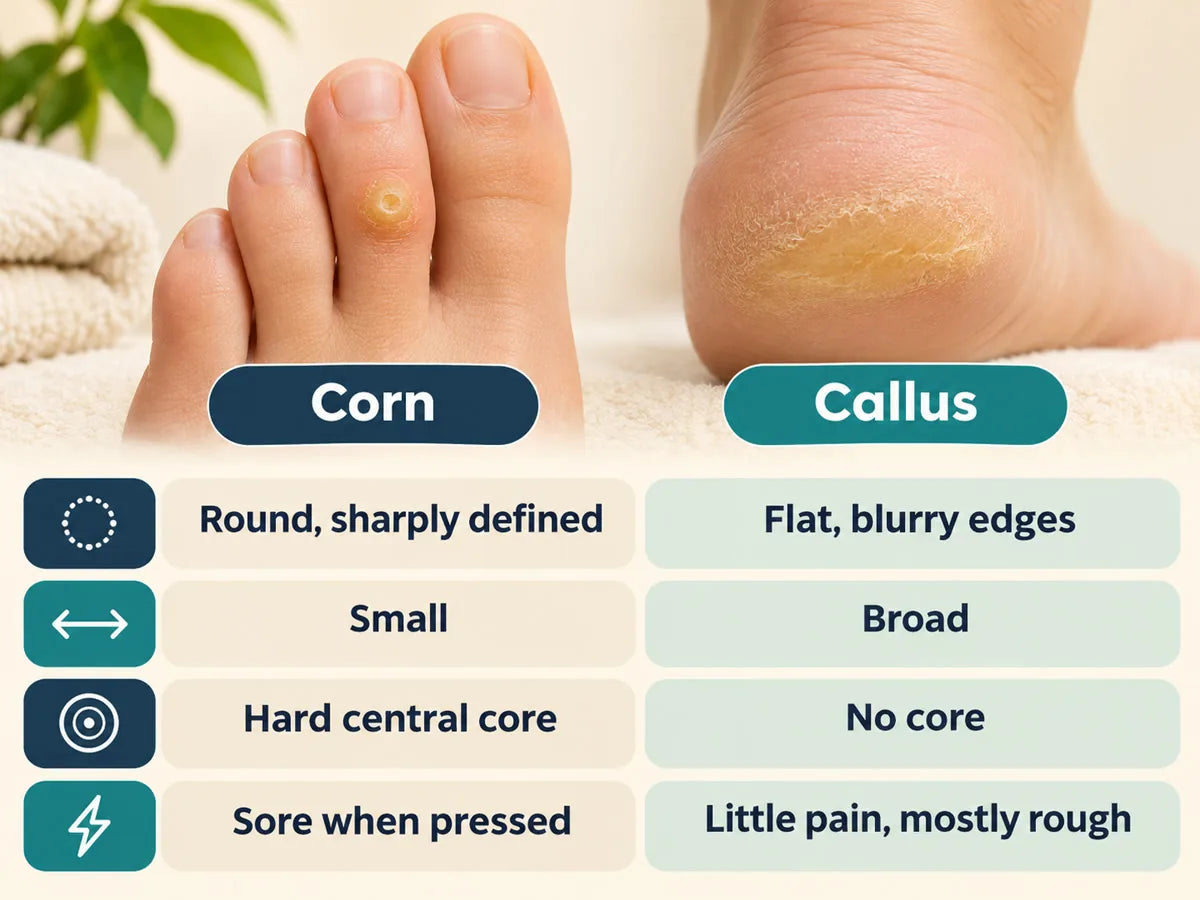
| Feature | Corn | Callus |
|---|---|---|
| Shape | Round, sharply defined | Flat, blurry edges |
| Size | Small | Broad |
| Usual location | Toes, between toes, bony points | Heels, ball of foot, inner big toe |
| Core | Hard central core | No core |
| Pain | Sore when pressed | Little pain, mostly rough |
| Typical force | Focused on one small point | Spread over a wider area |
Why each one forms
Both form from friction and pressure, and corns tend to appear where the force is focused on one small point while calluses appear where it spreads over a wider area.
- Callus: friction spread over a wider area builds a callus. Common examples are a heel rubbing inside a shoe or your weight rolling over the ball of your foot.
- Corn: pressure focused on one small point builds a corn. A common example is a bony toe joint pushing against a tight toe box.
High heels, narrow shoes with little toe room, rough inner seams, hammertoes and bunions all make both more likely.
Do they fade if the pressure stops?
Corns and calluses often improve gradually once the friction or pressure behind them stops, so removing the thick skin alone tends to bring them back.
Shoes with a roomy toe box and a low heel give the skin a chance to settle. Cushioned socks and pads that move pressure off the spot help too. If a spot keeps returning even with better shoes, see a podiatrist, since a toe shape such as a bunion or hammertoe may be the cause.
Foot corn and callus treatment: how does care differ?
Care for both starts in the same place: remove the source of friction or pressure. After that, a corn needs cushioning around its core, while a callus can be gently smoothed. Never cut either one.
Caring for a corn
Give the corn room first. Wear shoes with space for your toes, and place a donut-shaped pad around the corn so the core takes less pressure. A cushioned pad works like a corn callus band aid, with no medicine involved.
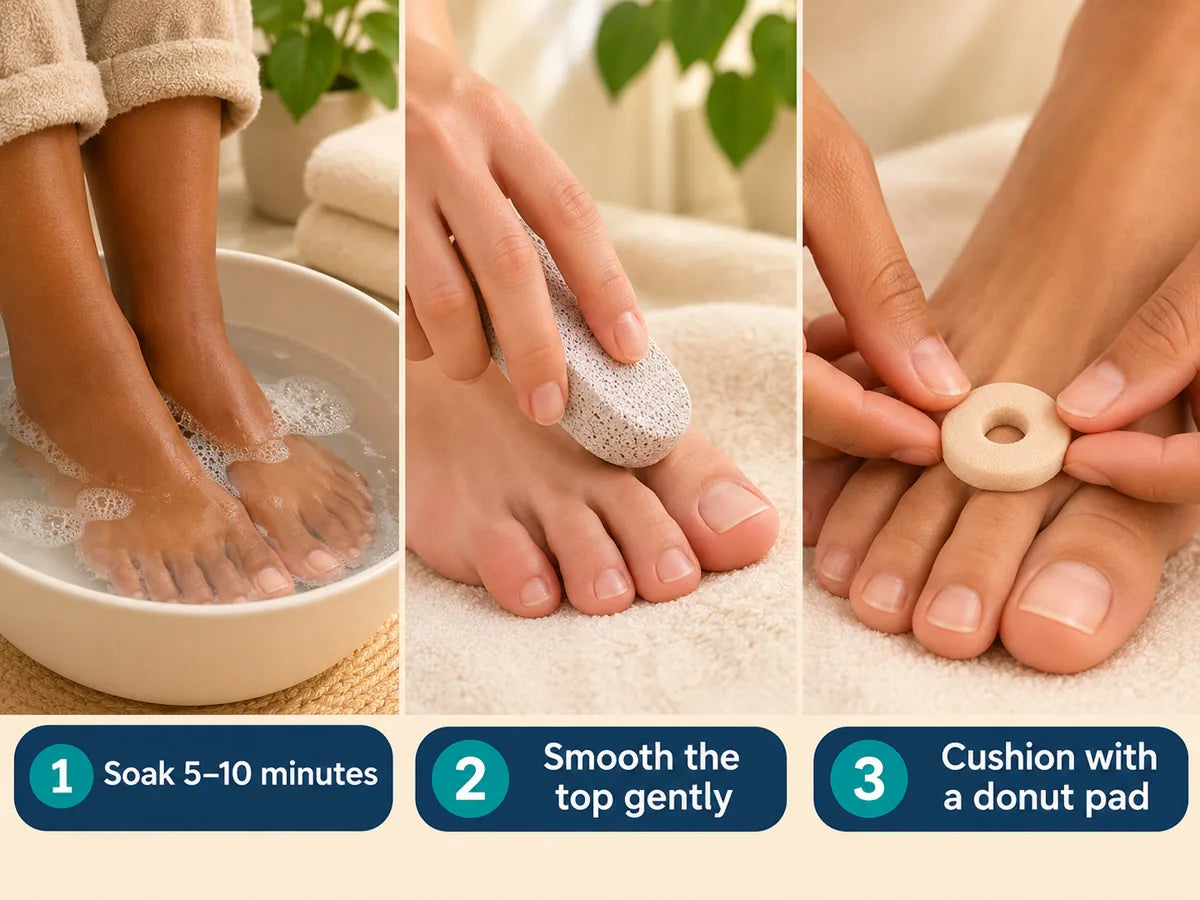
You can also soak your feet in warm water for 5–10 minutes, then smooth the top gently with a pumice stone. Stop well before the skin feels tender. For a soft corn between the toes, keep the space dry and separate the toes with a foam spacer or lamb's wool.
Salicylic acid corn plasters (12–40%) are an option for some adults. They loosen thick skin and are changed every 48 hours, for up to 14 days. Use them only on the corn itself and on intact skin, and only if the label's warnings fit you. They are not for anyone with diabetes or poor circulation.
Note: Keep callus removers and electric files off corns, and use them only on broad calluses.
Caring for a callus
Start by stopping the rub, then soften and smooth the skin. Moisturize daily. For dry, cracked heels, a urea cream at 10–25% applied within 5 minutes of bathing softens hard skin gradually. No cream will dissolve calluses on feet overnight.
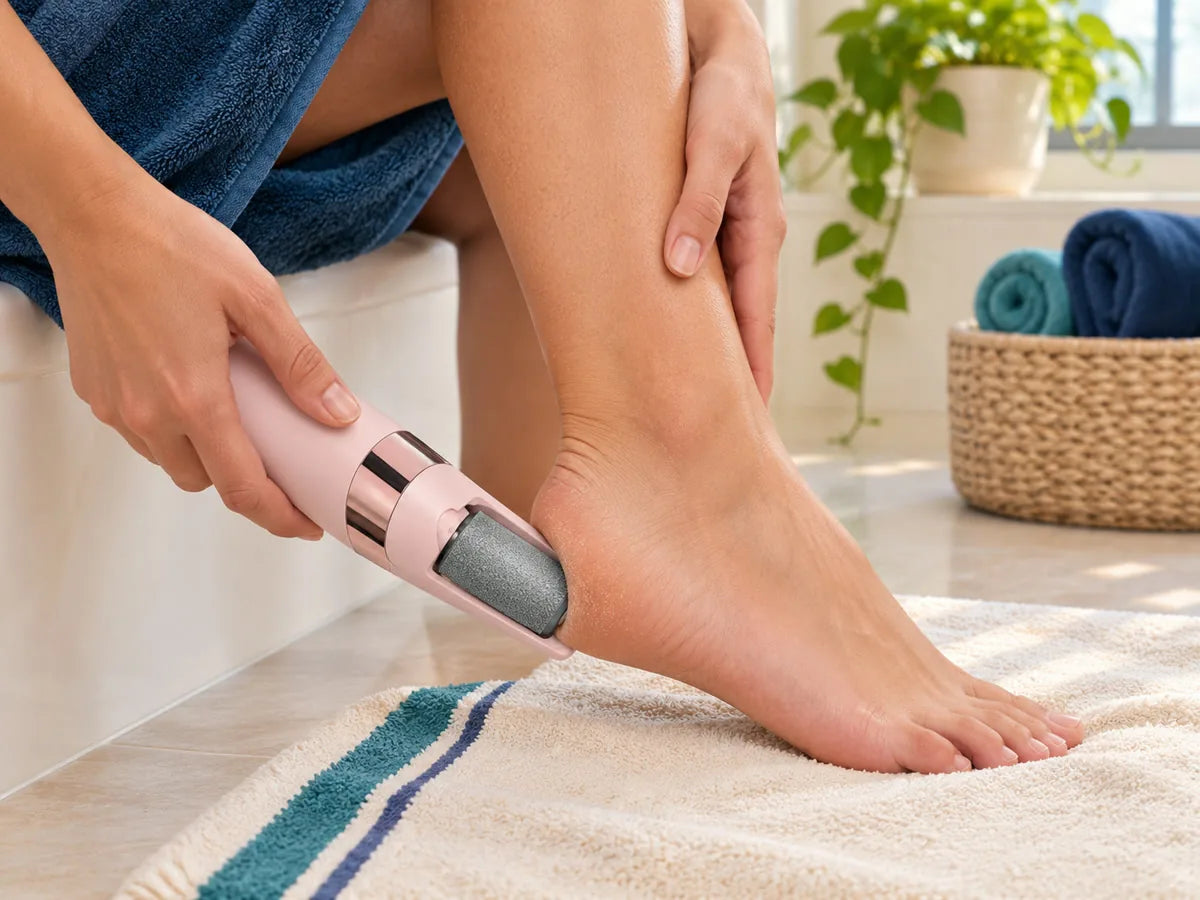
After a 5–10 minute warm soak, buff the callus gently with a wet pumice stone or an emery board. Moleskin cut in a half-moon shape around the callus also eases rubbing.
For a thick callus on the heel or ball of the foot, an electric file is a convenient option rather than a proven better one. It uses a spinning roller to buff hard skin. The Rechargeable Electric Foot File with Fine and Coarse Rollers and the Electric Callus Remover for Feet with Spare Rollers both work on clean, dry skin with light pressure. The first one's directions say 2–3 seconds per spot. Both are electric foot files from Decor Your Life.
Note: Skip trimming calluses on feet with razors, blades or scissors, and stop filing before skin feels raw, because cutting or over-filing can cause bleeding and infection.
Who should not treat a corn or callus at home, and when to see a podiatrist?
Corn and callus treatment at home suits most healthy adults, but some people should leave it to a professional.
Skip home care, including files and acid products, if you have:
- Diabetes: calluses can build up faster and break down into sores, and over-the-counter removers can burn the skin.
- Poor circulation: acid corn and callus products carry a label warning against use.
- Numbness or neuropathy: don't cut, file or use acid products unless your doctor says so.
- A weak immune system or fragile skin: these raise the risk of infection.
- Broken, irritated or infected skin, or wounds: acids and rollers can make the area worse.
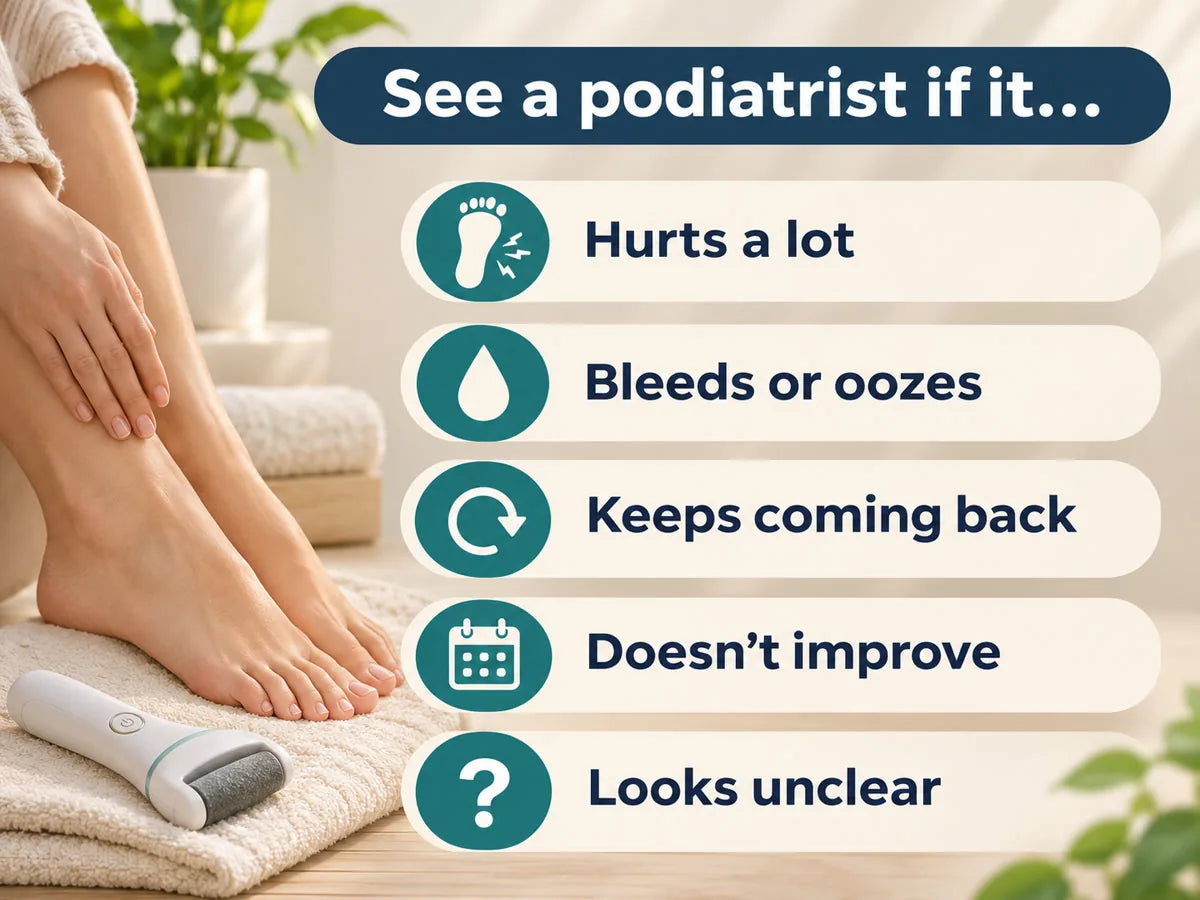
See a podiatrist if the spot:
- Hurts a lot: pain limits walking or daily life.
- Bleeds or oozes: blood or pus can be a sign of infection.
- Keeps coming back: it returns even after you change your shoes.
- Doesn't improve: nothing changes after a 14-day course of an acid product, or the spot gets worse.
- Looks unclear: it might be a wart, or you can't tell what it is.
A podiatrist can pare thick skin with a blade in the office. People with diabetes should also have a podiatrist check their feet every year.
[dyl-products: rechargeable-electric-foot-file, electric-callus-remover-for-feet, cordless-foot-callus-remover-nail-buffer]
Frequently asked questions
Should I try over-the-counter medicine for corns or calluses?
Yes, for some adults: over-the-counter salicylic acid can suit small corns or calluses on intact skin. It comes as plasters (12–40%) or liquids (12–17.6%), and liquids are flammable, so keep them away from heat and flame. Read the Drug Facts label first, since it warns against use with diabetes, poor circulation or irritated skin. If you're unsure, ask a pharmacist.
Can a corn form inside a callus?
Yes, a corn can form inside a callus, with a hard core sitting within a wider patch of thick skin, often under the ball of the foot. The clue is one point of sharp pain inside an otherwise rough area. Have it checked rather than digging it out.
What does a black or white callus mean?
A black or white callus can have more than one cause, so don't judge by color alone. Whitish, soggy skin between the toes can be a soft corn kept damp by moisture, while tiny black dots on the sole can signal a plantar wart. Any dark, new, changing or painful spot needs a professional check.
Good foot corn and callus treatment begins with knowing which one you have. Cushion a corn, gently smooth a callus and stop the friction behind both. See a podiatrist if you have diabetes, poor circulation or real pain. For thick calluses only, compare electric files in our foot care devices collection, with free US shipping on every order.