

Your heels feel like sandpaper, and a search for a callus remover turns up electric files, gels, pumice stones, glass files and blades, each promising smooth feet. The right pick depends less on the packaging and more on your skin: how thick the hard patches are, where they sit, and whether diabetes or sore skin changes what is safe at home. This guide compares each type side by side, with the safety limits that matter.
What is the best callus remover for feet?
There is no single best callus remover for feet. The right one depends on your callus, your patience and your health. Light-to-moderate calluses on healthy, unbroken skin suit a powered or manual file. Thick, painful or high-risk feet are a job for a podiatrist, who is a foot and ankle doctor.
Any tool only thins the surface, so hard skin builds back up if the rubbing or pressure that caused it continues. The available evidence does not show that electric files work better than manual ones. Choose by need:
| Your need | Type that fits | Why |
|---|---|---|
| Thick, rough heel callus on healthy skin | Electric foot file with a coarse roller | Sands hard skin with less hand effort |
| Light upkeep between pedicures | Pumice stone or fine glass foot file | Gentle, low cost, easy to control |
| No charging, simple tool | Manual foot file or pumice stone | No batteries or cables |
| Low effort | Rechargeable electric foot file | The roller does the rubbing |
| Prefer softening to sanding | Callus gel or solution, healthy skin only | Works chemically, no filing |
| Sore, cracked or high-risk feet (diabetes, poor circulation) | A podiatrist first | Home tools can cause injuries you may not feel |
| Want to cut it off | Skip blades and see a podiatrist | Cutting too deep can cause bleeding and infection |
Types of callus remover: electric, gel, pumice, file and shaver
Callus removers differ in how they take off hard skin. Some spin an abrasive, some soften the skin with chemicals, some rub by hand and some cut with a blade.
Electric callus removers and foot files
An electric callus remover, also called an electric foot file, is a handheld tool with a spinning roller or disc. The roller or disc has a gritty, sandpaper-like surface that buffs off dry, hard skin. It does not cut, so you glide it lightly over the skin and keep it moving. Most manuals limit contact to a few seconds per spot, often 2–4 seconds; follow the shorter time in your manual.
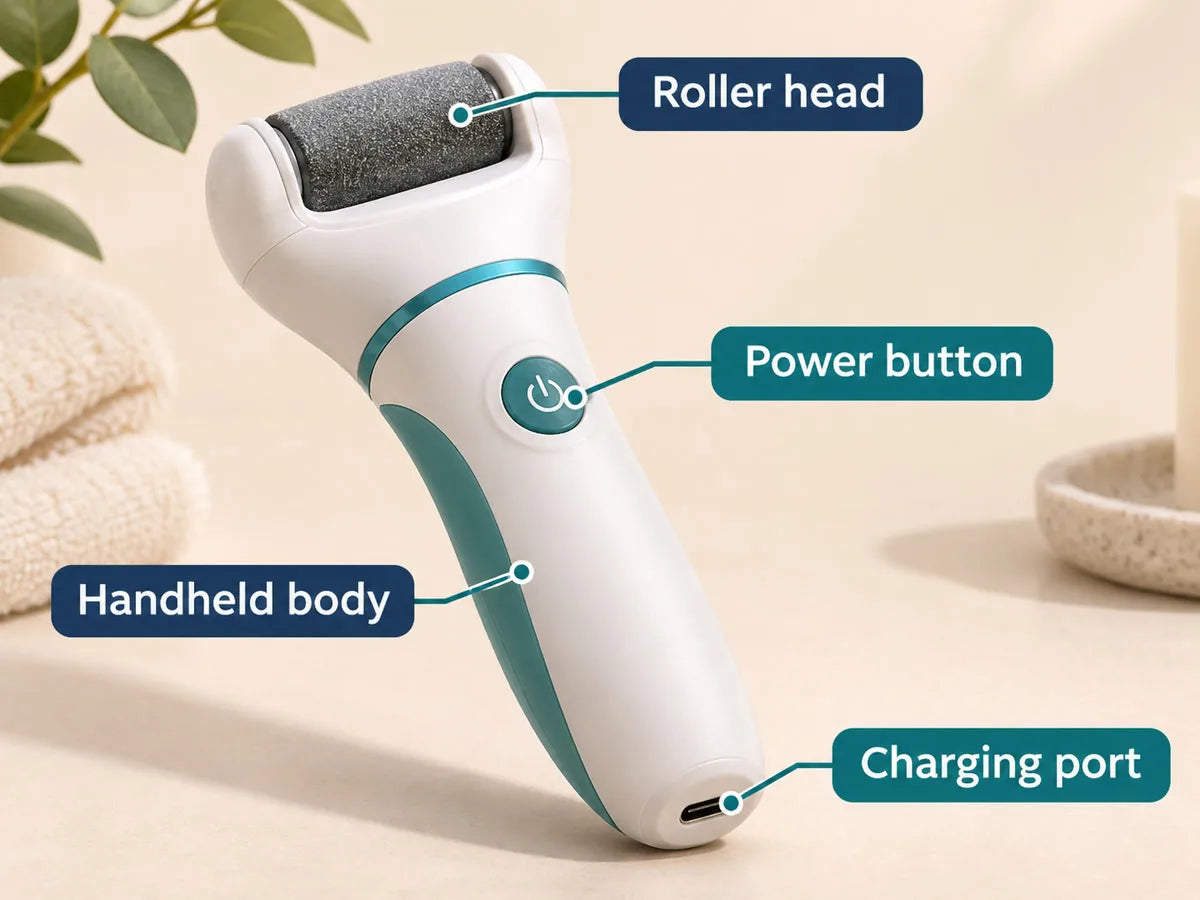
- Best for: rough heels and dry patches on healthy skin.
- Pros: less hand effort, with coarse rollers for thicker skin and fine rollers for smoothing the surface. Models run on AA batteries or a rechargeable battery.
- Cons: they make skin dust and need replacement rollers. Results vary and often take repeat sessions, and some units stall when pressed hard.
For electric-only details such as speeds and pressure stops, see our Beauty Device Guides.
Callus gels, solutions and patches
A callus gel, solution or patch is an over-the-counter callus remover. It uses chemicals to soften thick skin instead of sanding it. Strength and how often you apply it differ by product, so follow the label's directions.
- Best for: adults with healthy, unbroken skin who prefer not to file.
- Cons: chemical removers can irritate or burn the skin, especially broken, inflamed or sensitive skin.
Note: Skip chemical callus removers if you have diabetes or poor circulation, because they can harm feet with reduced blood flow or lost feeling.
Pumice stones
A pumice stone is a rough, lightweight stone that you rub by hand over softened skin. It wears down a thin layer of callus with no power or chemicals. Soaking your feet in warm water for 5–10 minutes first makes the skin easier to thin gently. This soaking advice applies to people without diabetes.
- Best for: light, regular upkeep.
- Pros: low cost and easy to control.
- Cons: slow and effortful on thick calluses. Rinse it after use and replace it when it wears smooth.
Manual foot files and glass files
A manual foot file is a handheld file with a gritty surface that you rub over hard skin. Coarse grit takes down thicker patches and fine grit smooths the finish. A glass foot file has its gritty surface built into the glass, so you can rinse it clean after use.
- Best for: small areas, tight budgets and people who want full control.
- Cons: more effort and slower than a powered file.
Note: Never file cracked or broken skin, because rubbing open skin can let infection in.
Callus shavers and blades
A callus shaver, also called a foot razor or credo blade, slices off thick skin with a blade instead of sanding it. Taking off too much skin can cause bleeding and infection. Foot doctors advise never using one at home and never letting a salon use one on you. The risk is greater with diabetes, because injuries can go unnoticed. Trimming is a podiatrist's job.
How to choose a callus remover for your feet
Your skin and your routine decide the right type more than the tool's features do. Thickness comes first, then health limits, then how much effort and upkeep you are willing to take on.
Callus thickness and location
Light, dry patches on the heel need only fine abrasion, such as a pumice stone, a fine glass file or a fine roller. Thick, hard skin on the heel suits a coarser roller or a coarse file. On thinner or more sensitive spots, such as the toes, use a fine head and shorter passes, and test a few seconds on one spot first.
Match coarseness to how thick the skin is. "Diamond" or "extra coarse" labels are a maker's description of the grit, not proof of better results.
Skin condition and health limits
Any callus remover on foot skin is for intact skin only. Skip it on cracked, sore, inflamed, infected or blistered skin. If you have diabetes, poor circulation or nerve damage that dulls feeling in your feet, see a podiatrist before removing any callus yourself. A callus that keeps coming back or hurts also needs a doctor's look. A small, deep spot that hurts when pressed may be a corn instead, so check how corns and calluses differ before you file.
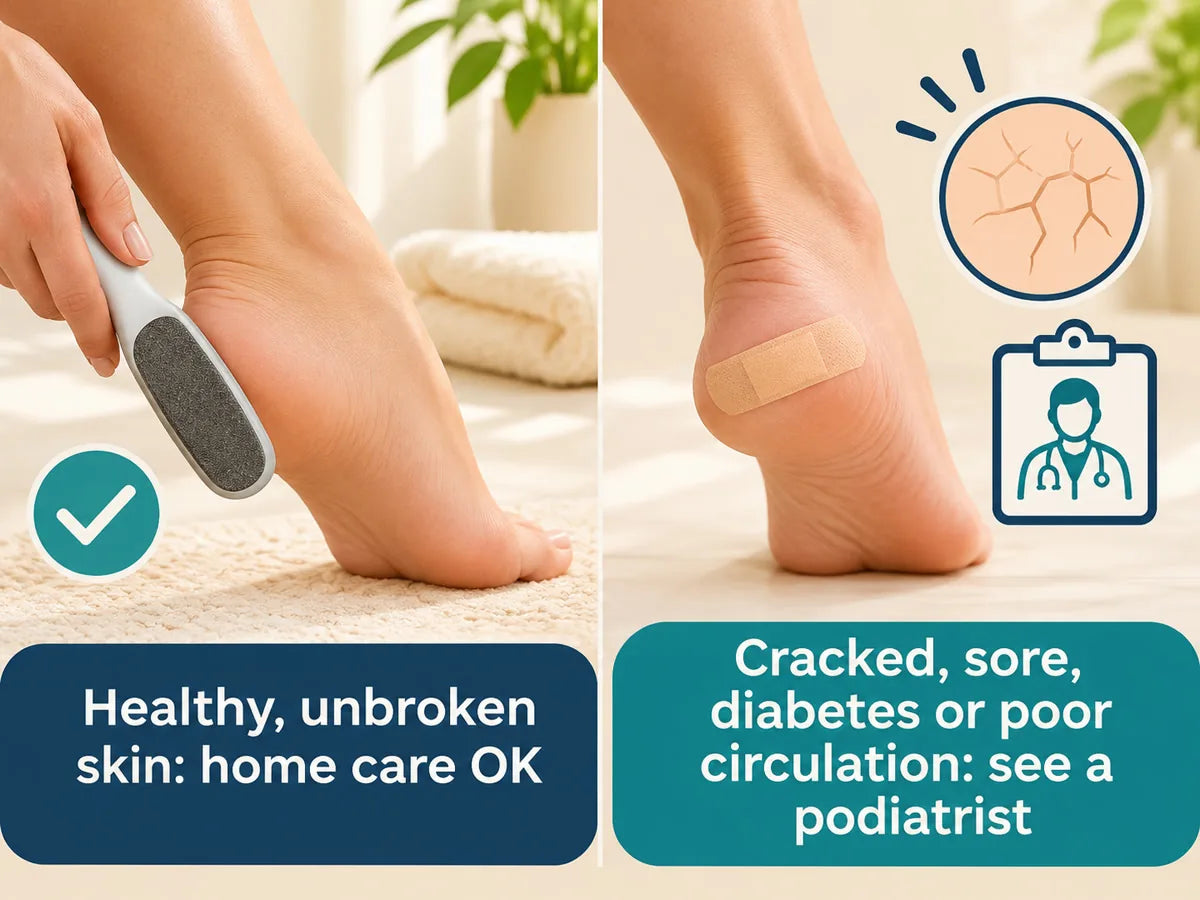
Note: Well-fitting shoes, protective padding and moisturizing afterward work alongside the tool, because the callus returns while the rubbing continues.
Speed, effort and control
Manual tools take more effort but give you more control. Powered files are faster and easier on your hands, but that speed also makes them easier to overdo. On electric models, two speeds let you start low. A pressure stop, which halts the roller if you press too hard, adds a safety margin.
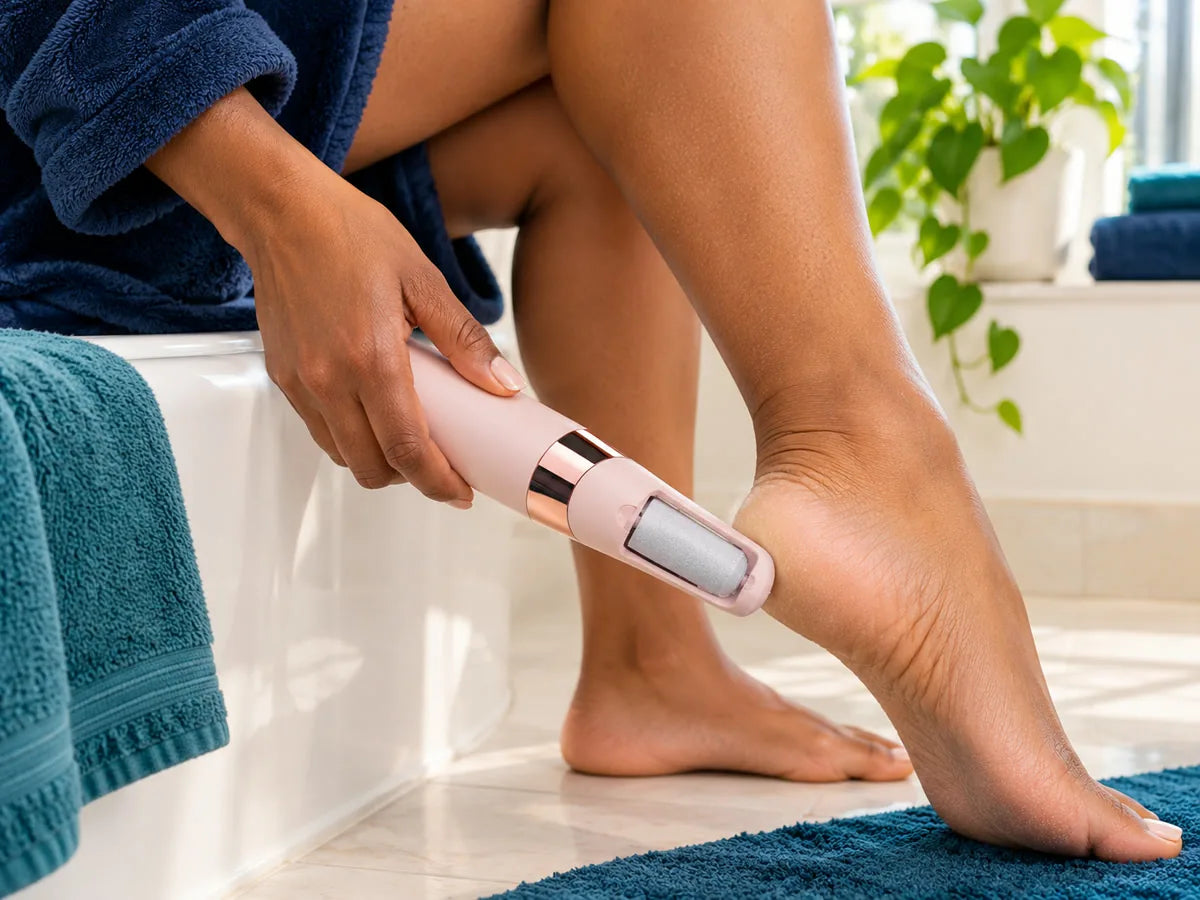
Whatever you use, keep strokes short and check your skin often; with a powered file, stay within the few seconds per spot your manual gives (2–3 seconds for our rechargeable file). Thick calluses usually need a few short sessions rather than one long one.
Upkeep, cleaning and replacement heads
Ongoing cost matters as much as the first purchase, because most abrasives wear out. Replacement estimates vary by brand. One maker recommends a new roller every 3 months, while another estimates about 8–10 uses. Check that spare heads exist for the exact model before you buy.
| Type | Cleaning | What wears out | Ongoing cost |
|---|---|---|---|
| Electric foot file | Remove the head, brush off dust, rinse only if the manual allows, wipe the body | Rollers or discs; some models have a battery you cannot replace | Replacement heads |
| Callus gel or patch | None | The product itself | Repeat purchases |
| Pumice stone | Rinse and let dry | The stone wears smooth | Low, occasional replacement |
| Manual or glass file | Rinse and dry | The grit surface dulls with use | Low |
Mistakes to avoid when buying a callus remover
These buying mistakes often leave you with a callus remover that disappoints:
- Trusting "smooth in one use" claims: these are manufacturer claims without device-specific trials, and thick skin usually needs repeat sessions.
- Skipping the spare-head check: without replacement rollers, a worn device becomes useless.
- Picking the wrong coarseness: extra coarse on thin skin is easy to overdo, and fine grit barely touches a thick heel.
- Misreading water wording: "splashproof," "waterproof" and "for dry use" mean different things, so check what can get wet.
- Ignoring the power type: AA models avoid charging, while rechargeable ones need a cable, and the battery may not be replaceable.
- Choosing a blade: foot doctors advise against blades at home, because taking off too much skin can cause bleeding and infection.
- Expecting results without fixing friction: tight or rubbing shoes rebuild the callus.
Is a callus remover safe? Who should skip it and when to see a doctor
Yes, a callus remover is low-risk for most adults with healthy, unbroken skin when it is used gently and briefly, but some people should skip home removal entirely.
- Broken, sore or infected skin: do not file, shave or apply chemicals to cracked, blistered, inflamed or infected skin, warts or wounds.
- Diabetes, poor circulation or nerve damage: do not remove calluses yourself; a podiatrist should check your feet at least once a year.
- Pregnancy or a pacemaker: some makers advise asking a doctor before using a powered file.
- Sharp tools: never use blades or foot razors at home.
- Over-filing: taking off too much skin can cause bleeding and infection, so leave a thin protective layer.
- Chemical irritation: gels and patches can sting or burn, so wash them off and stop if that happens.
- Stinging or soreness: stop using any tool on that area right away.
- Powered files: use on clean, dry skin unless the manual allows wet use, keep hair and threads away from the head, never use the device while it charges, and keep it out of children's reach.
See a doctor for severe pain, bleeding, discharge, or a callus that does not improve with home care.
Electric callus remover options at Decor Your Life
Decor Your Life carries three electric callus removers. They differ mainly in head type, speed options and whether they also buff nails:
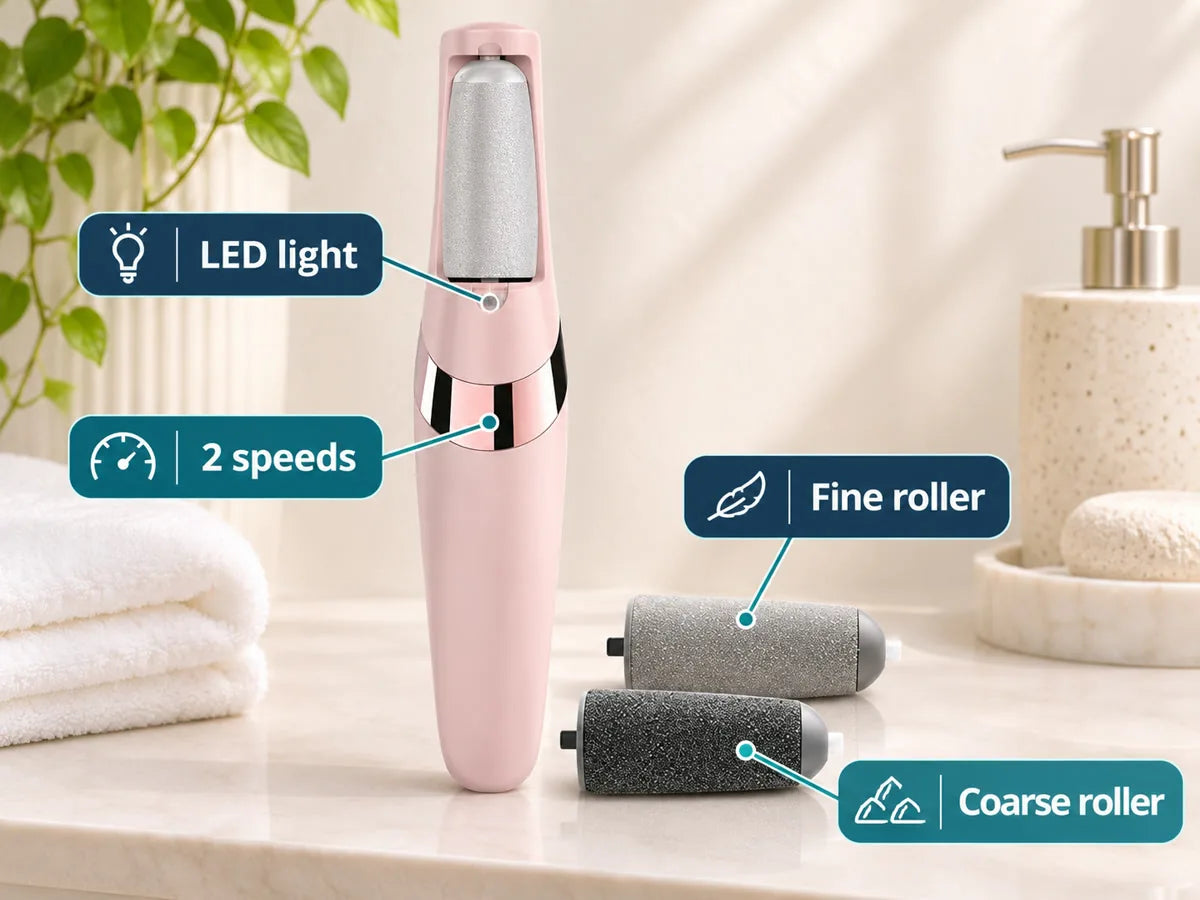
- Rechargeable Electric Foot File with Fine and Coarse Rollers: the pick if you want both grades in one device, with a fine roller for weekly upkeep, a coarse roller for thicker spots, two speeds and an LED light to see the area. A full charge takes about 2.5 hours and gives about 40 minutes of use, and the rollers can be rinsed.
- Electric Callus Remover for Feet with Spare Rollers: one speed and a wide roller that covers the heel in fewer strokes, with spare rollers in the box. It takes about 2 hours to charge for around 60 minutes of use. The body is not waterproof, so rinse only the roller.
- Cordless 2-in-1 Foot Callus Remover and Nail Buffer: coarse and fine sanding discs for feet, sleeves for buffing nails, forward and reverse rotation, and a digital display. Its battery is rated 1,200 mAh (milliamp-hours, a measure of capacity), and it takes about 2 hours to charge by USB-C for around 60 minutes of use.
Every order ships free in the US with tracking, after 1–3 business days of processing and 7–12 business days of delivery. Each device carries a 12-month limited warranty against manufacturing defects. Unused items can be returned within 30 days (you pay return shipping for change-of-mind returns), and damaged, defective or wrong items are replaced or refunded with no need to send them back. Details are on our returns and refunds page.
[dyl-products: rechargeable-electric-foot-file, electric-callus-remover-for-feet, cordless-foot-callus-remover-nail-buffer]
Frequently asked questions
How does a podiatrist remove calluses?
A podiatrist pares the thickened skin away with a sterile blade in the office. They may also suggest padding or shoe changes to reduce the pressure behind the callus. For painful or high-risk feet, this is far safer than using a blade at home.
Is a professional callus remover better than an at-home one?
A professional callus remover is not proven better, because the available evidence does not compare the two. A podiatrist suits thick, painful or high-risk feet, while at-home files suit light upkeep on healthy skin. Salon blades carry the same cutting risks as home blades.
Can I use a callus remover on corns?
A callus remover can gently thin the surface of a hard corn on healthy skin. Corns are thicker and deeper than calluses and usually form on the toes from bone pressure. Skip filing a sore or inflamed corn and see a doctor if it hurts; with diabetes or poor circulation, leave corns to a podiatrist.
The best callus remover for feet is the one that fits your callus thickness and skin health: a pumice stone or file for light upkeep, an electric foot file for rougher heels, and a podiatrist for thick, painful or high-risk feet. Keep pressure light and friction low, and compare options in our foot care devices collection.