

Rough heels before sandal season, or between salon pedicures, are where a dead skin foot remover earns its spot in your routine. Choosing one is harder than it looks, because pumice stones, electric foot files, peel socks and thick creams all promise softer feet while suiting very different skin and habits. This guide compares the four types, shows how to pick one and covers a gentle routine for keeping hard skin in check. If a hard spot on a toe hurts when pressed, it may be a corn, and our guide to corn and callus treatment explains the difference.
What is the best dead skin foot remover for rough heels?
The best dead skin foot remover for rough heels depends on how thick the skin is, how much effort and mess you are fine with, and whether any health limits apply. That means there is no single winner for everyone.
Hard skin on feet builds up from repeated friction or pressure, and it partly protects your feet. Gentle filing thins it, and results build over repeated sessions. Shoes that keep rubbing will keep rebuilding the skin, though, so treat any remover as upkeep.
| Your need | Type to try | Watch out for |
|---|---|---|
| Light dryness | Urea or exfoliating cream, fine manual file | Slow on thick buildup |
| Rough heels | Electric foot file or pumice stone | Light pressure, short passes |
| Thick hard skin | Electric file with a coarse head, over several sessions | Painful spots need a clinician |
| Low mess | Cream | Needs regular use |
| Sensitive skin | Cream or fine file, lowest speed | Stop at any soreness |
| No motor wanted | Pumice stone or manual file | Soak first, more arm work |
Types of dead skin foot remover
Dead skin removers either sand dry skin away by hand or motor (physical exfoliation) or soften it so it sheds or smooths over time (chemical exfoliation). The four types shoppers compare are:
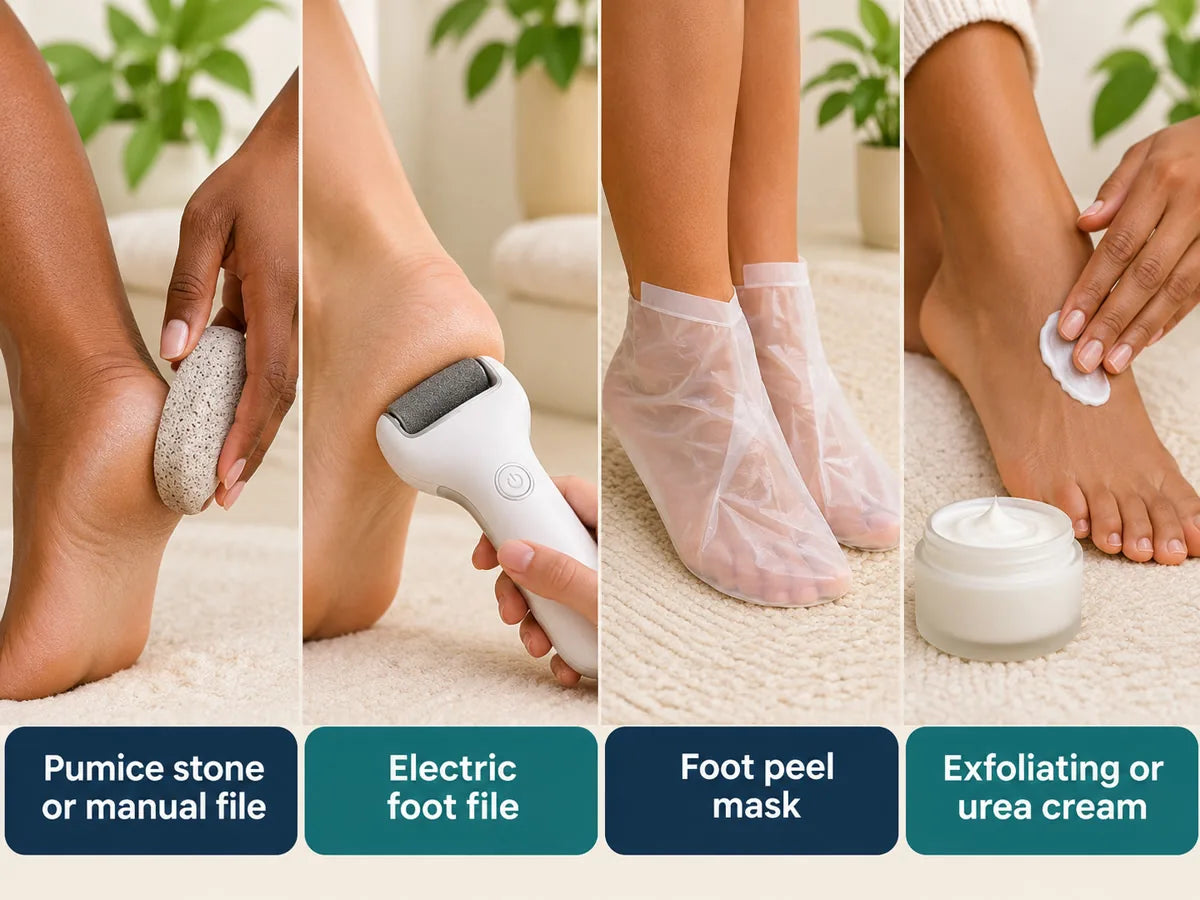
Pumice stones and manual foot files
A pumice stone or manual foot file is a hand tool with a rough surface that you rub over softened skin to sand away dry, hard layers. Because your hand does all the work, you control the pressure directly, with no motor, battery or charging. Labels such as "nano-glass" or "diamond" describe the surface, not proof that one file works better.
- Best for: light to moderate roughness on heels and the balls of the feet.
- Time: soak first for about 5–10 minutes in warm water, then file a little using circular or sideways motions.
- Pros: full control, low cost, nothing to charge.
- Cons: slower and more effort on thick buildup.
Note: Rinse and dry the tool after each use so it stays clean and ready for next time.
Electric foot files and rollers
An electric foot file is a rechargeable or battery-powered handle with a spinning abrasive roller or disc that buffs off hard, dry skin as you glide it over your heel. The motor does the sanding, so you use light pressure and short passes instead of scrubbing. Some models are wet and dry, while others are dry-use only, so check your manual.
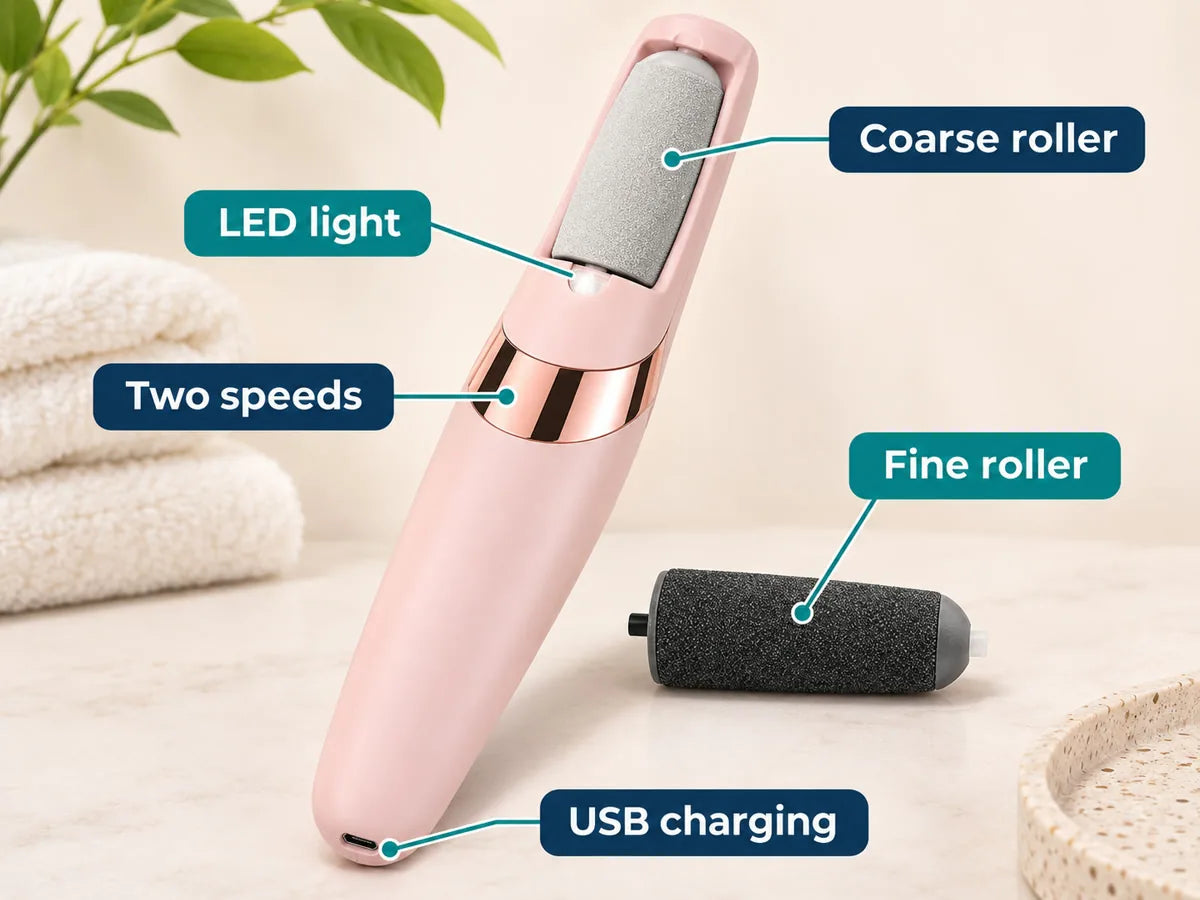
Decor Your Life carries three electric options, each with a different strength:
- Rechargeable Electric Foot File with Fine and Coarse Rollers: comes with a coarse roller for thicker spots and a fine roller for weekly upkeep, plus two speeds and an LED light.
- Electric Callus Remover for Feet with Spare Rollers: uses one wide roller that covers the heel in fewer strokes, with spare rollers in the box.
- Cordless 2-in-1 Foot Callus Remover and Nail Buffer: pairs coarse and fine sanding discs with small sleeves for buffing nails, and spins forward or in reverse.
All three charge by USB and are meant for clean, dry feet. The trade-off is loose skin dust to clean up, along with a battery and heads to look after.
Foot peel masks
A foot peel mask is a pair of booties filled with an exfoliating solution that you wear for the time on the label. The dead skin then flakes off gradually over the following days rather than right away.
- Best for: hands-off smoothing as an occasional treat.
- Results: flaking that comes off in stages, so plan for a few days of peeling.
- Cons: messy shedding, and the mask is not for wounds, cuts or active skin problems; anyone with diabetes or poor circulation should ask a doctor first.
Note: Let the skin fall away on its own and never pull it off, because tugging can open skin that is not ready to shed.
Exfoliating and urea creams
Exfoliating and urea foot creams are moisturizers you rub in to soften dry, rough skin, and urea in particular helps soften thick, dry skin on heels. They suit daily upkeep and pair well with a file, keeping heels looking smoother between filing sessions.
- Pros: no tools, no dust, easy to fit into a bedtime routine.
- Cons: slow on heavy buildup, and they should not go on cracked-open skin.
Follow the directions on the product label for how often to apply.
What to look for in a dead skin remover for feet
Four checks work across all four types, whether you are buying a stone, a peel or an electric heel hard skin remover. Match each one to your feet:
How thick your hard skin is
Skin thickness decides how strong a tool you need:
- Light dryness: a cream or a fine file keeps skin soft with little risk of overdoing it.
- Noticeable rough patches: a pumice stone or an electric file with a coarse head works through dead hard skin on feet over several sessions.
- Painful, very thick or unknown spots: see a dermatologist or podiatrist, who can pare hard skin safely in the office.
Hard, deep spots on the toes may be corns rather than calluses, so a toe hard skin remover is not the answer for them. Thin any hard skin gradually, because removing too much can cause bleeding and infection. For thick callus patches in particular, our callus remover guide compares every tool type side by side.
Speed, effort and mess
Each type trades effort for mess in a different way:
- Manual tools: slower and more tiring, but the dust stays in the shower or soaking water.
- Electric files: less arm work, with speed settings on some models, though they leave loose skin particles on the floor.
- Peels: no effort at all, but flakes shed for days.
Use an electric file over a towel or in the bathroom so the dust is easy to sweep up, and keep each spot to a few seconds of contact.
Sensitive skin and health limits
If your skin is sensitive, start with the finest surface, the lowest speed and the shortest contact time, then build up only if your skin stays comfortable. Diabetes, poor circulation or reduced feeling in your feet means asking your doctor before using any remover. Never file broken skin or warts. The safety section below covers the details.
Upkeep and replacement parts
Abrasive heads wear smooth, so replace a roller or disc when it feels smooth or stops working well, and check that spares are easy to get before you buy. Battery runtime varies by model:
| Model | Heads | Charge time | Use per charge |
|---|---|---|---|
| Fine and Coarse Rollers file | Fine and coarse rollers | About 2.5 hours | About 40 minutes |
| Callus Remover with Spare Rollers | Wide roller, spares included | About 2 hours | Around 60 minutes |
| 2-in-1 Callus Remover and Nail Buffer | Coarse and fine discs, nail sleeves | About 2 hours | Around 60 minutes |
The spare-roller model has no full-charge light, charges from a 5V USB source only and should not be used while charging. Rinse only the detachable roller and keep the body dry. Each device is covered by our 12-month limited warranty against manufacturing defects.
Mistakes to avoid when buying a dead skin remover for feet
Most disappointment with a hard skin remover for feet comes from a few avoidable buying mistakes:
- Trusting surface labels: "diamond" or "nano" names the abrasive, not proof of a smoother result.
- Skipping the power check: some files run on disposable batteries, so check whether the model recharges and how long one charge lasts.
- Ignoring replacement heads: a file is only as good as its next roller or disc.
- Expecting one-session results: hard skin thins over repeated gentle sessions, and pushing for more in one go can leave skin sore.
- Buying blades: foot razors and callus shavers can cut too deep, so leave them out of home care.
- Overlooking health limits: diabetes or poor circulation changes what is safe for you.
- Forgetting the cause: tight or rubbing shoes will rebuild the same hard skin.
How to remove dead skin and hard skin from your feet at home
A short routine is enough to smooth hard skin on feet and keep it in check, and it never needs a blade. The four steps are:
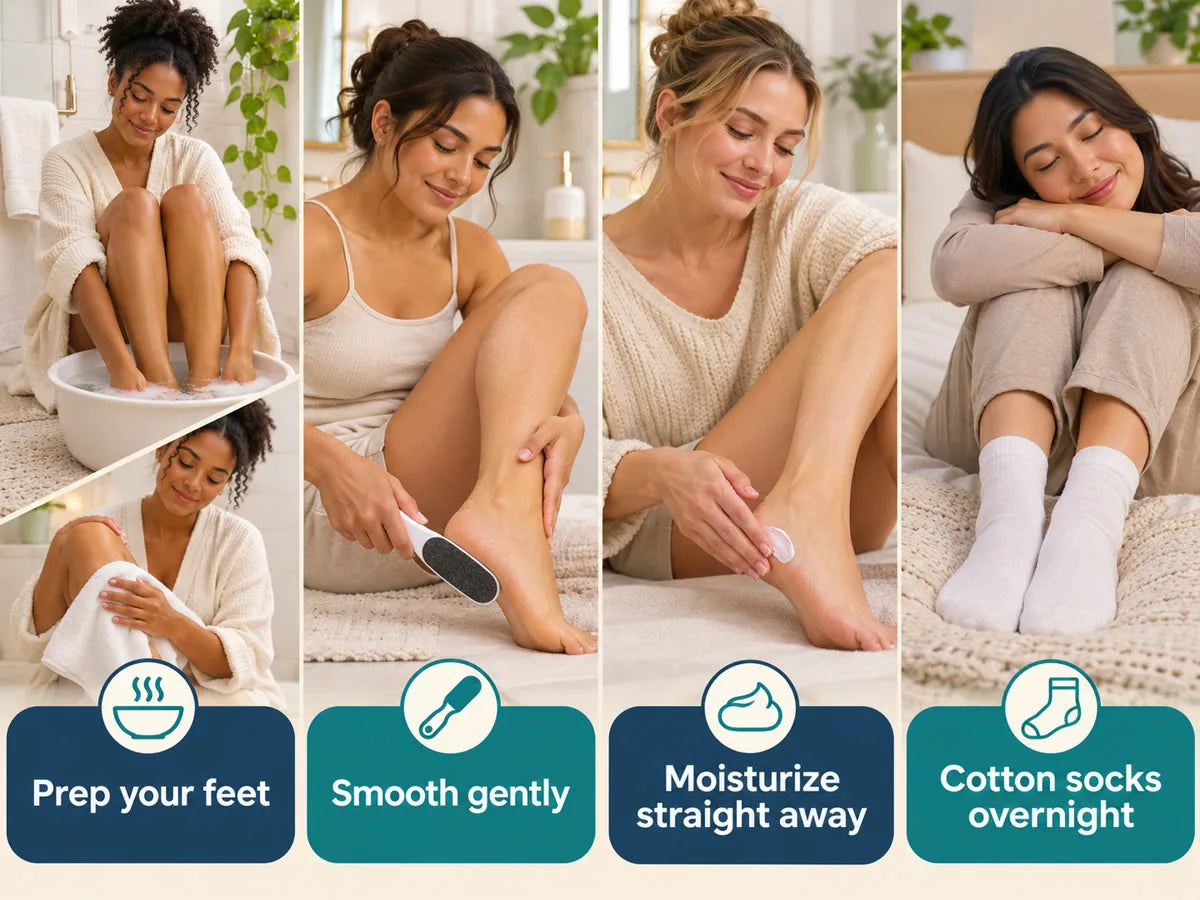
Prep your feet for your tool
Soak your feet in warm water for about 5–10 minutes if you use a pumice stone or manual file, then pat them dry. For an electric file, follow your model's directions: all three electric models above need clean, completely dry feet. Check that the skin is intact before you start.
Smooth the hard skin gently
Glide the tool with light pressure in short passes, staying only a few seconds on each spot (many manuals say 2–4 seconds), then check your progress. Leave some thickness behind rather than removing it all in one session, and stop if the skin feels sore. How often to file varies by product, and one brand suggests once or twice a week.
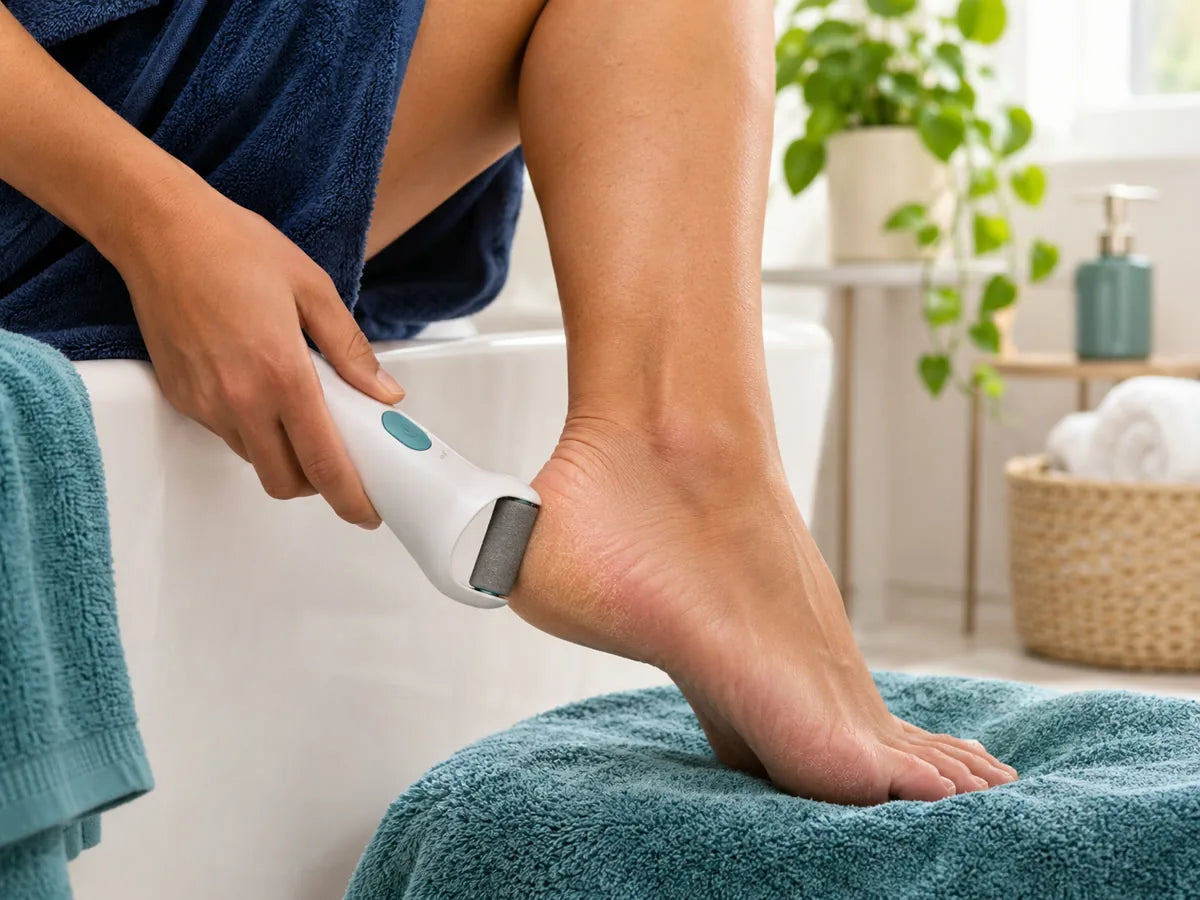
Note: Never use razors, scissors or blades, because cutting hard skin at home can cause bleeding and infection.
Moisturize straight away
Brush off the skin dust, then rub in a foot cream or urea cream. On dry heels, applying it within 5 minutes of a bath or shower helps keep skin looking smoother.
Wear cotton socks overnight
Pull on cotton socks after moisturizing so the cream stays on your feet instead of your sheets, and your feet feel softer by morning. Repeat the routine gently as part of your at-home pedicure rather than filing every day.
Who should not use a dead skin remover for feet?
Most people with intact, everyday rough skin can use a dead skin remover for feet gently and as directed, but some people need a doctor's advice first. Your health, the state of your skin and how hard you file decide the risk:
- Diabetes, poor circulation or reduced foot sensation: ask your doctor or podiatrist before using any remover, because injuries can go unnoticed and calluses can break down into sores. People with diabetes should not soak their feet and should use pumice only if their doctor says so.
- Pregnancy or a pacemaker: some makers ask you to check with a doctor before using an electric file.
- Damaged skin: never use a remover on broken, cracked-open, irritated, blistered or infected skin, or on warts.
- Sharp tools: skip blades and foot razors, and do not over-file.
- Hygiene and storage: keep one device per person, and store it out of children's reach.
Stop if your skin turns red, sore or painful, and see a clinician about any spot that is very painful, inflamed or unfamiliar.
[dyl-products: rechargeable-electric-foot-file, electric-callus-remover-for-feet, cordless-foot-callus-remover-nail-buffer]
Frequently asked questions
What should I do if a foot file or remover breaks my skin?
Stop filing, rinse the area gently with clean water and cover it with a clean bandage. Leave that spot alone until it heals. See a doctor if bleeding continues, the area turns red, swollen or warm, or you have diabetes or poor circulation.
Are foot peel masks safe, and how do they work?
They can suit intact skin when you follow the label exactly. The dead skin flakes off over several days, so the results are not instant. Skip them on wounds or irritated skin, ask your doctor first if you have diabetes or poor circulation, never pull the flakes off, and check the label's timing and frequency.
Does an electric foot file stop if I press too hard?
Some do: certain electric foot files stall or stop when pressed too hard, but that does not replace careful use. Light pressure and short passes work best, so check your model's manual to see whether it has a pressure stop.
A good dead skin foot remover is the one that fits your skin: cream or a fine file for light dryness, pumice or an electric file for rough heels, gentle sessions every time, and a doctor's okay first if you have diabetes or poor circulation. Compare rechargeable options in our foot care devices collection, with free US shipping on every order.