

A callus remover on the big toe can smooth the rough patch on the side of your toe that rubs every time you put on shoes. This spot is small and curved, so the tool you choose and how hard you press matter a lot. Below you will find how to file it down gently and how to keep it from building back up.
Can you remove a callus on your big toe at home?
Yes, you can remove a callus on your big toe at home when it is small, the skin over it is intact, and you file it gently instead of cutting it. Your result depends on two things: how carefully you file, and whether you fix the pressure that built the callus. Filing thins the hard layer, but it does not change the cause.
Skip home filing and ask a doctor first if you have diabetes, poor circulation or reduced feeling in your feet, because even a minor foot injury can become serious.
Note: Never cut or shave a callus with a razor, blade or scissors, and never file skin that is broken, red or sore.
Why does a callus form on the big toe?
A big toe callus is thickened skin that builds up to protect the toe from repeated friction or pressure. Look for the place where your toe takes the most rubbing:
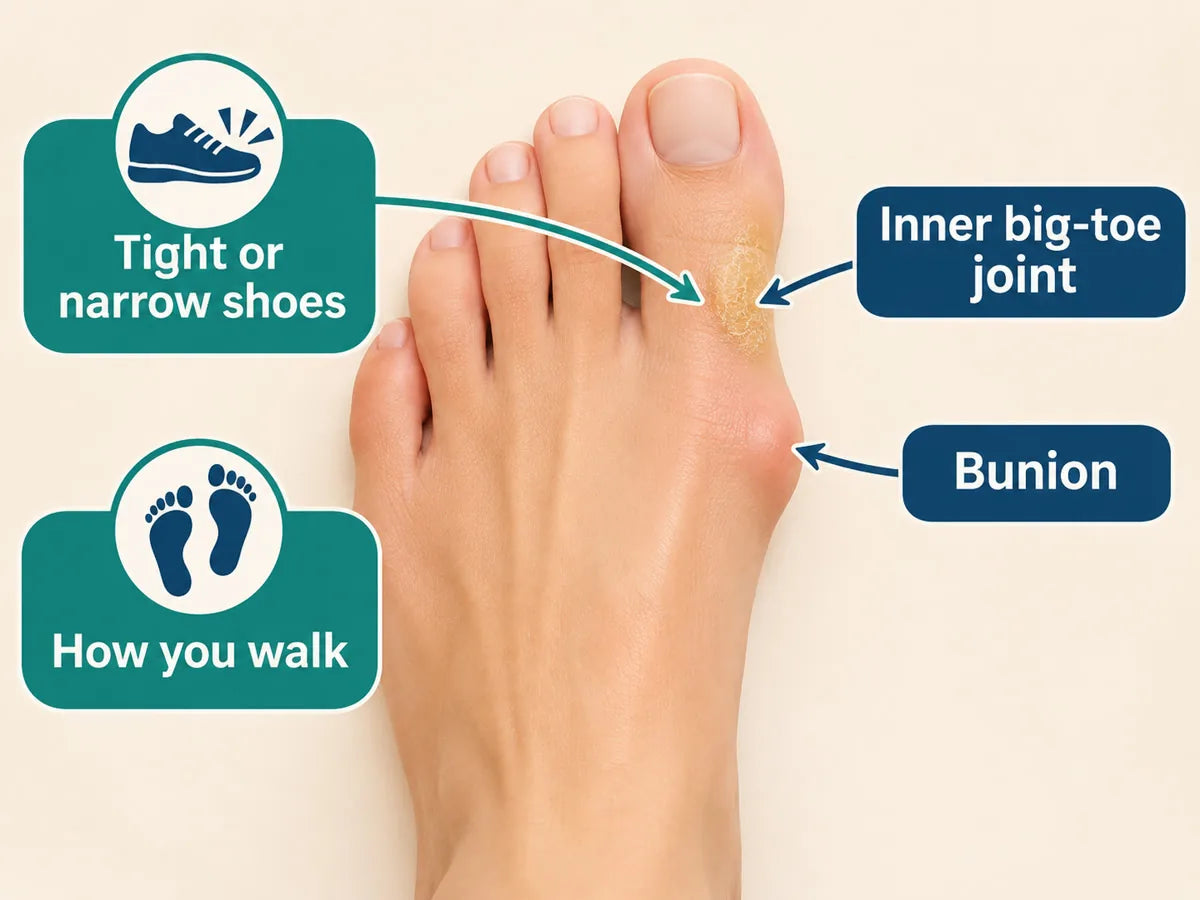
- Inner big-toe joint: a "pinch" or "roll-off" callus forms on the inner side of the joint, where pressure lands as your foot rolls off the ground with each step.
- Bunion: a bony bump at the base of the big toe pushes the skin against the side of the shoe.
- Tight or narrow shoes: a cramped toe box or a stiff inner seam rubs the same spot all day.
- How you walk: the way you push off can load one edge of the toe more than the rest.
If you think your foot shape is changing, ask a podiatrist to check it rather than guessing. A small, deep spot that hurts when pressed may be a corn rather than a callus, and our guide on how corns and calluses differ explains the signs.
How do you remove a big toe callus step by step?
On a small, awkward spot like the big toe, the safest routine is slow and light. You choose a tool you can control, soften the skin, file briefly and then check the area. The routine has four steps:
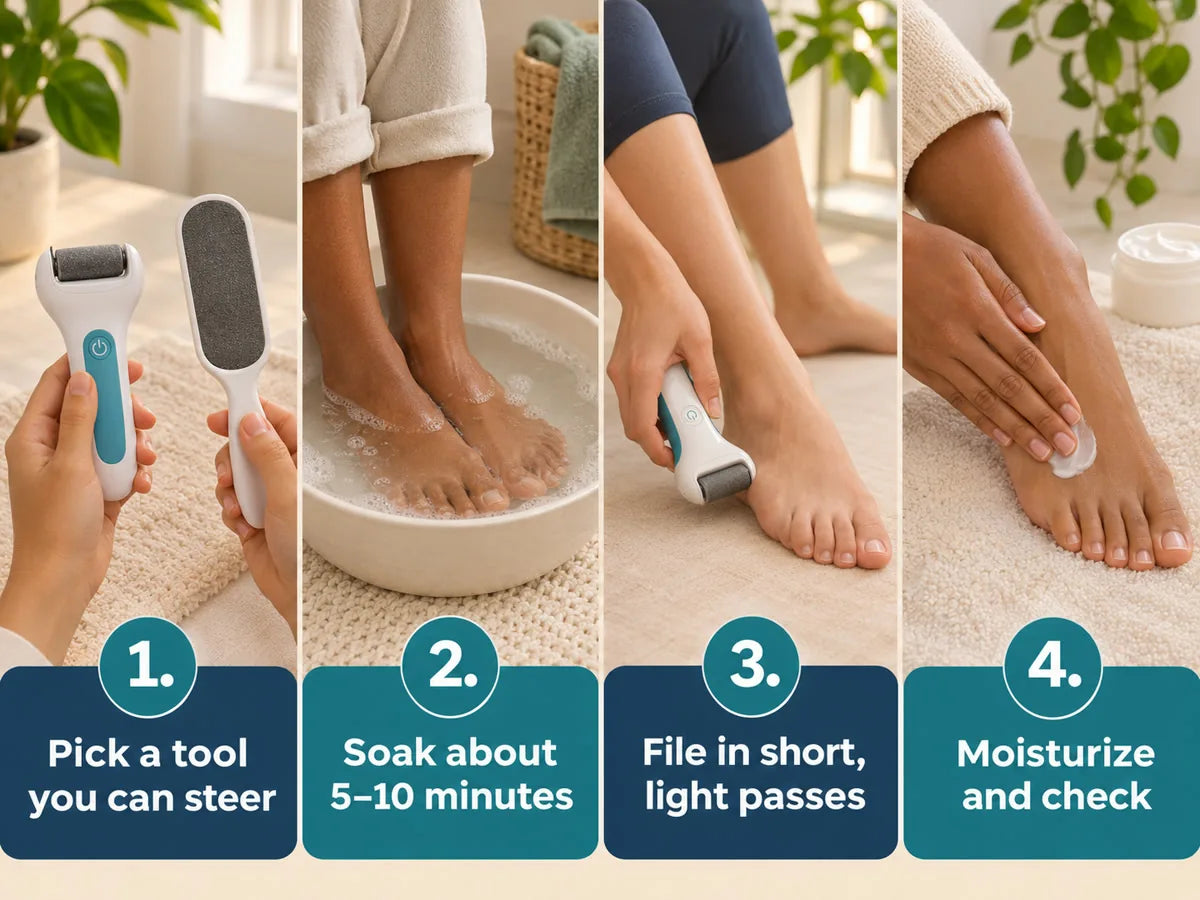
Pick a tool you can steer on a small spot
Choose a tool that lets you work a small area without catching the skin around it:
- Manual foot file or pumice stone: gives you the most direct control over pressure and angle.
- Powered callus remover: spins an abrasive head. Models offer coarse or fine heads and one or two speeds, so start with fine and slow.
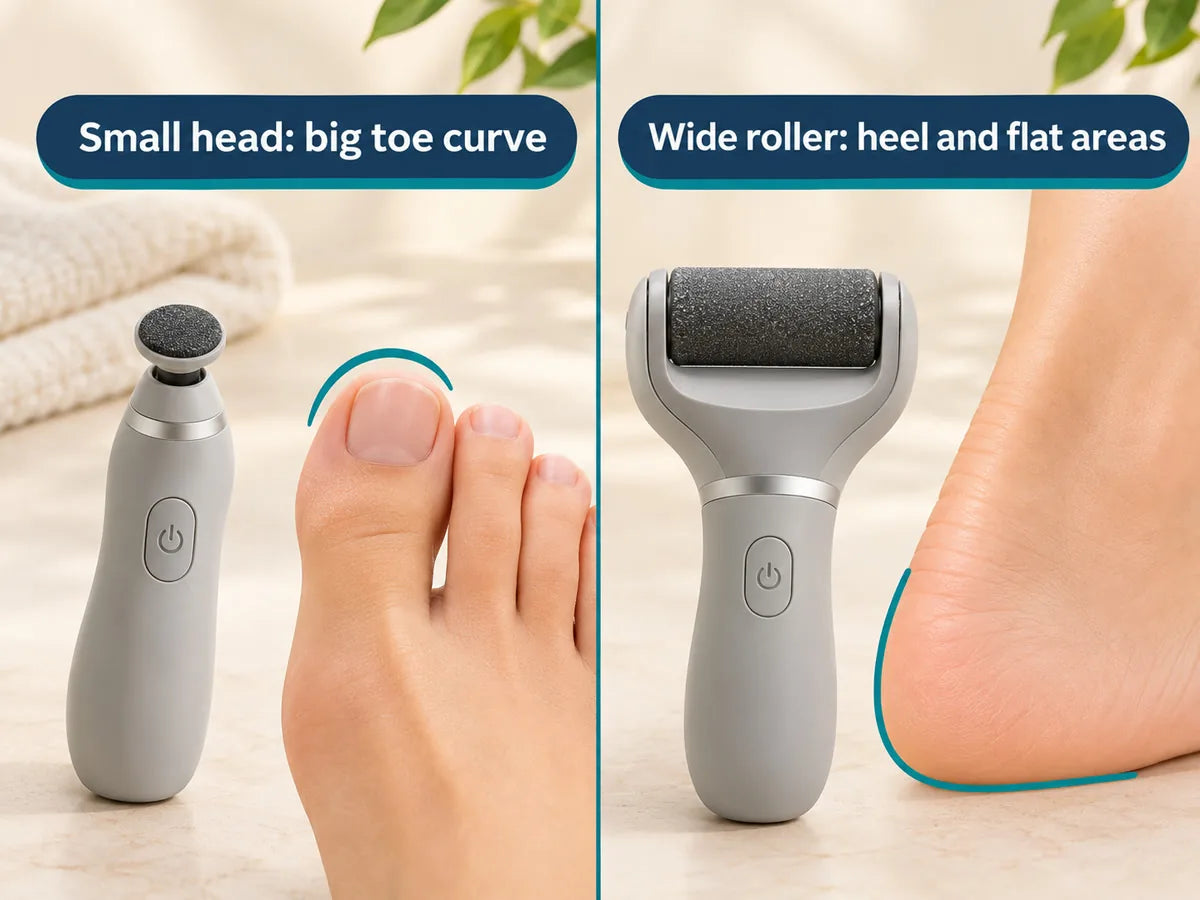
- Small head over wide roller: a small head is easier to guide around the curve of the toe, so keep a wide roller for flat areas like the heel and keep the skin around the toe clear of it.
- Disc-style option: the Cordless 2-in-1 Foot Callus Remover and Nail Buffer uses coarse and fine sanding discs and spins forward or in reverse.
Treat claims like "instant" or "professional" as marketing language, not proof of a better result.
Soften the skin first
Soak your feet in warm water for about 5–10 minutes so the hard skin softens. Then follow your tool's own wet or dry rules. A pumice stone is used on wet skin, while many electric files, including disc models, need clean, dry feet, so towel off well after the soak.
File in short, light passes
Work slowly and stop early:
- Light pressure: let the tool do the work, because pressing hard can stall a roller.
- Short passes: spend only a few seconds on one spot (2–3 seconds for the Rechargeable Electric Foot File), then lift and check.
- Stop signs: stop right away if you feel burning, soreness or see redness.
- Off-limits skin: never file broken skin, wounds or anything that might be a wart.
- Practical goal: aim for a softer, thinner patch, not a perfectly flat toe, since over-filing can leave skin raw or blistered.
Moisturize and check the spot
Brush off the dust and apply a moisturizer to the toe. Over the next day, check for soreness or blisters, and skip the next session if you see any. Clean the disc or roller as your manual instructs, because some bodies are not waterproof.
How do you stop a big toe callus from coming back?
A big toe callus usually comes back while the friction that built it is still there, so fix the cause first:
- Roomy shoes: choose a toe box that does not pinch the big toe, a low heel and a soft upper.
- Callus pads for big toe: a moleskin half-moon, gel pad or silicone toe sleeve over the spot cushions it and moves pressure away. These pads protect the skin rather than remove the callus.
- Medicated pads: salicylic acid pads are an over-the-counter drug product that works on the skin itself instead of cushioning it, so skip them if you have diabetes, poor circulation or irritated skin.
- Gentle upkeep: a quick, light pass with a fine head now and then is gentler on the skin than an occasional heavy session.
- Daily moisturizer: a urea or ammonium lactate cream softens hard skin gradually.
- Socks and seams: check your shoes for inner seams that rub, and choose cushioned socks.
Do heel calluses and ball-of-foot calluses need different care?
Heel calluses and ball-of-foot calluses use the same soak, file lightly and moisturize method, but the cause and the tool that suits each spot differ:
- Heel callus: dry skin and long hours standing build it up, and it can crack. A wide roller like the Electric Callus Remover for Feet with Spare Rollers covers the heel in fewer strokes.
- Calloused heels with dry patches: the Rechargeable Electric Foot File with Fine and Coarse Rollers pairs a coarse roller for thick spots with a fine roller for regular upkeep. A urea cream (10–25%) applied within 5 minutes of bathing helps keep heel skin soft.
- Ball of foot callus: this callus sits under the base of the toes. It comes from walking pressure and shoes, including frequent high heels, and a cushioning pad under that area can take pressure off the spot.
The light-pressure rule applies everywhere, and pain is a reason to stop filing and see a doctor. Our foot callus treatment guide covers the full routine for every area.
[dyl-products: rechargeable-electric-foot-file, electric-callus-remover-for-feet, cordless-foot-callus-remover-nail-buffer]
When should you see a podiatrist about a big toe callus?
See a podiatrist instead of filing again if any of these apply:
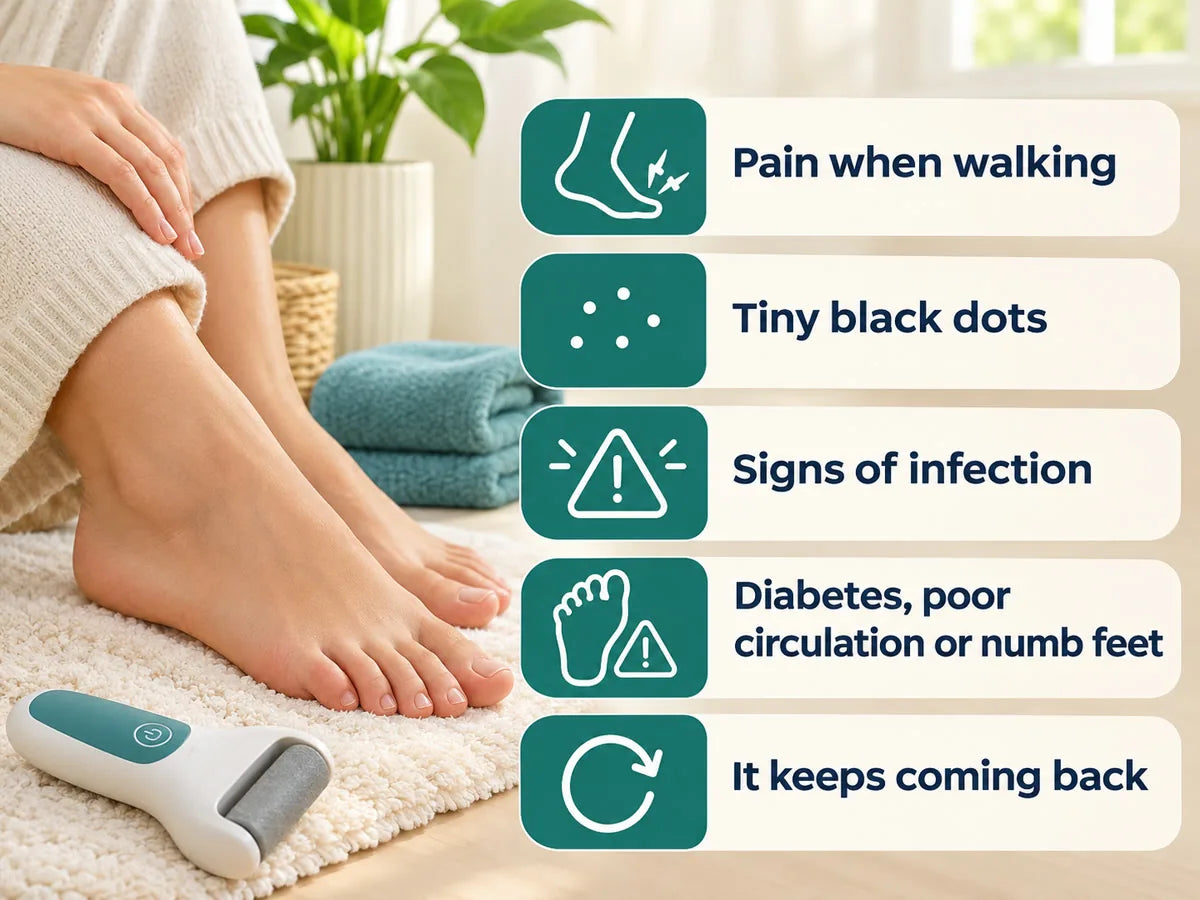
- Pain when walking: a callus that hurts with every step needs a closer look.
- Tiny black dots: these can mean a plantar wart, which is a contagious skin infection, so do not file it.
- Signs of infection: redness, warmth, bleeding, pus or blisters around the spot.
- Diabetes, poor circulation or numb feet: get a doctor's advice before any home care, and keep up regular foot exams.
- It keeps coming back: a podiatrist can safely pare thick skin in the office and check for a bunion or another pressure problem.
The best callus remover for big toe calluses is one you can control: a small head, light pressure and only a few seconds per spot. Pair it with roomier shoes and padding, and stop for pain or black dots. Compare disc and roller options in our foot care devices collection, with free US shipping on every order. Every foot file Decor Your Life sells comes with a 12-month limited warranty.