

Foot callus treatment at home is easy to rush when rough heels snag your socks or a callus under the ball of your foot feels sore. It is tempting to file until the skin feels soft, but filing too hard can leave skin raw and tender. A gentler, steadier approach usually gives a smoother result. This guide covers the routine, how to choose a tool, and when to skip home care.
How to get rid of calluses on feet at home step by step
To get rid of calluses on feet at home, soak them in warm water for 5–10 minutes, file the hard skin gently, rinse, and moisturize. A callus is skin that thickens to protect itself from repeated friction and pressure. Filing only removes the top layers, so the best way to get rid of foot calluses also includes better-fitting shoes and cushions that take pressure off the spot.
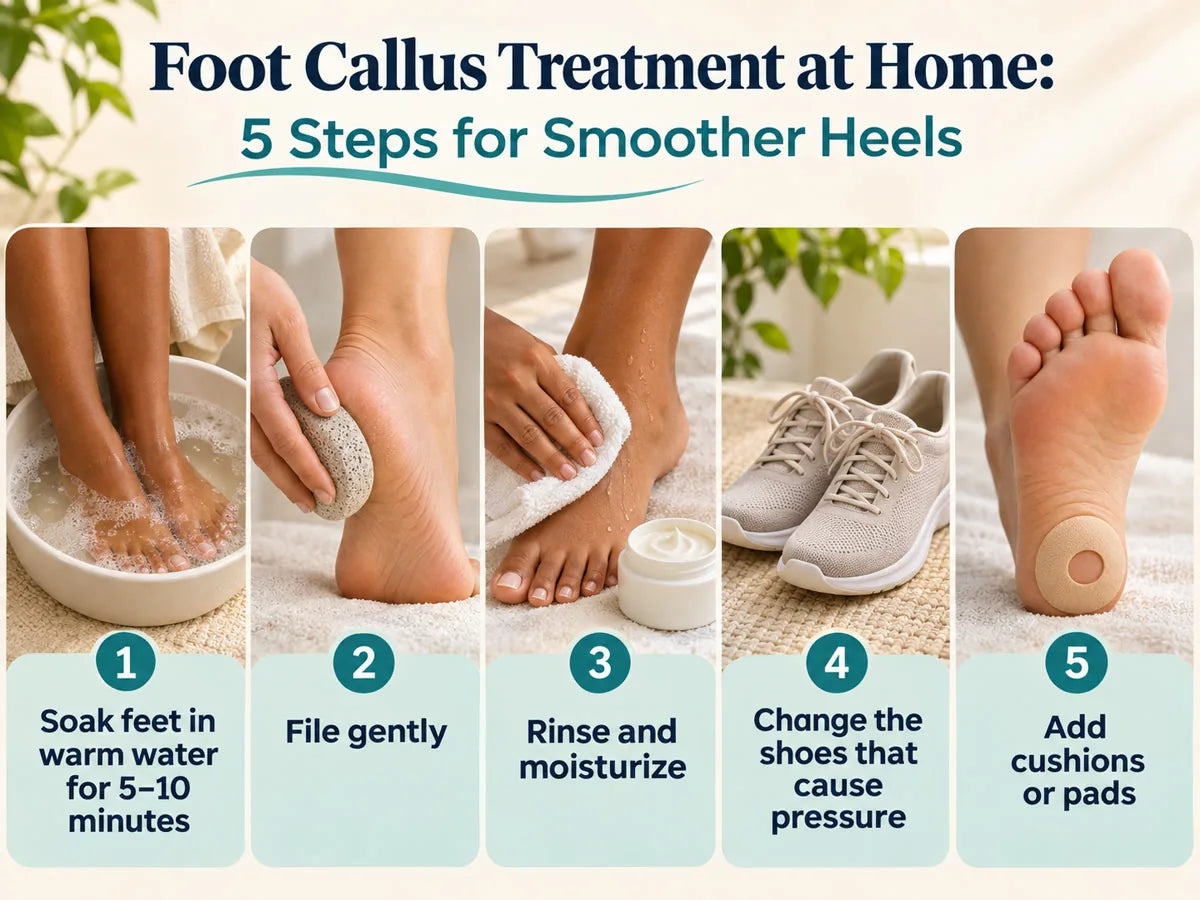
Expect upkeep rather than a one-time fix, because the skin thickens again while the rubbing continues.
Note: If you have diabetes or poor circulation, ask your doctor or a podiatrist (a foot doctor) before any callus care, because small injuries on the feet can go unnoticed and take longer to recover.
Follow these five steps in order. The first three steps smooth the skin you have now, and the last two slow down how fast the callus builds back.
Step 1: Soak your feet in warm water
Soak your feet in warm, not hot, water for 5–10 minutes to soften the hard skin. Pat them dry afterward. If you use an electric file, dry your feet completely, because many heads are designed for dry skin only.
Note: Skip the foot soak for calluses if you have diabetes, because soaking is not advised for people with diabetes and reduced feeling can hide a burn from hot water. Ask your doctor about safe foot care instead.
Step 2: File the callus gently
File with light pressure and short passes, and stop while a thin layer of hard skin is still there. With a pumice stone or manual file, use gentle strokes and check the skin often.
With an electric file, start on the low speed and keep the head moving. Keep to the shorter time: the Rechargeable Electric Foot File's directions say 2–3 seconds per spot, while another manufacturer says no more than 3–4 seconds on the same area. Use it on dry skin unless your model's manual allows wet use. Stop at once if the skin feels sore or looks red.
Weekly filing is a reasonable upkeep rhythm, because one manufacturer suggests it for maintenance and notes that filing too often can irritate skin.
Note: Never cut or dig out a callus with a blade or foot razor, and do not let a salon use one during a callus treatment pedicure, because cuts can lead to injury and infection.
Step 3: Rinse and moisturize
Brush or rinse off the skin dust, then pat your feet dry. Apply a moisturizer for dry feet. For rough or cracked heels, use a 10–25% urea cream within 5 minutes of washing.
Step 4: Change the shoes that cause the pressure
Look at where the callus sits and which shoes press or rub there. Tight, loose or stiff shoes keep creating friction and pressure on the same spot. Filing alone does not change that cause, so swap to pairs that fit well and do not rub.
Step 5: Add cushions or pads
Place callus cushions, moleskin or donut-shaped pads over the spot to protect it from rubbing in your shoes. They spread pressure away from the callus while you go about your day.
Note: Plain cushions are not the same as medicated callus plasters. If you have diabetes or poor circulation, avoid acid plasters unless a clinician advises them.
Pumice stone, gel or electric foot file: which callus treatment fits you?
Choose by comfort, skin risk and upkeep, because no independent comparison shows that powered files give better results than manual filing. The main differences are:

| Method | Best for | Main limit |
|---|---|---|
| Pumice stone or manual file | Mild rough heels after a soak | Easy to over-file by hand |
| Callus gels, creams and acid products | Softening thick, dry skin | Acid can irritate healthy skin |
| Electric foot file | Regular upkeep on dry, rough heels | Needs charging and replacement rollers or discs |
Pumice stone or manual foot file
A pumice stone is a light, rough stone, and a manual foot file is a handheld rasp with a rough surface. Both sand away hard skin as you rub them over the callus. They work best on skin softened by a 5–10 minute warm soak, so each stroke removes thin layers instead of dragging on dry skin.
- Best for: occasional upkeep on mildly rough heels.
- Pros: simple, no battery or charging, easy to control.
- Cons: you set the pressure yourself, so it is easy to over-file one spot.
Callus gels, plasters and acid products
Callus creams, gels and plasters soften hard skin so it is easier to smooth away. They fall into two groups:
- Urea creams: moisturizers that soften thick, dry skin. For heels, 10–25% urea is the range dermatologists suggest.
- Salicylic acid products: medicated pads, plasters and liquids. Some patches contain 40% salicylic acid, and one liquid callus remover lists 17%.
Acid products can irritate the healthy skin around the callus, so follow the label closely and keep the product on the hard skin only.
Note: Skip salicylic acid products if you have diabetes or poor circulation, unless a clinician advises them, because chemical removers can burn skin that recovers slowly.
Electric foot file or callus remover
An electric foot file is a battery-powered handle with a spinning rough roller or disc that sands off dry, hard skin. You hold it lightly against the heel and let the motor do the rubbing, so you skip the hand scrubbing. Pressing hard can stall the roller. Three examples show how designs differ:
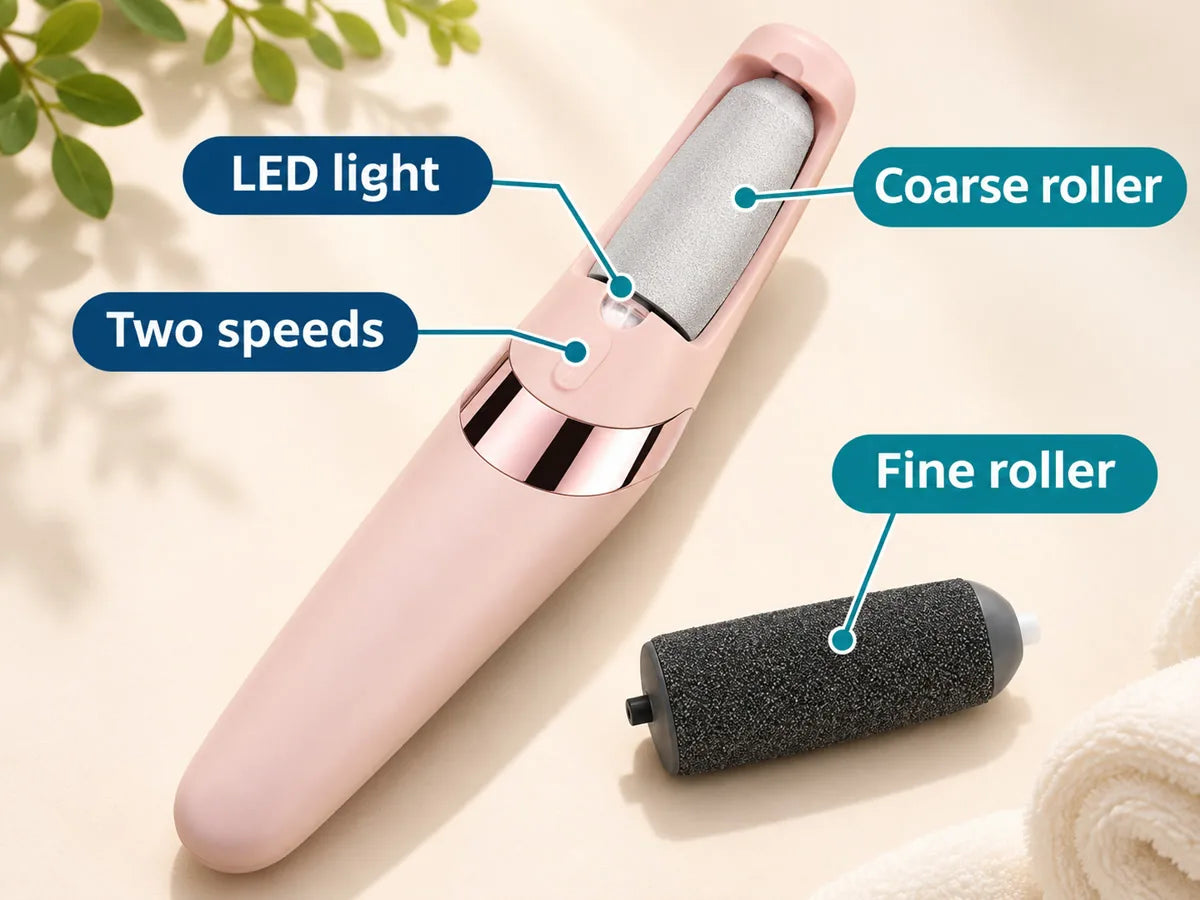
- Rechargeable Electric Foot File with Fine and Coarse Rollers: a coarse roller for thick skin, a fine roller for weekly upkeep, two speeds and an LED light. It takes about 2.5 hours to charge for about 40 minutes of use.
- Electric Callus Remover for Feet with Spare Rollers: one speed and a wide roller that covers the heel in fewer strokes. Spare rollers come in the box, and it takes about 2 hours to charge for around 60 minutes of use.
- Cordless 2-in-1 Foot Callus Remover and Nail Buffer: coarse and fine sanding discs, forward and reverse rotation, a digital display and sleeves for buffing nails. It takes about 2 hours to charge for around 60 minutes of use.
The main gain is convenience, not a proven better result than a pumice stone. Choose the two-speed file if you want a gentle start, the wide-roller model if you mostly work on heels and the balls of your feet, or the 2-in-1 if you also want to buff nails. All three are electric foot files from Decor Your Life.
What you need before you start foot callus treatment
Gather these before you begin:
- Basin and warm water: for the soak that softens hard skin.
- Towel: to dry your feet fully, which matters for dry-use electric files.
- Filing tool: a pumice stone, manual file or electric foot file.
- Moisturizer for dry feet: a urea cream works well on heels.
- Callus pads or cushions: to protect the spot from rubbing afterward.
- Well-fitting shoes: the pair you will wear once the skin is smooth.
Note: Check your feet first and skip filing on any cut, crack, blister or sore patch, because filing broken skin can lead to bleeding and infection.
Will foot calluses come back after treatment?
Foot calluses usually come back after treatment if the friction or pressure that built them keeps going. Calluses are your skin's protection against rubbing, so they fade only when that rubbing eases. This is why heels often feel rough again soon after a filing session.
Think of callus treatment at home as an upkeep routine:
- Keep filing light: one manufacturer suggests weekly filing for maintenance.
- Leave some thickness: removing too much skin can cause bleeding and infection.
- Fix the cause: better shoes and cushions do more for the long run than harder filing.
A powered file changes the tool, not the cause, and no independent comparison shows it keeps calluses away longer than manual filing.
Common foot callus treatment mistakes and how to fix them
These are the most common mistakes, each with its fix:
- Pressing hard: a heavy hand can stall an electric roller and leave skin sore. Use a light touch and let the tool work.
- Over-filing: taking off too much skin can cause bleeding and infection. Stop while a thin layer remains.
- Cutting the skin: blades and razors can cause cuts and infection. File gently or see a podiatrist instead.
- Filing sore skin: filing irritated or broken skin makes it worse. Wait until the skin has recovered.
- Skipping moisturizer: dry skin turns rough again faster. Moisturize after every session.
- Ignoring shoes: the callus returns if the rubbing continues. Change shoes and add cushions.
- Wet use on dry-only heads: some heads are made for dry skin only. Check your manual before using one in the shower.
- Using worn rollers: a worn rough surface files less well. Replace the roller or disc.
Is foot callus treatment at home safe, and who should skip it?
Foot callus treatment at home is not right for everyone. People with diabetes, nerve damage in the feet (neuropathy) or poor circulation should ask a doctor or podiatrist first. These conditions reduce feeling and slow recovery, so a small injury can go unnoticed, and a callus can break down into an open sore.
Use this checklist:
- Diabetes, neuropathy or poor circulation: do not soak your feet or self-file without your doctor's approval.
- Broken, sore or infected skin and warts: do not file these areas.
- Pregnancy, a pacemaker or a skin disease: some manuals ask you to check with a doctor first.
- When to see a clinician: see one for pain, bleeding, signs of infection, or a callus that does not improve.
- Children: keep electric foot files out of their reach, and keep one device per person for hygiene.
How to care for your foot file after callus treatment
Clean your foot file after every session so skin dust does not build up:
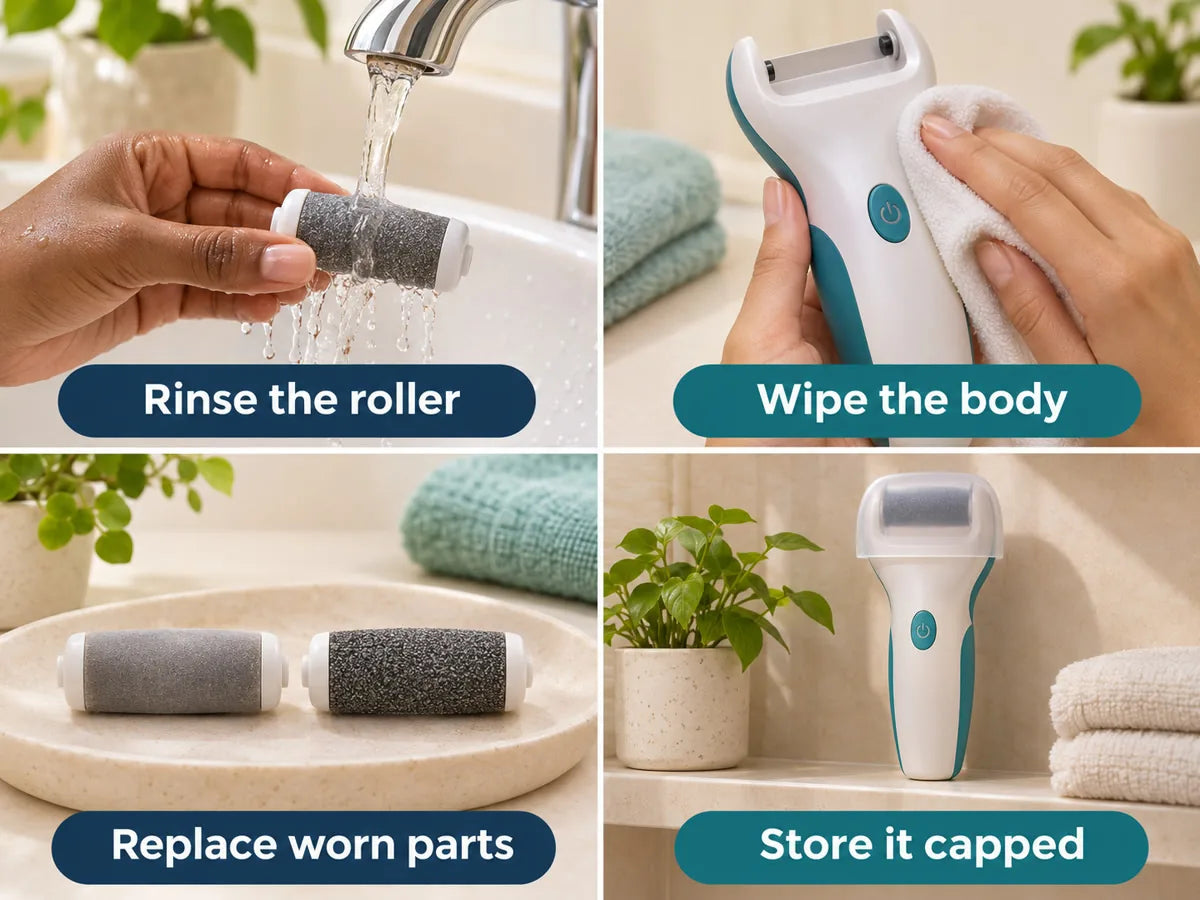
- Rinse the roller: pop off a detachable roller or disc, rinse it if your manual allows, and dry it before refitting.
- Wipe the body: keep it dry. The Electric Callus Remover's body is not waterproof, so rinse only its roller.
- Replace worn parts: one brand recommends a new roller every three months, but wear depends on use. Swap a disc when it feels smooth.
- Store it capped: fit the protective cap, if your model comes with one, to keep the roller clean.
When you charge it, use the source your manual names (5V USB for the Electric Callus Remover) and do not use it while it charges. For more device tips, see our beauty device guides.
[dyl-products: rechargeable-electric-foot-file, electric-callus-remover-for-feet, cordless-foot-callus-remover-nail-buffer]
Frequently asked questions
How do I know if I have a corn or a callus?
A callus is a flat, widespread patch of thick skin, usually on the sole. A corn is smaller, thicker and deeper, and it usually forms on the toes or the top of the foot where bone presses on skin. If you are unsure, or the spot hurts, have a clinician check it.
What's the difference between a wart and a callus?
A wart is a skin growth, while a callus is skin that has thickened from friction. Warts can look similar on the sole, so don't file a spot you are unsure about. Ask a dermatologist or podiatrist to check it first.
Is surgery ever needed for corns and calluses?
For most people, no. Reducing pressure and filing gently are usually enough. If a corn or callus stays painful or keeps returning, see a podiatrist, who can safely pare thick skin in the office. Never cut it yourself at home.
The best foot callus treatment is a gentle, regular routine: soak for 5–10 minutes, file lightly, moisturize, and take the pressure off the spot. If you want a powered option, compare our foot care devices. Every order ships free in the US, with 30-day returns on unused items and a 12-month limited warranty.