

If you want to get rid of corns on feet, you probably have one small, hard spot that hurts every time you put on shoes. You may be tempted to scrape it hard or cut it, but those shortcuts can make the area sore or infected. Most corns improve slowly once the pressure behind them stops. This guide gives you a safe foot corn treatment you can do at home, compares pads and acid corn removers, and explains when a podiatrist should take over. If you are not sure the spot is a corn at all, start with how corns and calluses differ.
How to get rid of corns on feet step by step
To get rid of corns on feet safely, stop the pressure that formed the corn. Then soften and gently file the thick skin around it, moisturize every day and pad the spot. A corn is a small, thick patch of skin with a hard central core, and it forms where a shoe or a bone keeps pressing or rubbing.
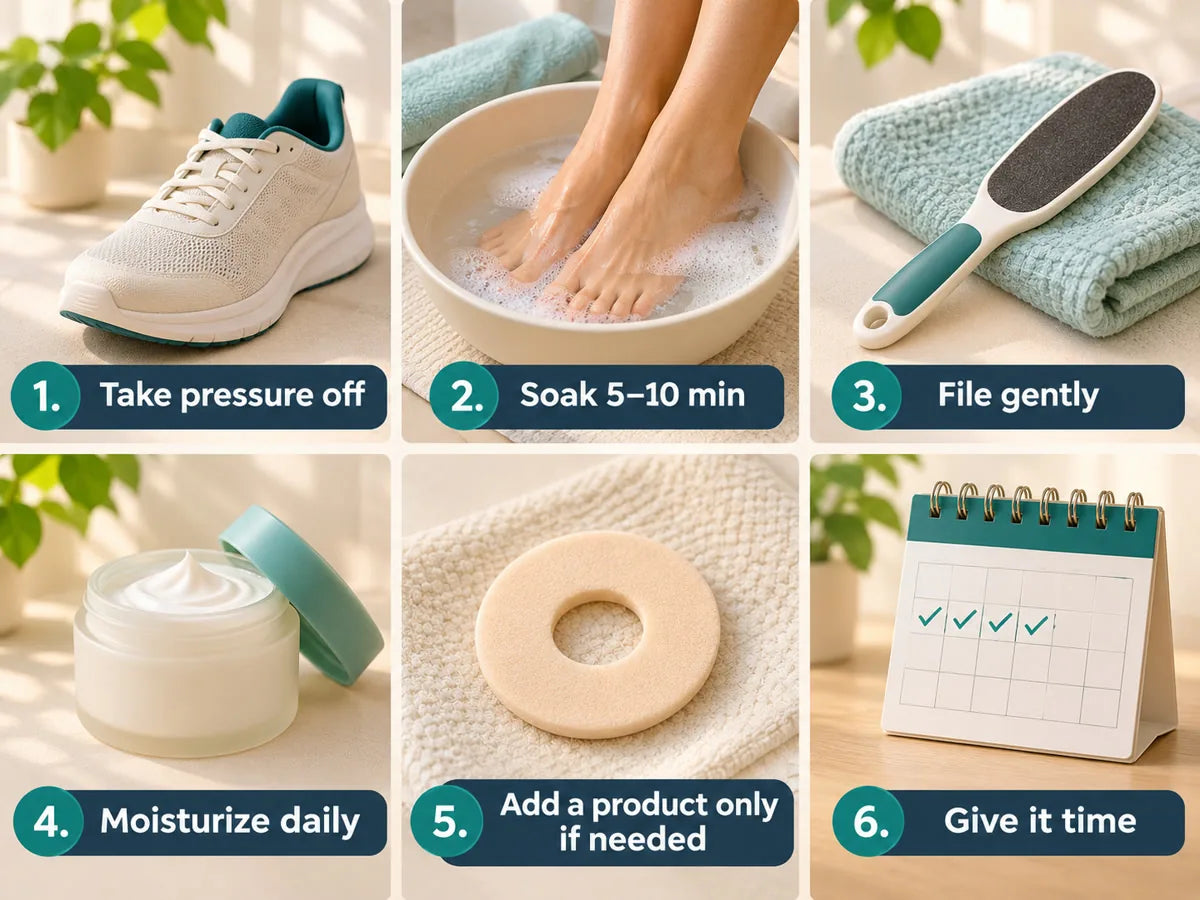
Never cut or shave a corn. If you have diabetes or poor circulation, talk to your doctor before you start any home care. For corn types and soft corns between the toes, see our separate guides on foot corns and corns between toes.
Step 1: Take pressure off the corn
Switch to shoes with a roomy toe box, a low heel and a soft upper. Corns form where pressure or rubbing keeps hitting the same spot, so less pressure gives the skin a chance to settle.
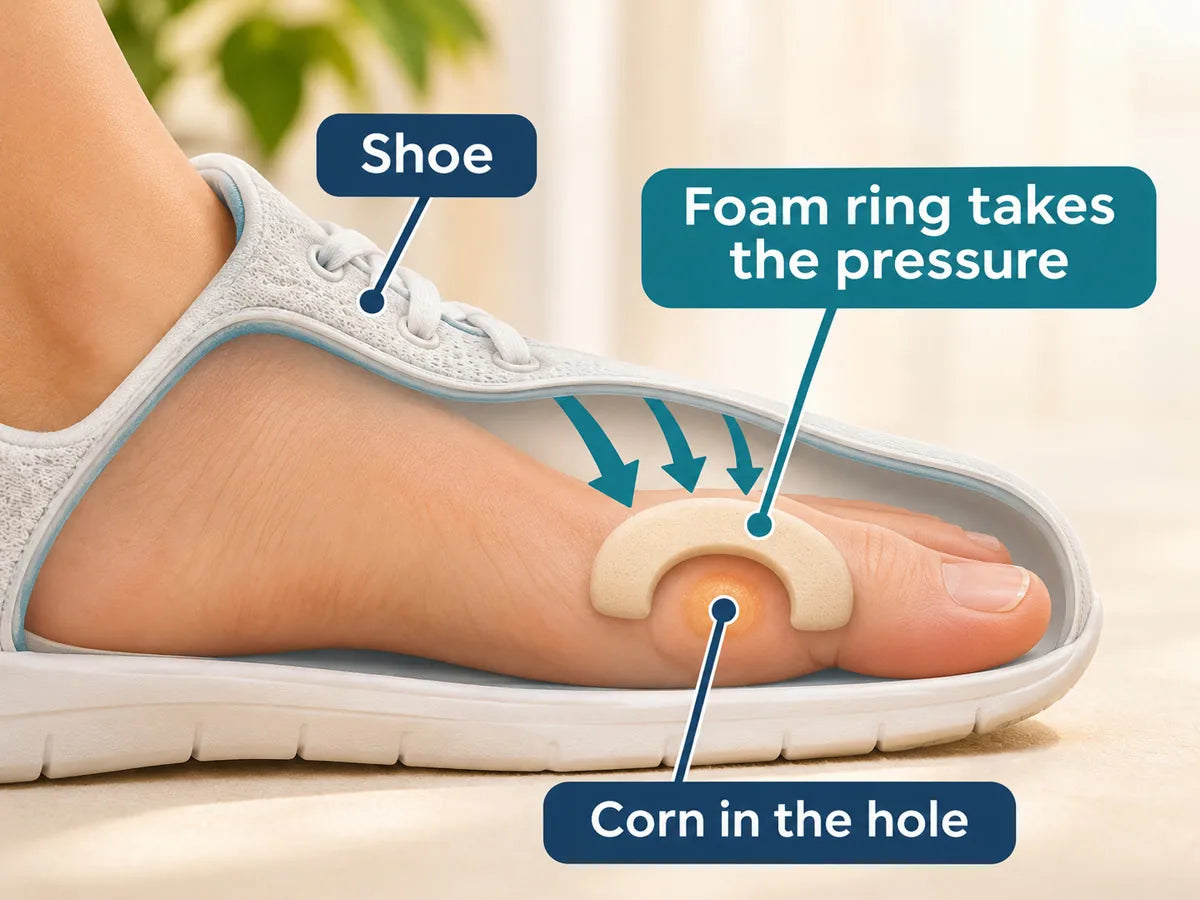
Next, place a non-medicated donut pad around the corn. The hole sits over the corn, so the foam ring takes the pressure from your shoe instead of the sore spot.
Tip: Run your fingers inside each shoe to find seams that press on the spot. Wear cushioned socks, and trim your toenails straight across, because long nails push your toes into the front of the shoe.
Step 2: Soak your foot in warm water
Soak your foot in warm water, not hot, for about 5–10 minutes. The soak softens the thick skin so it files away gently instead of tearing. Afterward, pat the foot completely dry, including between the toes.
Note: Skip the soak and ask your doctor first if you have diabetes, numbness or nerve damage in your feet. Soaking is not advised for diabetic feet, and you may not feel water that is too hot.
Step 3: Gently file the thick skin around the corn
While the skin is still soft from soaking, rub a wet pumice stone or foot file over the thick skin around the corn using light strokes. A few gentle passes are enough for one session.
Stop well before the skin feels sore or looks pink. Removing too much skin can cause bleeding and infection, so a few light passes beat a long session.
Note: Never use a razor, blade or scissors on a corn at home. Leave paring to a podiatrist.
Step 4: Moisturize every day
Apply a foot moisturizer every day, ideally right after soaking or washing, so the thick skin stays soft between filing sessions. Look for creams that contain urea or ammonium lactate, which gradually soften hard skin; salicylic-acid creams do the same, but skip them if the safety list below applies to you. Results build slowly with daily use rather than appearing after one application.
Step 5: Add a corn product only if you need one
Add a corn product only if roomy shoes, padding and daily moisturizer have not eased the corn. Pressure relief deals with the cause, while a product mainly thins the thick skin.
You can choose a non-medicated cushion pad or a salicylic-acid plaster or liquid, and each one comes with its own directions. The next section compares the options, and the one after it explains who should skip acid products, so read both before you buy an acid product.
Step 6: Give it time and check the spot
Give the corn time, because it fades gradually as long as the pressure stays off. No product or routine clears it overnight. Signs that the routine is working include less pain in shoes and softer, flatter skin over the spot.
If you use a salicylic-acid product, stop when you reach the label limit of up to 14 days. See a podiatrist if the corn still hurts or looks the same after careful home care.
Which corn remover for feet is right: pads, plasters or liquids?
Non-medicated pads take pressure off a corn, while salicylic-acid products soften and thin the thick skin itself. The right corn remover for feet therefore depends on where the corn is and how healthy your skin is. The three main types are below.
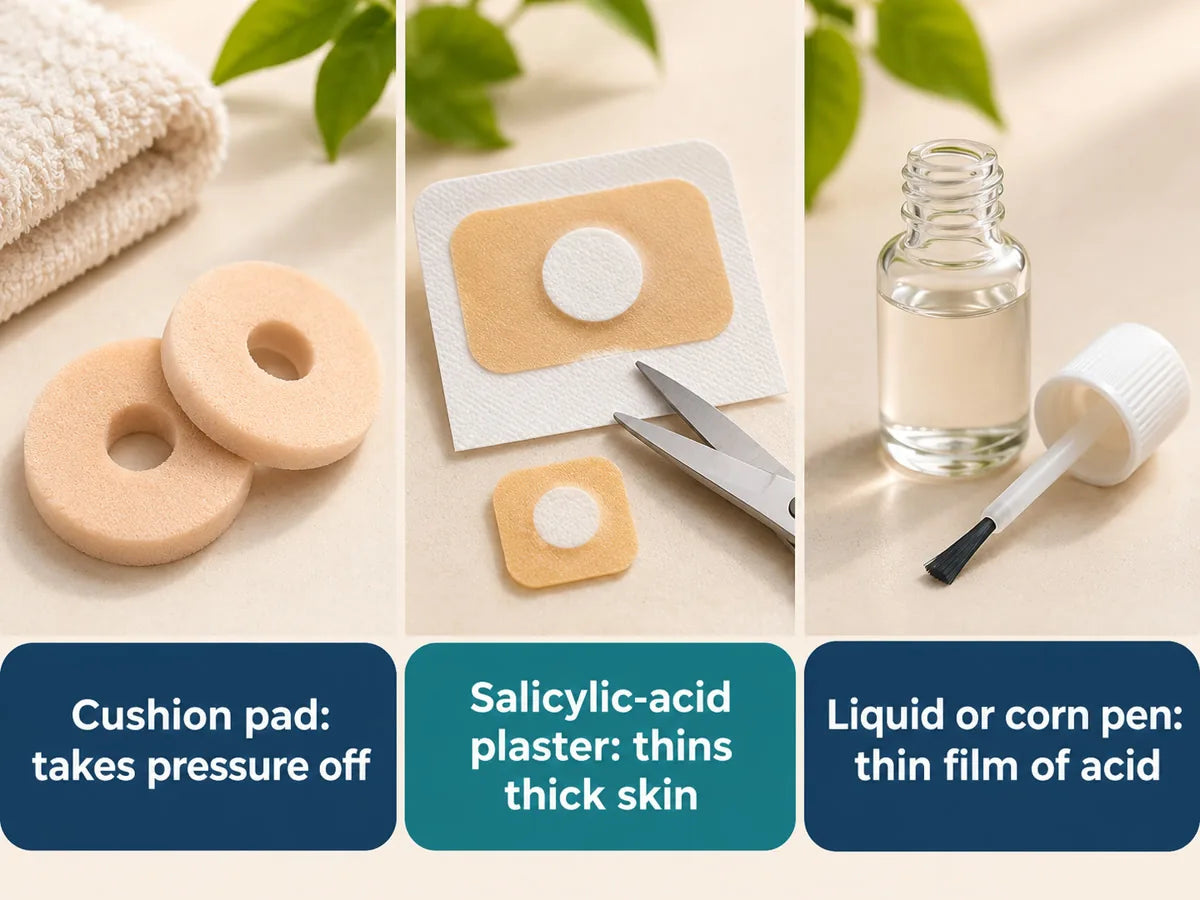
Non-medicated cushion pads
Non-medicated cushion pads are foam, felt, gel or silicone pads, often donut-shaped, that sit around a corn. Your shoe presses on the pad instead of the sore spot, which means less rubbing with every step. Follow the wear time printed on the pack.
- Best for: Most people, including those with corns on the toes or under the foot.
- Pros: They contain no acid and cut down rubbing from shoes.
- Cons: Adhesion varies, so some pads slip, and they do not thin thick skin.
Salicylic-acid plasters
Salicylic-acid plasters are medicated pads that hold salicylic acid against the corn. Salicylic acid is an ingredient that loosens and thins thick skin. US labels list 12–40% salicylic acid for plasters.
To use one, apply it to clean, dry skin and cut it to fit the corn so the acid stays off the surrounding skin. Replace it every 48 hours as needed, for up to 14 days. A 5-minute warm-water soak beforehand is optional, and you can protect nearby skin with petroleum jelly.
- Best for: Small, hard corns on unbroken skin in people without diabetes or circulation problems.
- Results: Expect gradual progress rather than a quick fix: when podiatrists applied 40% plasters, 34% of corns had cleared at 3 months, and home results will vary.
- Cons: The acid can irritate or burn the skin around the corn.
Salicylic-acid liquids and corn pens
A corn remover liquid or corn pen is a paint-on format that leaves a thin, clear film of salicylic acid on the corn as it dries. Labels list 12–17.6% salicylic acid for this format. The usual directions are one drop or a small amount, once or twice daily, for up to 14 days.
Directions for liquids differ from directions for plasters. Read the Drug Facts panel, which is the standard label box with the ingredients, directions and warnings.
- Best for: Small, hard corns on unbroken skin in people without diabetes or circulation problems.
- Cons: It is easy to apply too much or let the liquid run onto surrounding skin.
Note: Liquid removers are flammable and give off vapors. Keep the cap tight and keep the bottle away from heat and flame. If any liquid gets in your eyes, flush them with water for 15 minutes. Stop using the product if the skin becomes irritated.
Note: Corn remover creams and gels are not covered by the FDA's corn-remover rules, which apply only to plasters and liquids, and their ingredients vary. Check the ingredient list and strength before you buy one.
Who should skip acid products when trying to get rid of corns on feet?
Skip salicylic-acid corn removers and ask a doctor first if any of these apply to you:
- Diabetes: Corn remover labels warn against use if you have diabetes, because the acid can burn skin on a foot that is already at higher risk.
- Poor circulation: Labels give the same warning, because skin damage on the feet is riskier when blood flow is reduced.
- Nerve damage or numbness: Avoid corn plasters and liquid removers if you have nerve damage or numbness in your feet.
- Fragile or easily infected skin: If you are older, have a weak immune system or have thin skin, see a podiatrist instead of treating the corn yourself.
- Irritated, red, broken or infected skin: Do not apply acid to skin that is already damaged.
- A spot between the toes or an unclear spot: Soft corns need cushioning and toe spacers instead of acid, and a spot that might be a wart needs a professional check.
If discomfort continues while you use an acid product, stop and ask a doctor. Non-medicated pads are still fine for most people unless a doctor advises otherwise. If you have diabetes, also check with your doctor before filing at home.
Can an electric foot file get rid of corns on feet?
No, an electric foot file cannot get rid of corns on feet. These files are made to smooth calluses and rough, hard skin on the heels and soles, not to remove a corn's hard core. If a broader callus surrounds the corn, keep the file on that callus and off the corn itself.
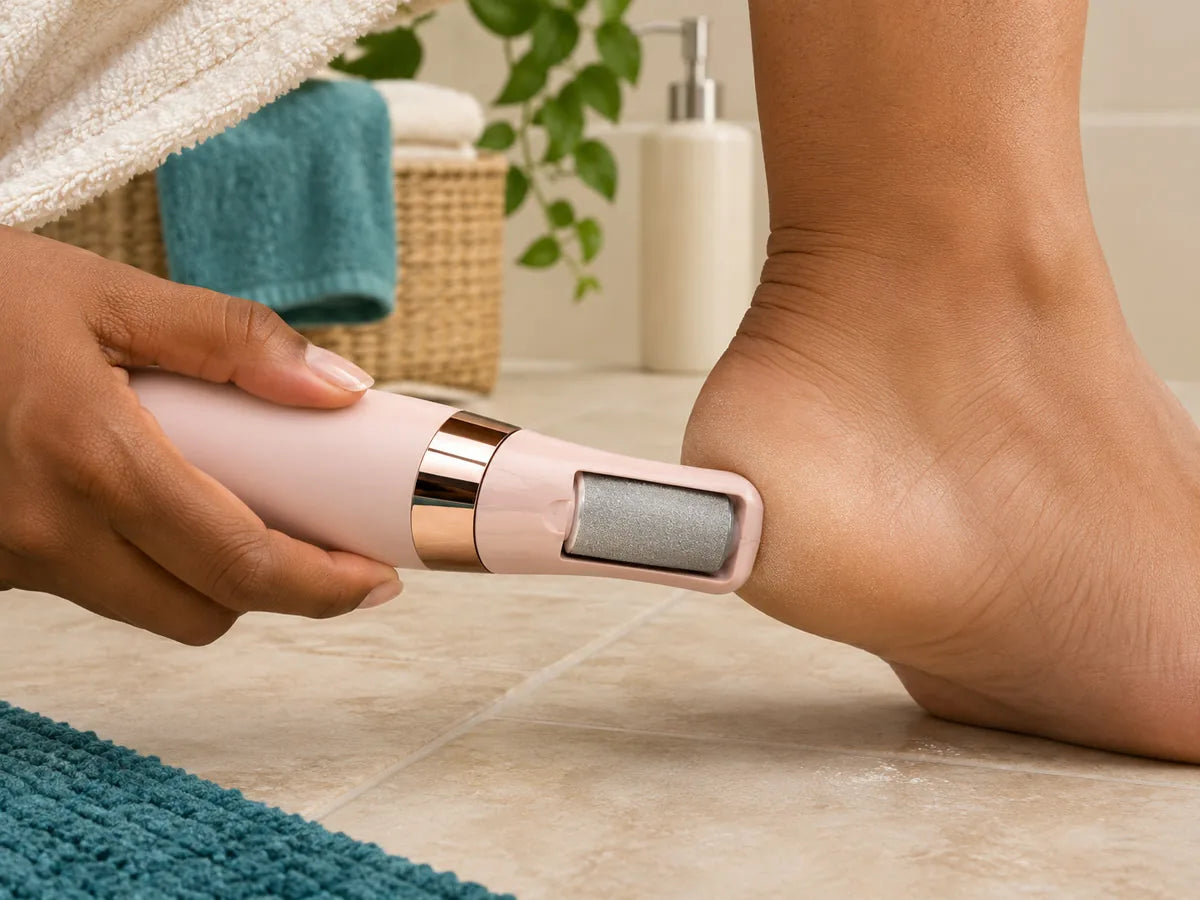
Each of these files suits a different routine:
- Rechargeable Electric Foot File with Fine and Coarse Rollers: It has two speeds and an LED light that helps you see the area you are working on, and it charges in about 2.5 hours for about 40 minutes of use.
- Electric Callus Remover for Feet with Spare Rollers: It uses one wide roller for heels and the balls of the feet, and it charges in about 2 hours for around 60 minutes of use.
- Cordless 2-in-1 Foot Callus Remover and Nail Buffer: It comes with coarse and fine discs and adds sleeves for buffing nails, and its 1,200 mAh battery takes about 2 hours to charge for around 60 minutes of use.
Use any of these files on clean, fully dry skin (unlike a wet pumice stone) with light pressure and short passes. The first file's directions say to spend 2–3 seconds per spot, and pressing hard can stall the roller. Decor Your Life sells these files for heels and soles, so keep them off the corn itself.
Note: Never use an electric file on broken skin, warts or wounds. Keep the device body dry, and ask your doctor first if you have diabetes or poor circulation.
Common mistakes when you try to get rid of corns on feet
These habits can make a corn last longer or hurt more:
- Cutting or shaving the corn: This can cause bleeding and infection, so leave paring to a podiatrist.
- Pressing hard with a file: Heavy pressure removes too much skin, so use light strokes and stop before the skin feels sore.
- Putting acid on surrounding skin: Cut plasters to fit the corn and protect nearby skin with petroleum jelly.
- Wearing the same tight shoes: The pressure that formed the corn is still there, so switch to shoes with a roomy toe box.
- Expecting overnight results: Corns fade gradually, so stay within the 14-day limit on any acid label.
- Skipping moisturizer: Daily moisturizer keeps thick skin soft between filing sessions, so apply it every day.
Why is my foot corn not going away or coming back?
A foot corn usually lingers or comes back because the pressure that formed it has not stopped. Check for these common causes:
- Shoes still press on the spot: A narrow toe box or an inside seam can keep rubbing the same area.
- The pad slips or is the wrong size: The hole in the pad should sit over the corn, with the ring resting on the skin around it.
- The shape of your foot causes the pressure: Hammertoes and bunions push skin against shoes, and a podiatrist can suggest toe spacers, pads or shoe inserts.
- The spot is not a corn: A plantar wart can look similar to a corn, but a wart needs different care.
- The 14-day acid course did not work: Stop an acid product at 14 days, or sooner if the skin turns red or irritated, and see a podiatrist rather than repeating it.
If the corn keeps returning even after you fix these causes, a podiatrist can find what is behind it.
When to see a podiatrist for a corn on your foot
See a podiatrist, a doctor who specializes in feet, about a corn on your foot if any of these apply:
- Severe pain: The corn is very painful or makes daily walking hard.
- Uncertainty: You are not sure whether the spot is a corn, a wart or something else.
- Signs of a problem: The corn bleeds, has pus or discharge, or keeps getting worse.
- Higher-risk health conditions: You have diabetes, poor circulation or nerve damage in your feet. People with diabetes should also have a foot exam every year.
- No progress: The corn has not improved after careful home care or a full course of an acid product.
A podiatrist can confirm what the spot is, safely pare the thick skin down with a blade in the office, and suggest padding or shoe inserts that keep pressure off the area.
[dyl-products: rechargeable-electric-foot-file, electric-callus-remover-for-feet, cordless-foot-callus-remover-nail-buffer]
Frequently asked questions
Can you get rid of a corn overnight?
You cannot get rid of a corn overnight, whatever a product's packaging suggests. Corns fade gradually once the pressure behind them stops. Using an acid product longer or more often than the label says will not speed things up and can irritate your skin.
Do natural remedies like vinegar or lemon work on corns?
No, vinegar and lemon are not among the corn-care steps that dermatology and podiatry sources recommend. The safest home approach is a warm soak, gentle filing, padding, daily moisturizer and better-fitting shoes.
How can you tell a corn from a wart?
You cannot always tell a corn from a wart at home, because plantar warts can look very similar to corns. Have a podiatrist check any spot that is unclear, painful or bleeding, and do not put corn acid on a suspected wart. Our guide to foot corns explains the differences in more detail.
The safest way to get rid of corns on feet is gentle and steady: take the pressure off, soak, file only the skin around the corn, moisturize, pad the spot and give it time. See a podiatrist whenever you are unsure. To smooth the hard skin around a corn, browse our foot care devices, with free US shipping on every order.