

Soft corn toes often start as a sore, whitish spot between your toes that padding, soaking or a quick scrub hasn't fixed. It keeps hurting in your shoes and seems to come back no matter what you try. This corn lives in a damp, tight space, so the usual corn advice doesn't fit it well. Here is how to ease it safely and when it's time to get help.
How do you ease a soft corn between the toes at home?
You ease a soft corn between the toes by cutting down the rubbing and dampness that keep it going, not by removing the corn itself. Corns often improve once pressure and friction drop, but they tend to come back if the cause stays.
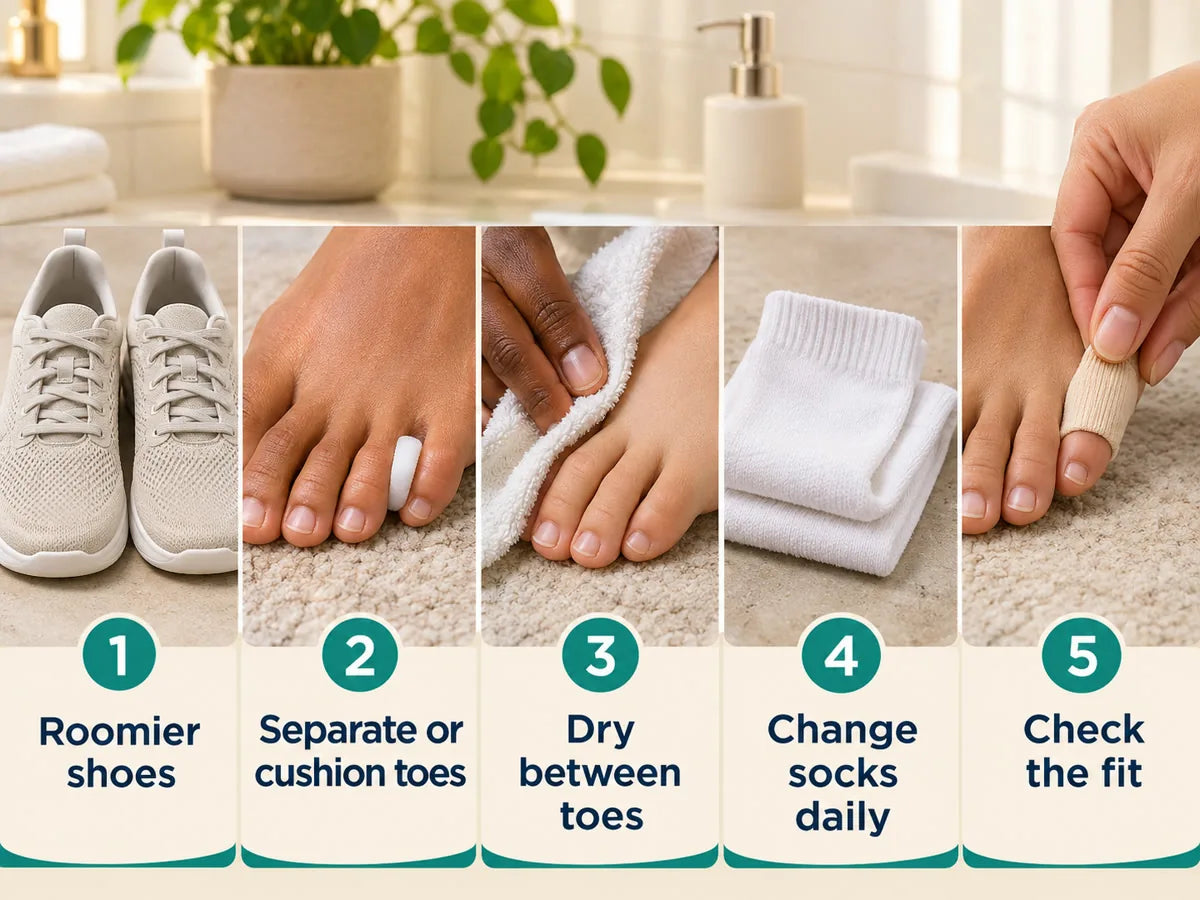
Follow these steps for corn on toe treatment at home:
- Switch to roomier shoes. Choose pairs with a wide, deep toe box, so your toes are not squeezed against each other.
- Separate or cushion the toes. Place a nonmedicated foam or silicone toe spacer, a toe sleeve or a tuft of lamb's wool (a soft natural fiber) between the toes to reduce contact.
- Dry between your toes. Pat the space dry after every wash, because constant moisture keeps the corn soft and soggy.
- Change your socks daily. Put on clean, dry socks each day to keep sweat from sitting between your toes.
- Check the fit around your pinky toe. Make sure the spacer or sleeve is not too tight and doesn't slip, roll or bunch, since padding that shifts adds new rubbing.
Note: A spacer or sleeve cushions the area and cuts down the rubbing, but it will not make the corn disappear for good if your shoes or toe position stay the same.
What causes a soft corn between the toes or on the pinky toe?
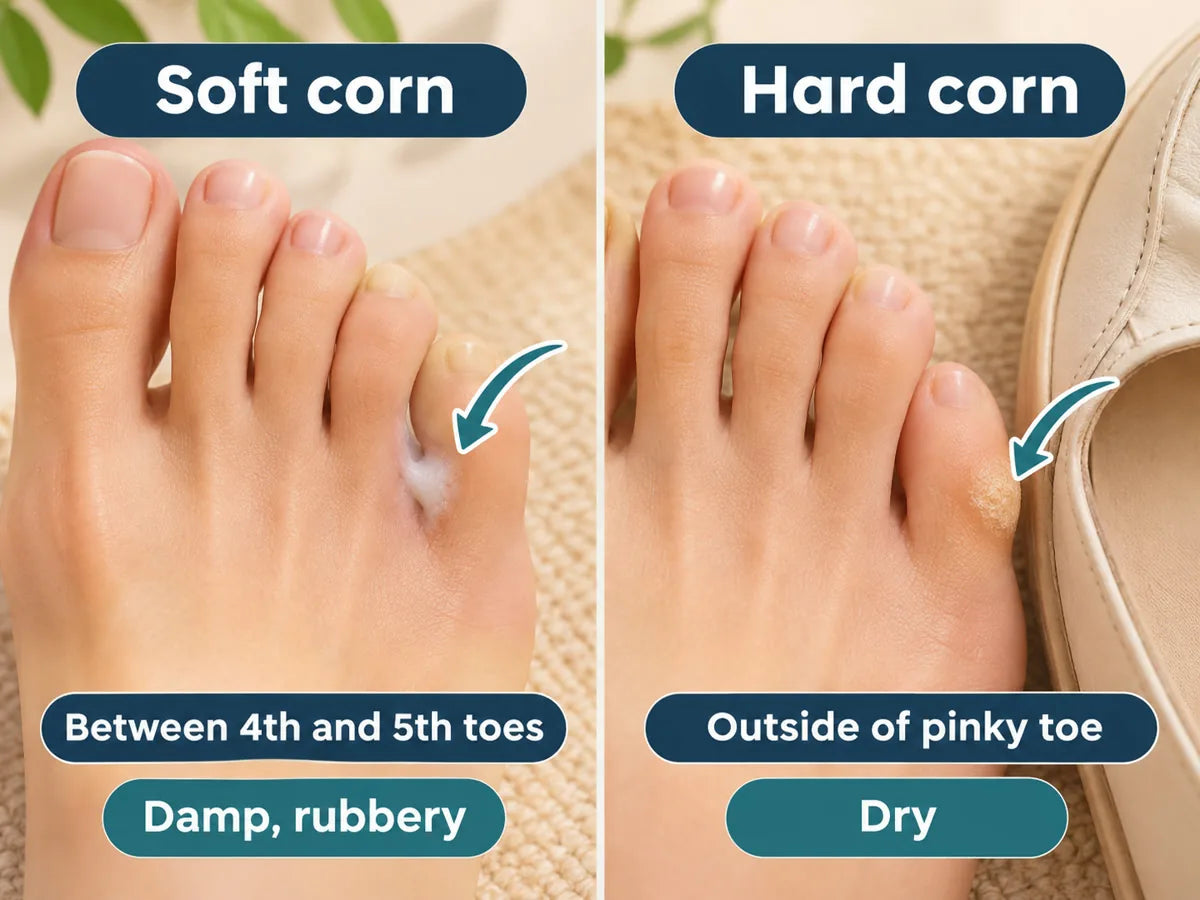
A soft corn forms when two toes press and rub against each other while the skin between them stays damp. Its medical name is heloma molle: a whitish or gray, rubbery and tender patch of thickened skin, most often between the fourth and fifth toes.
Common triggers include:
- Toe-to-toe friction: the bony parts of neighboring toes rub with every step.
- A tight toe box: narrow shoes push the toes together.
- Hammertoe or poor toe alignment: a toe that bends out of line presses harder on its neighbor.
- Moisture between toes: sweat keeps the skin soft, which is why this corn looks soggy rather than dry.
A pinky toe corn on the outside of the toe is usually a hard corn, the dry kind that forms where the toe presses on the shoe. Roomier shoes help both types, and a soft nonmedicated pad or sleeve over the outside corn can take pressure off it.
Can you use a pumice stone, electric file or acid on a soft corn between toes?
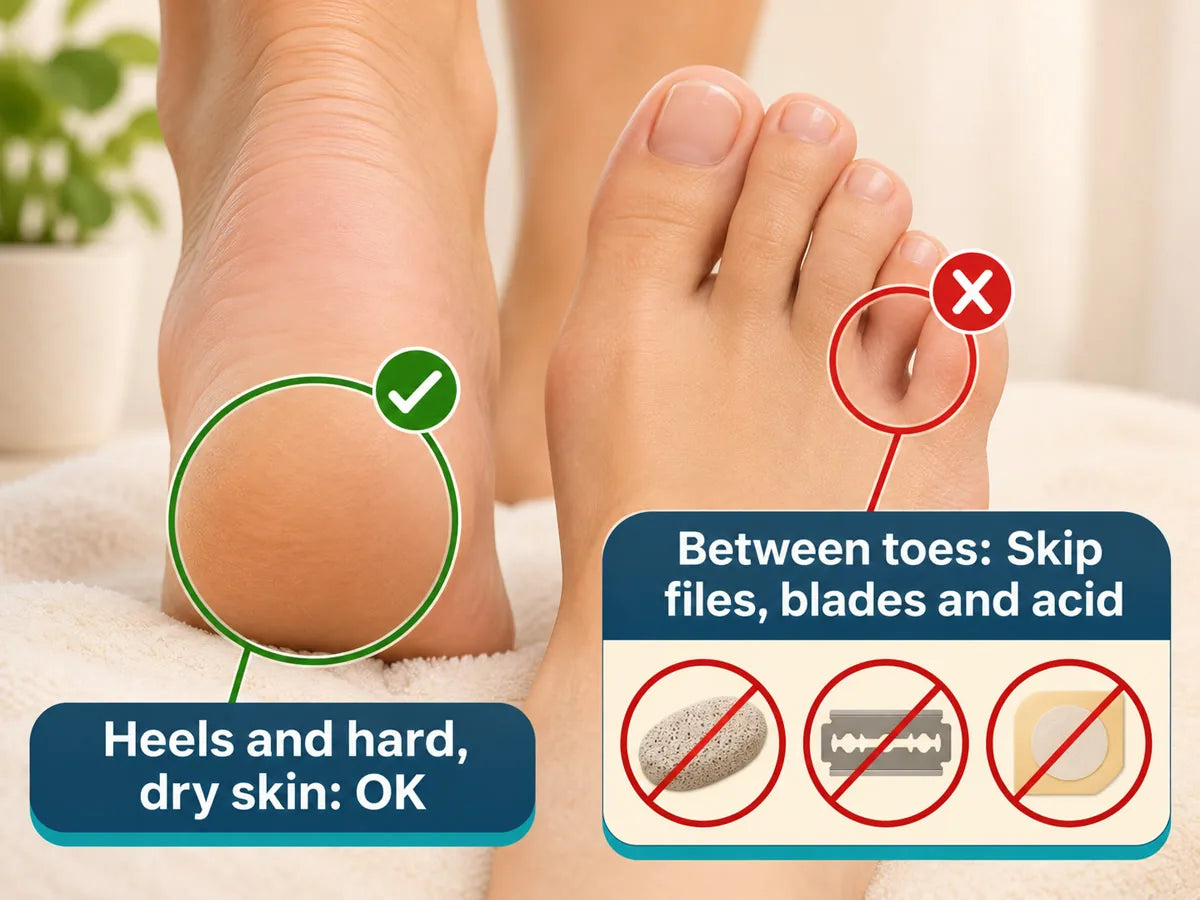
No, skip the pumice stone, electric file and acid product on a soft corn between the toes, because the space is tight and damp, and the healthy skin around the corn is easy to scrape or burn. A remedy for corns on toes that suits hard, dry skin on an open area like the heel doesn't carry over to this damp gap.
| Option | Why it's a poor fit between toes | Safer step |
|---|---|---|
| Pumice stone | Hard to reach; easy to rub off too much soft skin, which can bleed or get infected | Cushion and separate the toes |
| Electric foot file | Made for heels and hard, dry skin; hard to control in a narrow, damp gap | Keep it for heels and dry patches |
| Salicylic acid patch (12–40% plaster) | Can injure nearby healthy skin; not for diabetes, poor circulation or irritated, reddened skin | Use nonmedicated padding instead |
| Cutting or shaving | Risk of cuts and infection | Let a podiatrist trim it |
Note: Electric foot care tools such as the Rechargeable Electric Foot File with Fine and Coarse Rollers, the Electric Callus Remover for Feet with Spare Rollers and the Cordless 2-in-1 Foot Callus Remover and Nail Buffer are designed for rough heels and hard skin, not for the space between toes. Their safety warnings also say not to use them on broken skin and to ask your doctor first if you have diabetes or poor circulation.
When should you see a podiatrist about a soft corn on your toe?
See a podiatrist, a foot doctor who can check the spot and trim thickened skin safely, if any of these apply:
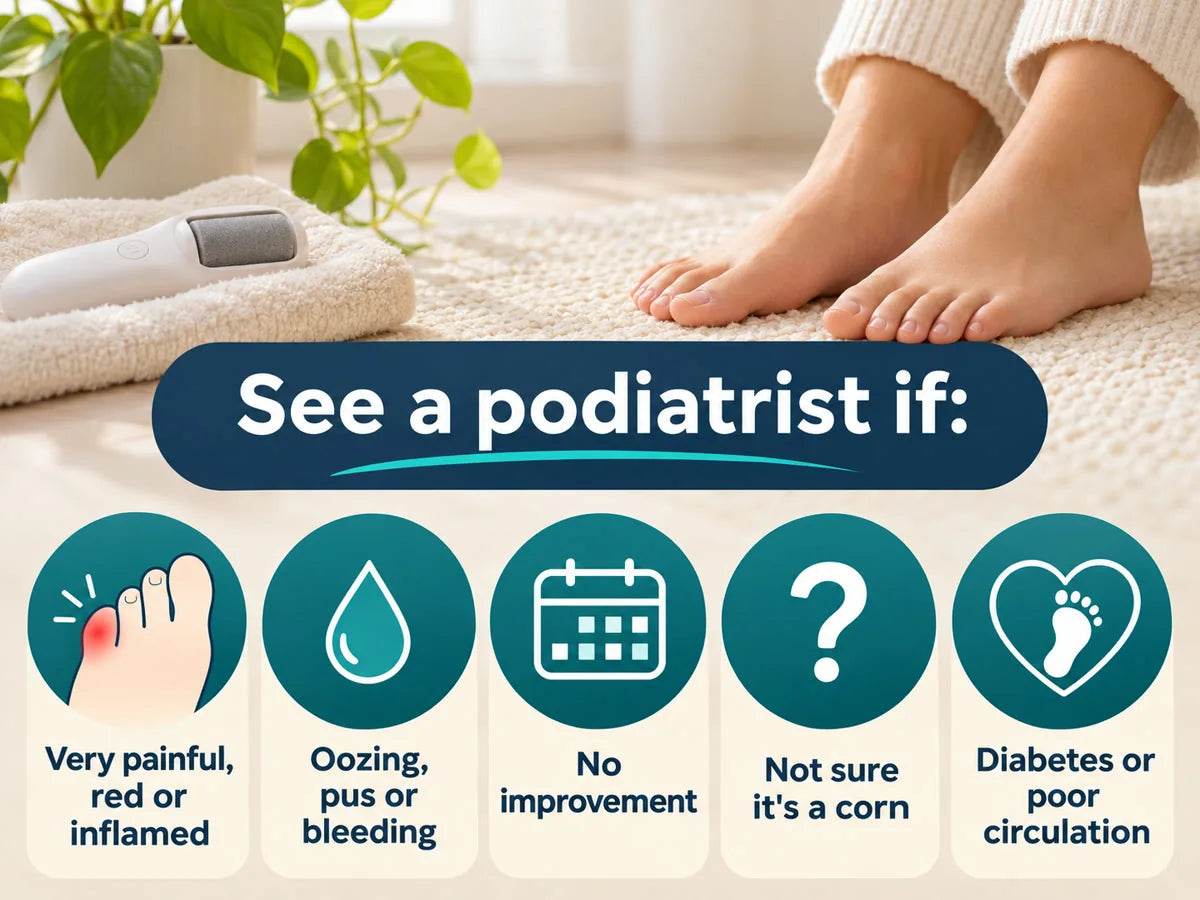
- Pain or redness: the corn is very painful, red or inflamed.
- Signs of infection: it oozes, shows pus or bleeds.
- No improvement: roomier shoes, padding and dry skin haven't helped.
- Unclear spot: you're not sure it is a corn at all.
- Health conditions: you have diabetes, poor circulation, a weak immune system or delicate skin, so you should get advice before any home care.
Note: Don't cut or shave the corn yourself, because a slip between tight toes can lead to a wound that gets infected.
FAQ
How can you tell a soft corn from a wart?
You often can't tell for sure at home, because a corn and a wart can look alike. Don't guess, and don't put acid or an electric file on a spot that might be a wart. A podiatrist or doctor can check it and tell you what it is. For how a corn differs from a callus, see our guide to corn and callus treatment.
How long does a soft corn take to go away?
There's no set timeline, since it depends on how well you remove the pressure and moisture between your toes. A soft corn can return if your shoes or toe position stay the same. If it lasts or keeps hurting, see a podiatrist.
Soft corn toes usually settle when the rubbing and dampness stop, so start with roomier shoes, a nonmedicated spacer and dry skin between the toes, and keep files, blades and acid out of that space. Get help for pain, redness or oozing. For rough heels and dry skin elsewhere on your feet, compare options in our foot care devices collection, with free US shipping on every order, or read more foot and beauty device guides.
The foot files Decor Your Life sells are for heels and dry patches, so keep them away from the skin between your toes.