

Shopping for a face scrubber for sensitive skin is tricky when the last brush you tried left your cheeks red and tight. The problem is usually the design and the habit: stiff contact points, high settings, long sessions and too many exfoliating steps stacked together. This guide covers the five features that keep a scrubber gentle, a starting point for each skin type and the signs that mean you should skip one.
What is the best face scrubber for sensitive skin?
The best face scrubber for sensitive skin is a soft silicone facial cleansing brush you can run on its lowest setting, with a built-in timer and a head made for cleansing rather than exfoliating. A sonic facial brush vibrates to move your cleanser over wet skin, while the soft silicone does the light scrubbing.
An ultrasonic skin spatula is a different device: a flat metal blade that vibrates above 20 kHz to lift residue, with strict limits in its manuals, so it is not a sensitive-skin pick.
Gentle hand-washing with your fingertips is also a valid choice. Evidence that any home device cleans better than careful hand-cleansing is limited and comes from small, mostly company-linked studies.
| Skin type | Features to look for | Starting speed | How often | Caution |
|---|---|---|---|---|
| Sensitive | Soft silicone, timer, cleansing-only head | Lowest | A few times a week | Stop if red or stinging |
| Dry | Soft silicone, mild cleanser | Low | A few times a week | No extra exfoliants |
| Oily | Silicone with a firmer zone for oily areas | Low, higher on oily areas if comfortable | Up to once a day | Cut back if tight or red |
| Acne-prone | Soft silicone, easy to clean | Lowest, only when skin is calm | A few times a week when calm | Skip inflamed breakouts |
| Rosacea, eczema or broken skin | None | Skip | Skip | Ask a dermatologist |
What to look for in a face scrubber for sensitive skin
On sensitive skin, the right features limit how hard, how fast and how long the device touches your face. The details that make a facial brush for sensitive skin gentler include:
Silicone vs bristle touchpoints
Silicone touchpoints suit most sensitive skin better than nylon bristles, because the soft molded bumps feel less scratchy and the material rinses clean and dries fast between uses. Spinning bristle heads are more abrasive and fit normal to oily skin better.
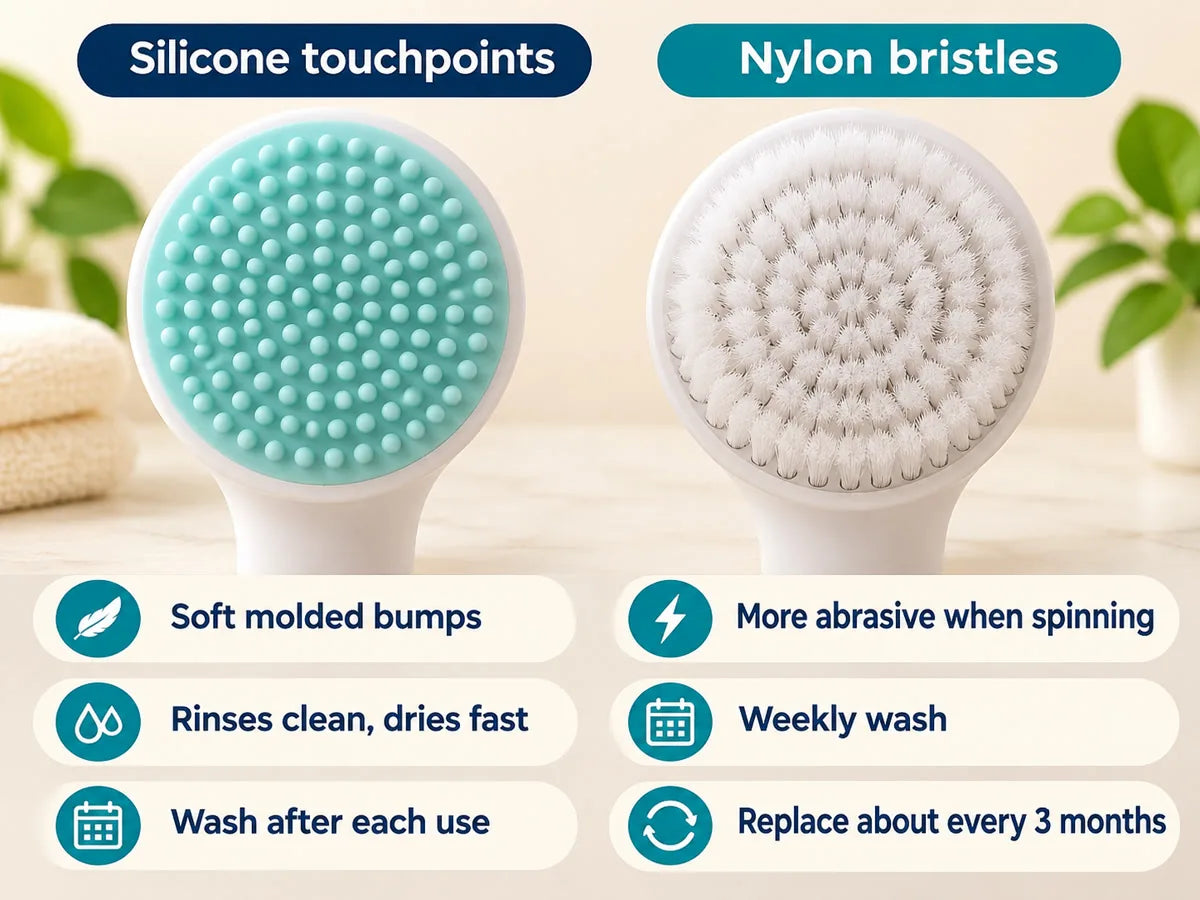
- Softness: Look for soft, thin touchpoints; one maker offers a sensitive-skin head with thinner touchpoints for more control.
- Drying and hygiene: Bristle heads need a weekly wash in warm soapy water, while silicone is washed with soap and warm water after each use and left to air-dry.
- Upkeep: Nylon bristle heads need replacing about every 3 months; many silicone models have no head to replace.
Note: A "sensitive" label on the box is not proof your skin will tolerate the device, because softer contact gives you more control but does not mean your skin will tolerate it. For a closer look at silicone vs bristle, see our dedicated guide.
Low speed and adjustable intensity
Choose a scrubber with a gentle lowest setting and intensity that steps up gradually, so you can start soft with light contact and raise it only if your skin stays calm. Adjustable levels let you match the strength to your skin instead of living with one fixed setting.
Silicone sonic scrubbers vibrate rather than spin, so do not expect a rotating brush. Makers describe output in vibrations per minute, bristle movements per minute or hertz (Hz), and these numbers are measured differently, so they cannot tell you which device is gentler.
Built-in timer
A built-in timer keeps each area of your face short and even, so you don't linger on one cheek. One brand's default is about 1 minute in total, and one manual caps use at 3 minutes per session, but these limits are model-specific. Stop sooner if skin turns red.
A gentle cleansing head, not a harsh exfoliator
Pick a soft head made to help your cleanser lift surface dirt and oil, not one built for strong exfoliation. Some makers describe their silicone cleansing tools as non-exfoliating, while other devices are marketed specifically for exfoliation.
Read phrases like "deeper clean" or "pore cleansing" as product claims unless the brand backs them for that exact device. No scrubber can remove blackheads, shrink pores or whiten skin; at best, pores can look less noticeable.
Note: Don't pair a scrubber with grainy scrubs, exfoliating cleansers or clay cleansers, because stacking exfoliation raises irritation and gritty particles can damage silicone.
Waterproof body and easy charging
IPX7 is a waterproof rating meaning a device survives temporary immersion up to 1 m (about 3.3 ft) for 30 minutes, so shower use and rinsing under the tap are fine. "Waterproof" without a code is not enough.
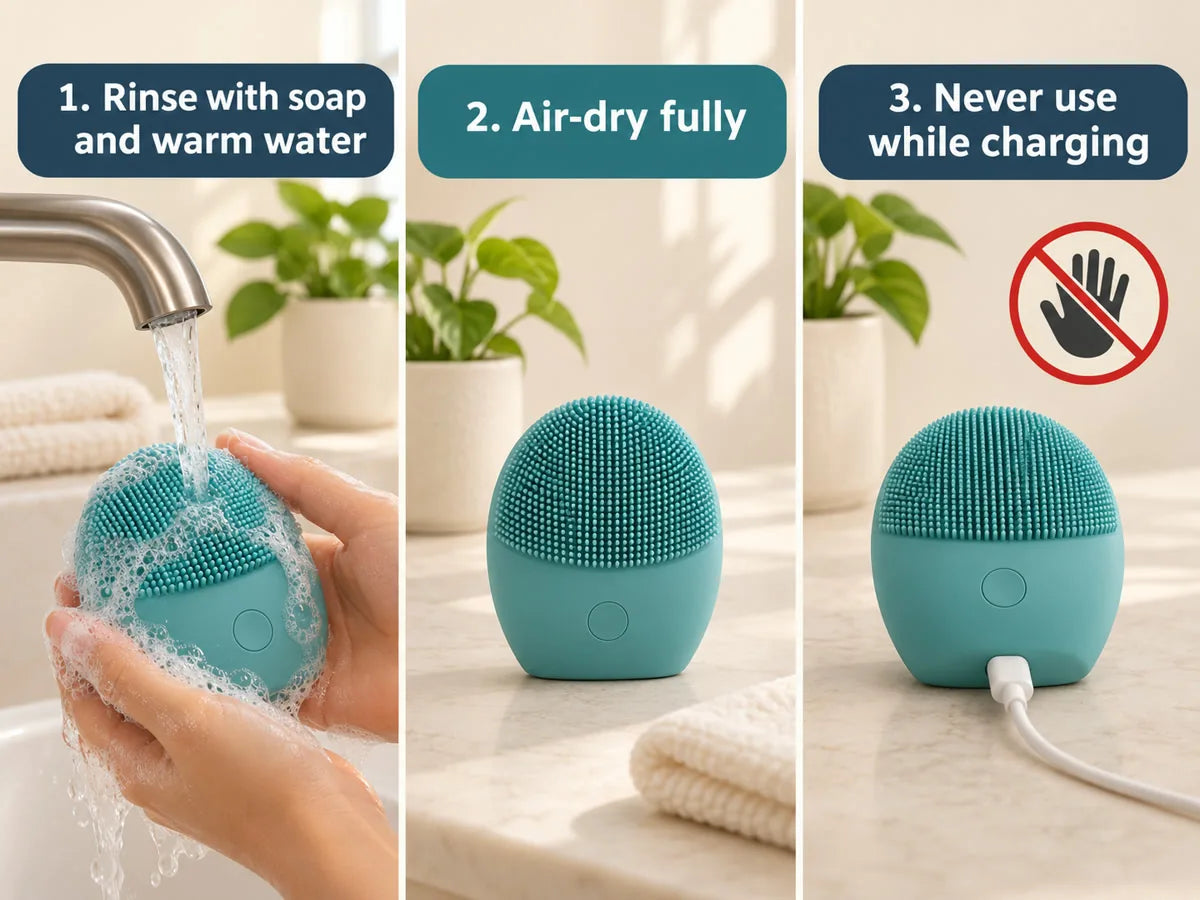
A USB port must be fully dry before you charge, while a magnetic charger has no open port to worry about. Rinse the brush, let it air-dry and never use it while charging. Check the warranty before you buy, because a rechargeable device depends on its battery and charger.
Face scrubber by skin type: what to choose and how often to use it
Whatever your skin type, start on the lowest setting and slow down at the first sign of redness. Brands and dermatologists differ on frequency, so use these as cautious starting points, not rules; for technique, see our guide on how to use a face scrubber. The right setting and schedule differ in these cases:
Face scrubber for sensitive skin
A face scrubber for sensitive skin should be a soft silicone brush used on its lowest setting a few times a week to start, with a gentle cleanser and very light contact. If your skin stays calm, you can add a session gradually.
Stop if skin feels sore, stings or turns red. Fingertip cleansing is the gentlest option on reactive days, and it is often a better fit than grainy face scrubs for sensitive skin.
Face scrubber for dry skin
A face scrubber for dry skin works best as a soft silicone brush on a low speed with a mild cleanser, in short sessions a few times a week. Use lukewarm water, pat dry and apply moisturizer right away.
Skip extra exfoliants on brush days. If you are hunting for the best face scrub for dry skin, dermatology guidance often favors a soft washcloth and a mild chemical exfoliant over grainy scrubs or a face brush for dry skin.
Scrubber for oily skin
A scrubber for oily skin can be used up to once a day if your skin stays comfortable, since some makers allow daily use. Keep most of your face on a low setting and use a higher one only on oily areas such as the forehead and nose.
A facial cleansing brush for oily skin helps your cleanser clear surface oil; it does not remove blackheads, whose dark color is not dirt. Cut back to fewer sessions if your face feels tight or looks red.
Face scrubber for acne-prone skin
A face scrubber for acne-prone skin should stay in the drawer while breakouts are red and inflamed, because scrubbing can make acne worse; ask a dermatologist what to use instead. When skin is calm, use the lowest setting for short sessions.
Glide around blemishes rather than over them. Clean the brush after every use with soap and warm water, let it dry fully and never share it.
Cleansing-only or warm side: comparing two sonic face scrubbers
Choose the Waterproof Silicone Sonic Facial Cleansing Brush if you want a simple cleansing brush with no extras; choose the Sonic Facial Cleansing Brush with Warm Massage Side if you also want a warm finish after skincare.
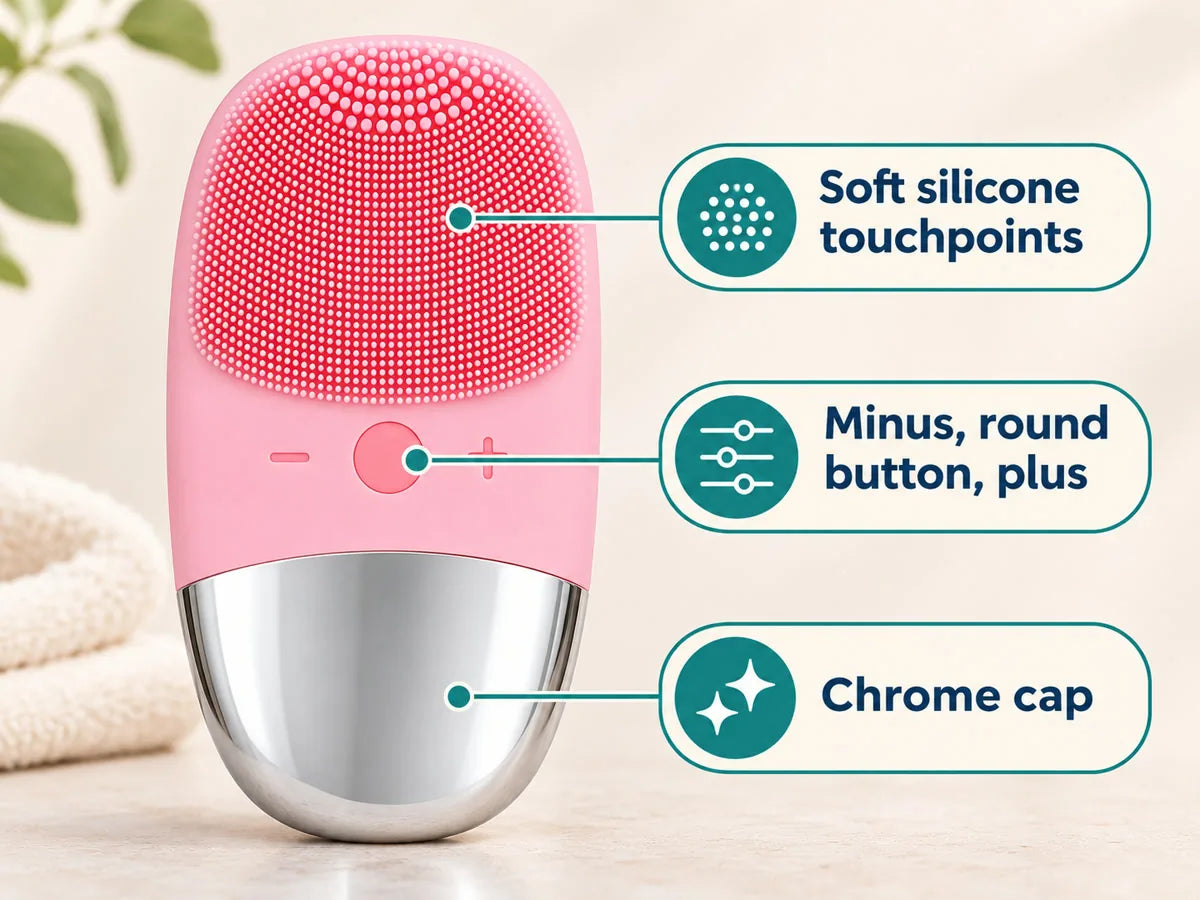
| Feature | Waterproof Silicone Sonic Facial Cleansing Brush | Sonic Facial Cleansing Brush with Warm Massage Side |
|---|---|---|
| Speeds or levels | 5 speeds | 6 intensity levels |
| Timer | Built-in timer | Not listed |
| Touchpoints | Soft silicone, three zones | Soft silicone, three brush zones incl. nose tip, plus the warm side |
| Extras | None | Warm side, about 108–113°F (42–45°C) |
| Waterproofing | IPX7 | IPX7 |
| Charging | USB (5V/1A) | Magnetic USB |
| Best for | Daily cleansing, oily and combination skin, shower use | Daily cleansing, warm massage after skincare, shower use |
For sensitive skin, the five-speed brush's guide suggests speeds 1–2, with 3 for daily cleansing and 4–5 for oily areas. Both suggest about 20 seconds per area and call once a day enough for most skin, but on sensitive skin treat that as a ceiling, not a target. On the warm-side brush, start at the lowest of its six levels and use the dense daily-use zone rather than the firmer one. Both are sold by Decor Your Life with a 12-month limited warranty against manufacturing defects.
When to skip a face scrubber for sensitive skin
Skip a face scrubber, or ask a dermatologist first, if any of these apply:
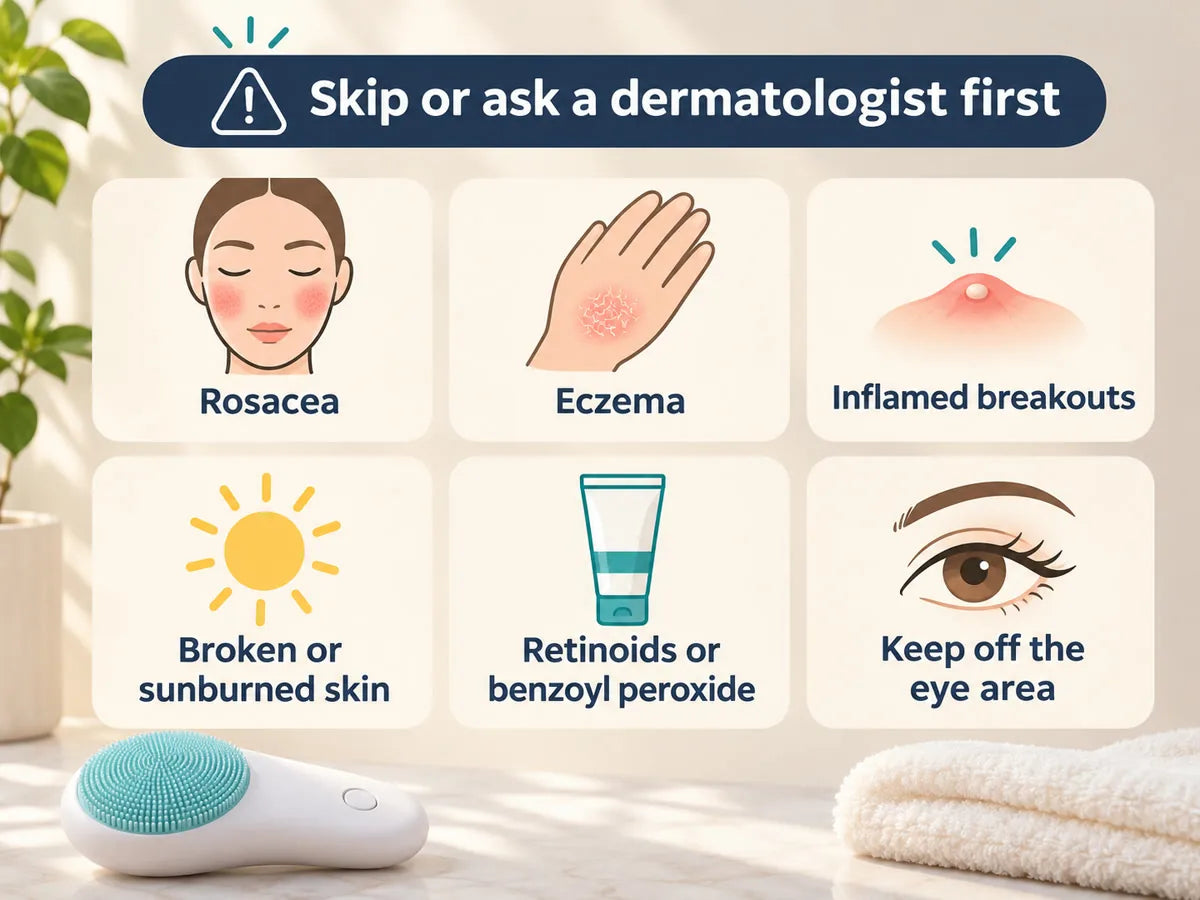
- Rosacea: Dermatology guidance says to wash with fingertips only and avoid rubbing, scrubbing or exfoliating.
- Eczema or another skin condition: Check with your dermatologist before adding any device.
- Active, inflamed breakouts: Scrubbing can make acne worse.
- Broken, sunburned or irritated skin: Both products above warn against use on broken or irritated skin.
- Retinoids, retinol or benzoyl peroxide: Adding a brush can worsen dryness and irritation.
- Dark spots from acne or burns: Aggressive exfoliation may deepen pigmentation in some people.
- Eye area: Keep the device off your eyelids and eyes.
Note: Stop if you feel pain or discomfort or notice redness, a rash or itching, and see a dermatologist if it does not settle. With a warm massage side, stop as soon as it feels too hot.
[dyl-products: silicone-sonic-facial-cleansing-brush, sonic-facial-cleansing-brush-warm-massage]
Frequently asked questions
Can a face scrubber cause redness or breakouts on sensitive skin?
Yes, a face scrubber can leave sensitive skin red and irritated when you use it too often, press too hard or choose a high setting, and scrubbing can make existing acne worse. Keep to the lowest speed and short sessions, and stop when skin reacts; no device can promise it won't happen.
Can I use a face scrubber with retinoids, acids or an exfoliating cleanser?
No, it is best not to combine them: retinoids, retinol and benzoyl peroxide can already leave skin drier and more sensitive, and acids or exfoliating cleansers add more exfoliation. Pair the brush with a gentle, non-gritty cleanser, and ask a dermatologist how to fit both into your week.
Is a manual silicone scrubber gentler than a powered facial brush?
A manual silicone scrubber is not proven to be gentler than a powered facial brush. Control matters more: a manual pad lets you set the pressure, a powered one offers preset levels, and some silicone pads feel slippery when wet. Whichever you pick, keep contact light and sessions short.
The right face scrubber for sensitive skin keeps contact soft, slow and short: silicone touchpoints, the lowest speed, a timer and a cleansing-only head. If your skin is already irritated, your fingertips are the better tool for now. When you're ready, compare our facial cleansing devices, with free US shipping on every order.