

A face scrub at home sounds simple until you are standing at the pantry, looking at oats, sugar and a lemon, and wondering which ones will leave your skin red or broken out. The wrong grit or too much pressure can irritate skin quickly. A soft mix and a light hand can leave it feeling smoother. Here you'll find two gentle recipes, the ingredients to skip and how to use a scrub safely.
What is a face scrub at home?
A face scrub at home is a physical (mechanical) exfoliant that you mix from kitchen ingredients and rub gently over damp skin, so friction lifts dead cells off the surface. Store-bought face scrubs and exfoliators work the same way. They come as a finished formula with directions, while a homemade face scrub has no preservative and no product testing behind it.
Chemical exfoliants work differently. Acids such as AHAs (glycolic and lactic acid) and BHAs (salicylic acid) dissolve dead cells over hours or days instead of rubbing them off. Both types are cosmetic steps for how skin looks and feels. Neither is a fix for a skin condition.
How does a face scrub work on your skin?
A face scrub works through gentle friction. Soft particles moved in small circles loosen dead cells on the skin's surface, and rinsing carries them away. About 30 seconds of light massage is enough.
Pressure is where things go wrong. Pressing hard or using rough, uneven particles turns that friction into irritation and can disrupt the skin barrier, which is the skin's protective outer layer. The general rule is that the more aggressive the method, the less often you should use it.
What can a face scrub at home do for your skin?
Results depend on your skin and the recipe, and they stay on the surface. The typical benefits of a gentle exfoliating face scrub include:
Skin that feels smoother after rinsing
Skin often feels smoother and softer right after you rinse, because the loose dead cells that made it feel rough are gone. Results from a specific kitchen recipe vary from person to person, so treat any DIY result as personal rather than predictable.
Surface buildup removed
A scrub lifts surface buildup and dead cells, so skin can look a little brighter and feel cleaner. The effect is temporary and stays on the surface. A scrub does not deep-clean or unclog pores.
What a face scrub at home can't do
Know these limits before you mix your first batch:
- No lasting change: A scrub refreshes the surface for a while, but it does not change your skin over the long term.
- No fix for skin conditions: It does nothing for acne, rosacea, eczema or dark spots, and scrubbing can make some of these look worse.
- Unproven recipes: Dermatology guidance does not endorse any DIY face scrub, so results with oatmeal, honey or yogurt vary from person to person.
- Irritation risk: Too much pressure, too many sessions or rough grit can leave skin red and irritated.
- Darker marks: If your skin tends to keep dark marks after irritation (post-inflammatory pigmentation), aggressive scrubbing can make those marks more likely.
Who should skip a face scrub at home?
Oily and normal skin can usually try a gentle scrub. Several skin types and situations call for a softer option. Here is how the two groups split:
Good fit
Oily or thicker skin usually handles physical exfoliation best. Normal skin with no redness or irritation can often handle a gentle scrub too. Even so, patch test any new recipe first, because kitchen ingredients can still cause a reaction.
Take care or avoid
Skip a scrub, or ask a dermatologist first, if any of these apply:
- Sensitive, dry or acne-prone skin: Friction can irritate it, and scrubbing can make active acne flare.
- Rosacea or eczema: Guidance for both conditions says not to rub or scrub the skin.
- Broken skin: Never scrub over cuts, open wounds, sunburn or infected skin.
- Retinoids, retinol or benzoyl peroxide: These already make skin more sensitive, and people taking isotretinoin should avoid abrasive scrubs altogether.
- Skin prone to dark marks: Aggressive exfoliation can increase pigmentation.
- Oat allergy: Skip both recipes below.
Note: For dry, sensitive or acne-prone skin, a washcloth and a mild chemical exfoliant are gentler choices. Stop scrubbing if your skin turns red, and see a doctor if the irritation doesn't settle.
Which gentle DIY face scrub recipes are worth trying?
The gentlest DIY options use soft, finely ground ingredients, mixed fresh in a small batch that you use once. Here are two recipes worth trying:
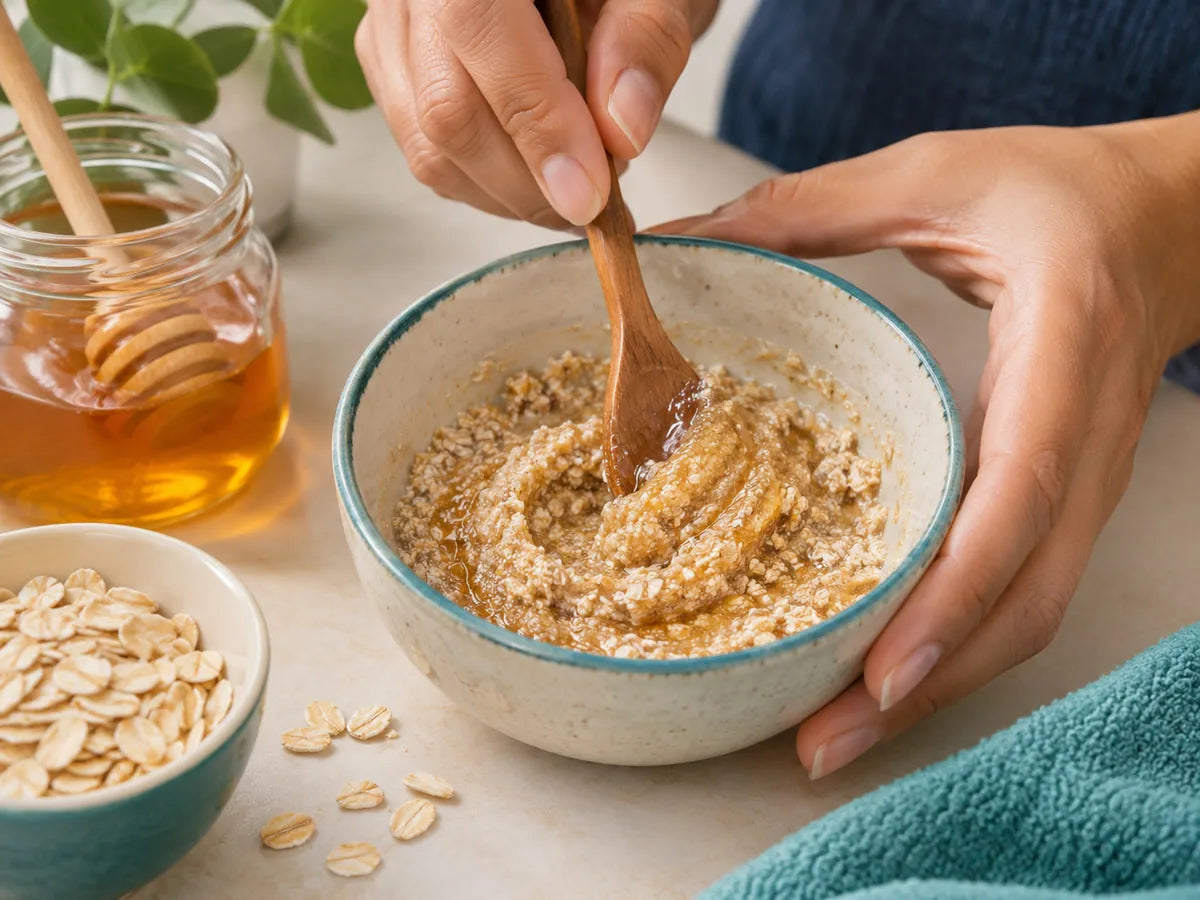
Finely ground oatmeal and honey scrub
This oatmeal and honey scrub uses oats ground to a fine powder for gentle grit, with honey to bind them into a smooth paste. Colloidal oatmeal, which is oats ground fine and boiled, is used in oat baths and body pastes to help skin hold moisture. That evidence does not cover a raw ground-oat face scrub, and honey's role here is texture.
- Ingredients: Plain oats ground as fine as your blender allows, and a little honey.
- Method: Stir the honey into the ground oats with a clean spoon until you have a loose, spreadable paste.
- Best for: Normal or oily skin that handles a gentle scrub well.
- Cons: It contains no preservative, so mix only what you need for one use and throw away any leftovers.
Gentle yogurt-based scrub
This version uses plain yogurt instead of honey. Yogurt contains lactic acid, a mild acid that can loosen dead cells and help skin look brighter. With finely ground oats added, you get gentle grit and a light chemical exfoliant in one paste.
- Ingredients: Plain, unflavored yogurt and finely ground oats.
- Method: Stir the oats into the yogurt until the paste holds on a spoon, then use it right away.
- Best for: Normal skin that wants a creamier texture.
- Cons: Yogurt spoils quickly. Because this scrub combines grit and acid, skip it if your skin is sensitive.
Which ingredients should you skip in a face scrub at home?
Keep these popular DIY ingredients off your face:
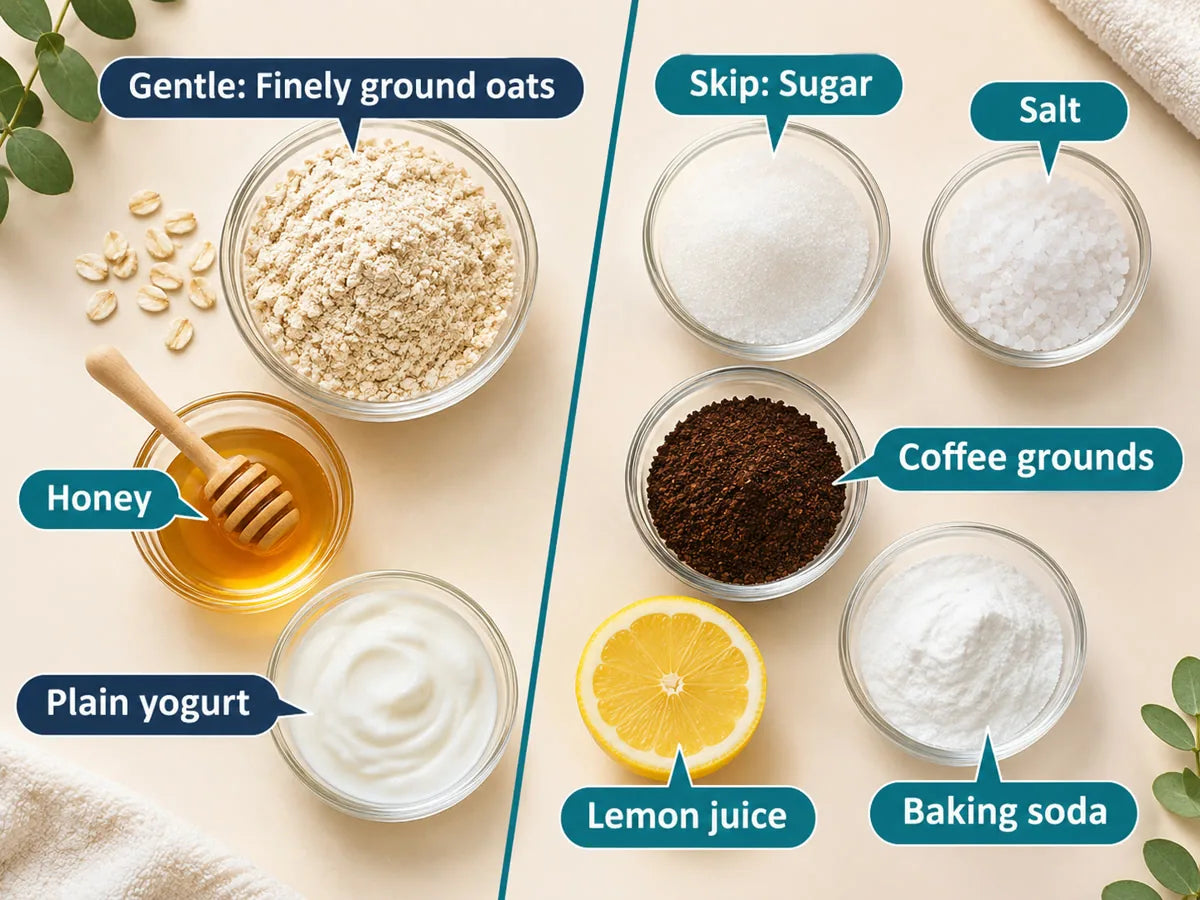
- Sugar and salt crystals: The granules are rough and uneven, and dermatology sources advise against using them on the face because they can irritate the skin barrier.
- Coffee grounds: They can be too harsh and abrasive for facial skin, especially skin that is sensitive or prone to eczema, rosacea or psoriasis.
- Crushed nut shells or fruit pits: These hard, irregular pieces are difficult to use gently, so soft, finely ground ingredients are the safer choice for your face.
- Lemon juice: Its acidity can irritate skin. Citrus juice followed by sun exposure can also cause a blistering rash or painful swelling.
- Baking soda: It is abrasive and alkaline, while your skin's surface is naturally slightly acidic, so it can leave skin irritated.
- Body scrubs: Their grit is made for body skin, not your face.
The same rule applies when you shop for a good face scrub, whether it's a drugstore option or a Korean exfoliating face scrub: choose one labeled for facial use. "Microbead-free" only means the product follows the US ban on plastic microbeads in rinse-off cosmetics. It does not mean the grit is gentle.
How do you use a face scrub at home safely?
To use a face scrub safely, apply light pressure for about 30 seconds, rinse with lukewarm water and moisturize. Follow these steps:
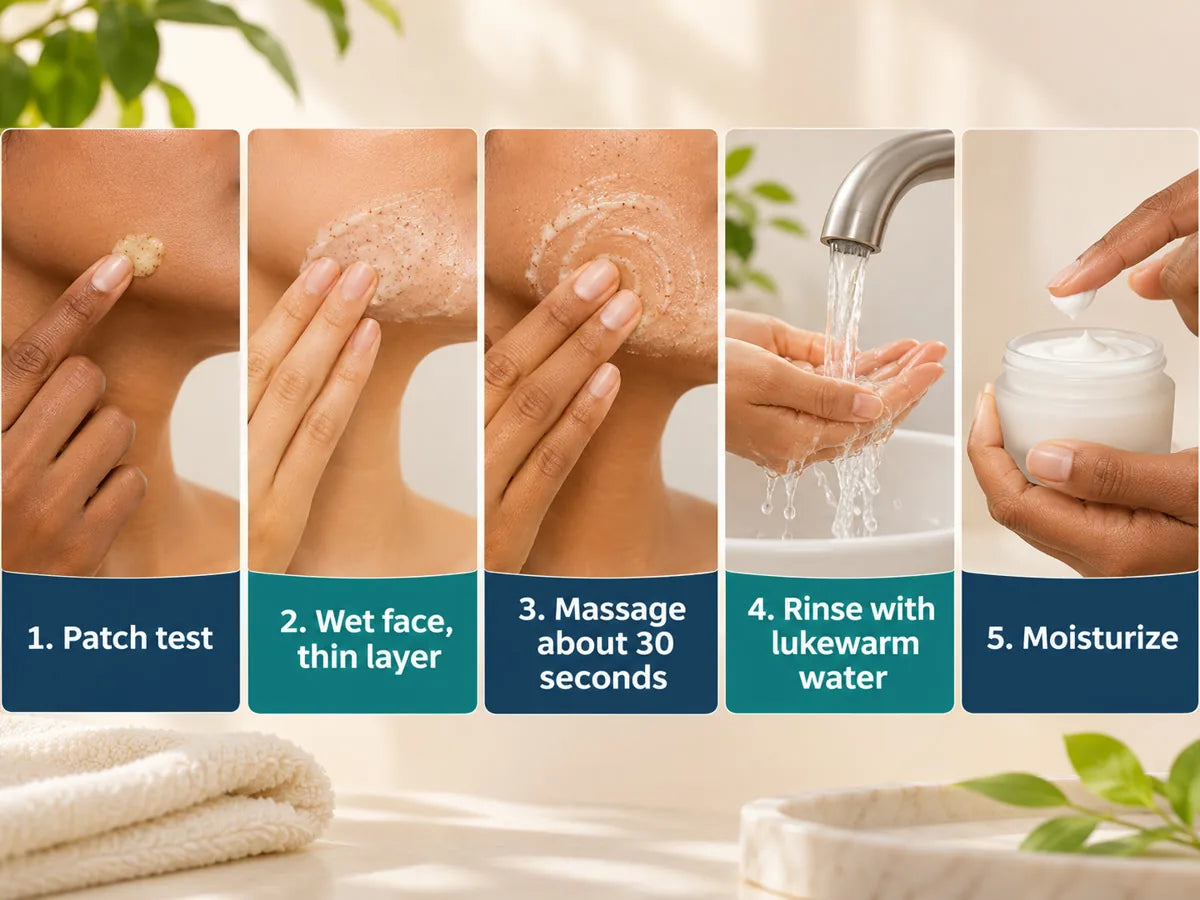
Patch test first
Dab a little of the mix on your jawline or behind your ear before you use it on your whole face. If the spot turns red, itches or stings, skip that recipe. If your skin is sensitive, wait 24–48 hours before you decide.
Wet your face and apply a thin layer
Start with a clean, damp face, then spread a thin layer of scrub with your fingertips. Keep it away from your eyes, and skip any areas that are already red, broken or irritated.
Massage lightly for about 30 seconds
Move your fingertips in small, gentle circles for about 30 seconds, and let the particles do the work instead of pressing harder.
Note: Stop and rinse right away if your skin starts to sting, because stinging is a sign of irritation.
Rinse with lukewarm water
Rinse with lukewarm water, not hot, until no grit is left on your skin or along your hairline. Pat your face dry with a clean towel instead of rubbing it, so you don't add more friction.
Moisturize
Apply moisturizer right after you dry your face, because exfoliating can leave skin drier than usual. Keep the rest of that day's routine simple, with no other exfoliants, acids or retinol. In the daytime, finish with a broad-spectrum SPF 30+ sunscreen.
How often should you use a face scrub at home?
Once or twice a week is the most a face scrub at home usually needs, and dry or sensitive skin often does better with less. Use these guidelines as a starting point:
- Oily or thicker skin: Up to once or twice a week, as long as your skin stays calm.
- Normal skin: Start at once a week and increase to twice only if your skin handles it well.
- Dry or sensitive skin: Scrub less often, or switch to a washcloth and a mild chemical exfoliant.
- If you use other actives: Skip the scrub if you already use retinoids, retinol, benzoyl peroxide or another exfoliant, and use one exfoliant at a time.
Let your skin's response guide you. If it feels more sensitive after a session, wait longer before the next one.
What are the signs of over-exfoliating with a face scrub?
The clearest signs of over-exfoliation are:
- Redness: Your skin stays pink or red long after you rinse.
- Stinging: Products that normally feel fine start to sting or burn.
- Dryness or cracking: Your skin feels rough and dry, or small cracks appear.
- New sensitivity: Your skin reacts to products it used to tolerate.
These signs can mean your skin barrier is disrupted. Stop using the scrub and any other exfoliants, wash with a gentle cleanser, and moisturize until your skin feels comfortable again.
Note: See a dermatologist if the irritation doesn't settle, or if a spot is changing, growing or bleeding, because those changes need a professional to look at them.
How does a face scrub at home compare with acids and a face scrubber?
Choose a DIY scrub for an occasional smoothing step on oily or normal skin. Choose a mild AHA or BHA if your skin doesn't tolerate rubbing. Choose a soft silicone face scrubber if you want gentle, controlled cleansing.
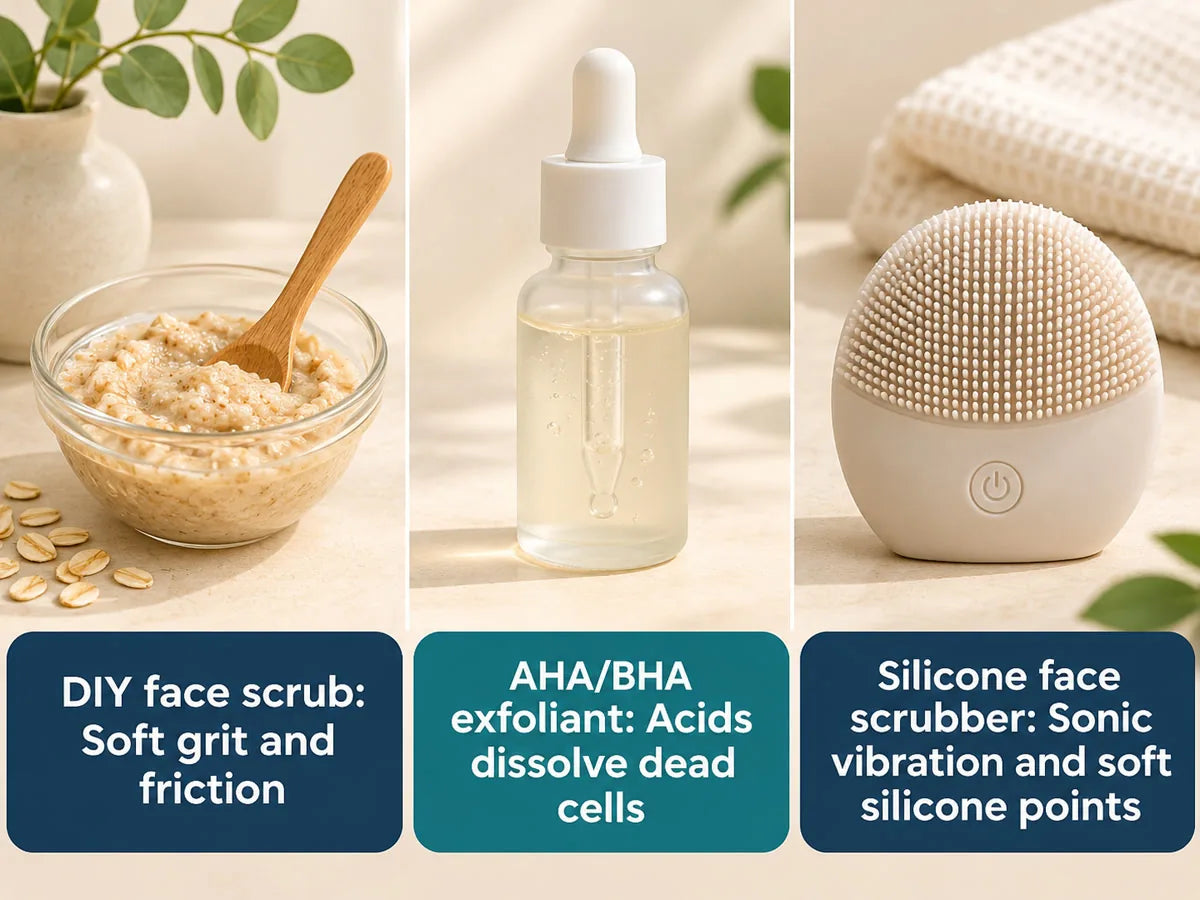
| DIY face scrub | AHA/BHA exfoliant | Silicone face scrubber | |
|---|---|---|---|
| How it works | Soft grit and friction lift surface dead cells | Acids dissolve dead cells over hours or days | Sonic vibration and soft silicone points work cleanser into skin |
| Best for | Oily or normal skin that tolerates rubbing | Mild formulas for dry, sensitive or acne-prone skin; salicylic acid often for oily skin | Daily cleansing; low settings for sensitive skin |
| Care points | Fresh batch, light pressure, 1–2 times a week | Sunscreen with AHAs; one exfoliant at a time; skip with rosacea | Light touch; never on broken or irritated skin |
AHAs such as glycolic and lactic acid make skin more sensitive to the sun. Use sunscreen while you use them and for a week after you stop.
A face scrubber for sensitive skin works best on a low setting with a light touch, because the silicone points already provide gentle friction. Skip it with rosacea or eczema unless your dermatologist says otherwise, since guidance for both says not to rub the skin. Here is how to use a face scrubber: wet your face and the brush, add your usual cleanser and move in small circles for about 20 seconds per area.
Decor Your Life carries two options. The Waterproof Silicone Sonic Facial Cleansing Brush has five speeds, with speeds 1–2 suggested for sensitive skin. The Sonic Facial Cleansing Brush with Warm Massage Side has six intensity levels. Both are IPX7 waterproof, so you can use them in the shower, and neither should be used on broken or irritated skin. For more tips, see our beauty device guides.
Frequently asked questions
Can you use a body scrub on your face?
No, skip body scrubs on your face. Facial skin is thinner and more delicate than body skin, and body scrubs are made for tougher areas. Use only products labeled for the face. A body & face scrub is fine on your face only if its label says so.
How do you make a face scrub for dry skin?
Mix finely ground oats with a little honey or plain yogurt for the softest texture, but know that dry skin is more easily irritated by scrubbing, so a washcloth and a mild chemical exfoliant are gentler. If you do scrub, use a very light touch, go less often than once or twice a week, and skip it on days when your skin feels tight or irritated.
How do you make a face scrub for oily skin?
Use the same finely ground oat base with honey or yogurt, and avoid harsh grit such as sugar or coffee. Oily skin tends to tolerate physical exfoliation better, but skip scrubbing during active breakouts, because rubbing can make acne flare.
A face scrub at home works best when you keep it simple: finely ground oats, a light touch for about 30 seconds, and no more than once or twice a week, with no sugar, salt, coffee or citrus on your face. If you want a gentler everyday option, a soft silicone brush is an easy next step. Browse our facial cleansing devices, with free US shipping on every order.