

A callus shaver can look like a quick fix when you're staring at rough heels before sandal season. The worry is fair. It uses a real blade, so one slip can mean a cut, a sore spot that gets infected, or money spent on a tool that ends up in a drawer. This guide compares blades with electric rollers, explains how to lower the risk if you still use a blade, and matches three safer options to different needs.
Callus shaver vs electric callus remover: which is safer for you?
For most healthy feet, an electric callus remover with an abrasive roller is the safer choice. A blade callus shaver carries a much higher risk of cutting too deep.
A blade cuts or planes skin away, while a roller sands it down a thin layer at a time. The American Academy of Dermatology (AAD) and Mayo Clinic both advise against cutting calluses at home.
Note: If you have diabetes or poor circulation, see a doctor or podiatrist before using any callus tool. Small injuries on your feet can become serious.
No tool removes every risk, so light pressure and stopping early matter with either one.
Choose a callus shaver if…
A blade only makes sense if all of these apply to you:
- Healthy feet: No diabetes, circulation problems, or broken or irritated skin.
- Experience: You're used to handling sharp tools carefully.
- Informed choice: You accept that dermatology guidance advises against cutting calluses at home.
- Follow-through: You'll follow the manual and stop at the first sign of soreness.
Choose an electric callus remover if…
An electric roller fits better when:
- Control matters: You want a gentler abrasive that removes skin in thin layers.
- New to foot tools: You're a beginner who wants an easier learning curve.
- Quick routine: You want a fast at-home pedicure for rough heels.
- Skin is intact: Your skin is healthy and unbroken.
See a podiatrist instead if…
A podiatrist (a foot and ankle doctor) can safely pare a callus with a blade in the office. That visit is the safe version of a professional callus shave. Book one if you have:
- Diabetes or poor circulation: People with diabetes should also get a podiatrist check at least once a year.
- Pain: A painful, inflamed or persistent callus.
- Unclear cause: A callus or corn you can't explain.
- Damaged skin: Broken, bleeding or infected skin.
- Possible warts: Anything that might be a wart.
What is a callus shaver and what is an electric callus remover?
A callus shaver and an electric callus remover are both foot tools that reduce thick skin on the heels and soles. One cuts the skin and the other sands it. The two types include:
Callus shaver (blade)
A callus shaver is a handheld tool with a sharp blade that you draw across thick skin to slice or plane it away. It is also sold as a callus razor, foot callus shaver, pedicure razor, callus blade, or callus and corn shaver. Because the blade cuts instead of sanding, your angle and pressure decide how much skin comes off. That makes it easy to go too deep.
- Best for: Nobody at home by default. Medical guidance advises against cutting calluses yourself.
- Cons: It is easy to cut too deep. Blades need changing, and a bare blade has to be handled with care.
Electric callus remover (powered roller)
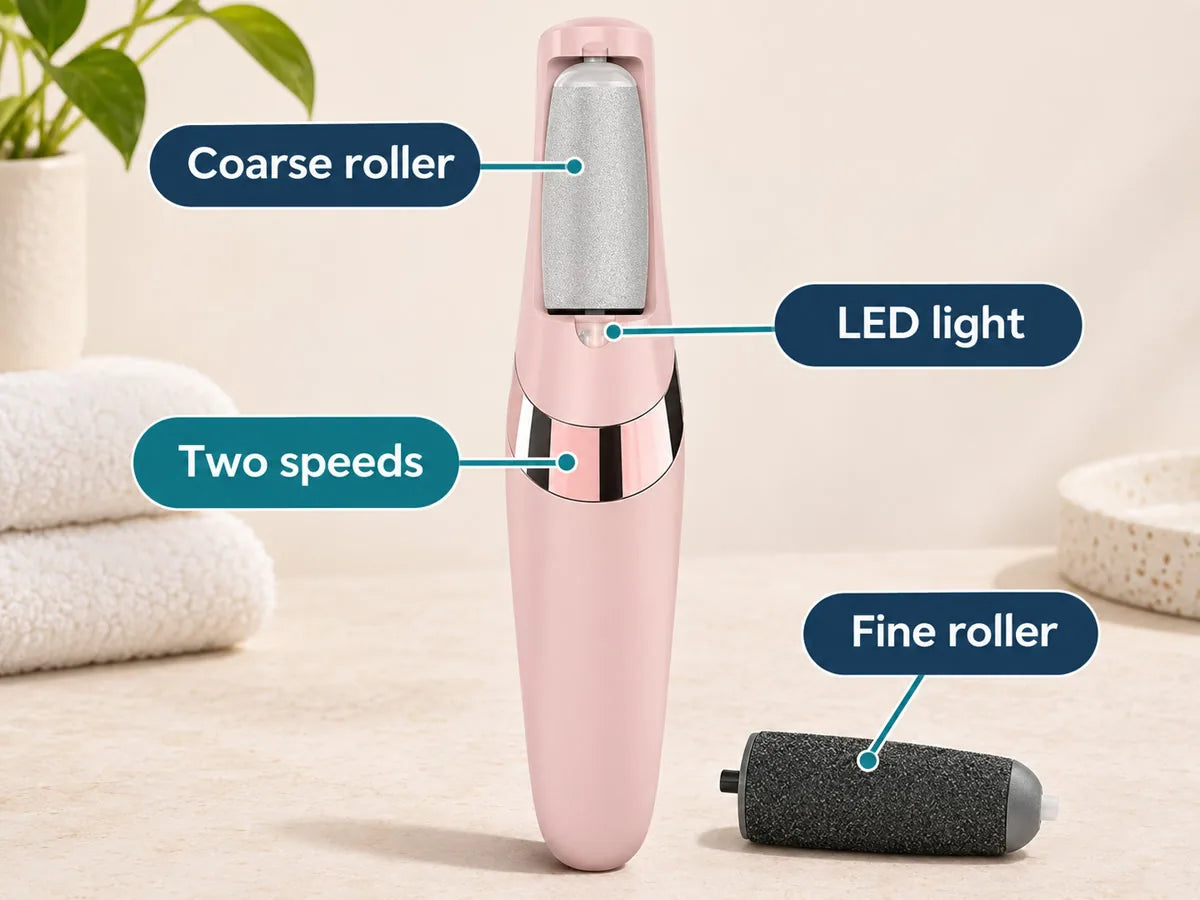
An electric callus remover, also called an electric foot file, is a battery-powered handle with a rotating abrasive roller or disc that buffs off hard, dry skin. It smooths the surface gradually instead of cutting it. It is not the same as a blade shaver, even when stores list both as foot shavers.
- Best for: Rough heels and dry patches on healthy, unbroken skin.
- Results: Heels can feel smoother. No independent studies of these devices were found, so treat claims about speed or "salon" results as maker claims.
- Cons: Some models are for dry skin only, so check the instructions. Rollers wear out and need replacing.
Is a callus shaver safe to use on your feet?
No, a callus shaver is not recommended for home use, because a sharp blade can easily cut too deep and cause injury, bleeding or infection. The AAD and Mayo Clinic both advise against cutting calluses yourself, and other health-system guidance agrees.
Diabetes raises the stakes. Thickened skin is more likely to break down and become infected, and nerve damage from diabetes can reduce feeling in the feet, so a cut can go unnoticed.
Handling a bare blade adds risk of its own, especially when you change or clean it.
Electric rollers need care too. Do not use one on broken, bleeding, irritated, infected or blistered skin.
Note: See a dermatologist or podiatrist if a callus is very painful, inflamed or persistent, or if you don't know what caused it.
Callus shaver vs electric callus remover: key differences
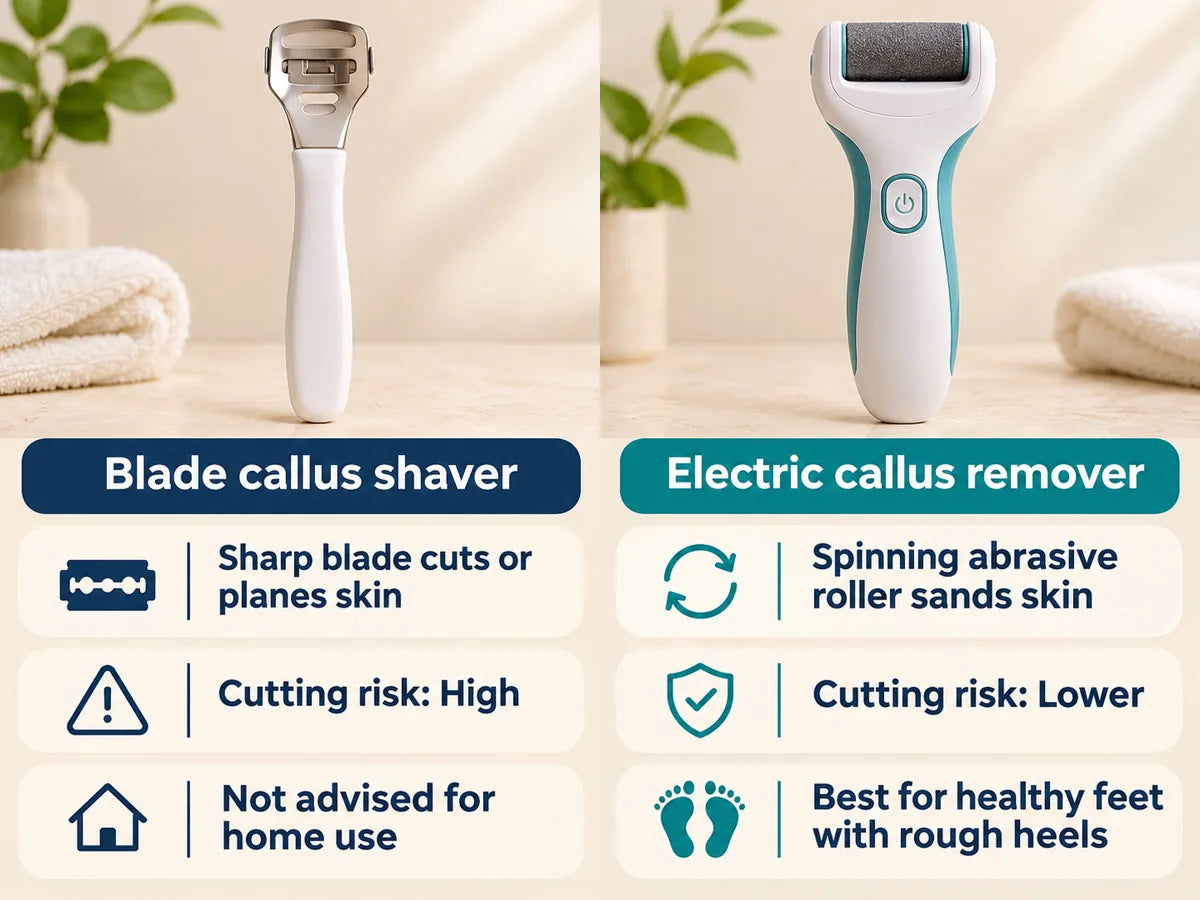
The two tools aim at the same rough skin, but they differ in how much control you have, what you replace and how beginner-friendly they are. Here is how they compare:
| Blade callus shaver | Electric callus remover | |
|---|---|---|
| How it works | Sharp blade cuts or planes skin | Spinning abrasive roller or disc sands skin |
| Cutting risk | High; your hand sets the depth | Lower; removes skin slowly, but you can still overwork one spot |
| Parts to replace | Blades | Rollers or discs as they wear |
| Wet or dry use | Follow the tool's manual | Some models need clean, fully dry skin |
| Beginner ease | Steep learning curve | Easier to control |
| Best for | Not advised for home use | Healthy feet with rough heels |
Cutting risk and control
With a blade, your hand and the angle decide how deep it cuts, so a small slip can remove more than you meant.
A roller sands slowly, which gives you time to stop. One manual directs 2–3 seconds per pass, and other makers limit contact to 3–4 seconds per area.
Note: Use light pressure and short passes with either tool. Pressing hard can stall a roller.
Blade changes vs roller replacement
Swapping a blade means handling a bare edge, which adds a cutting risk of its own.
Rollers wear down and are replaced instead. One manual estimates a roller lasts a few sessions, depending on how often you use it and the area you work on.
Rollers are meant for one person, so don't share them with family members.
Wet or dry skin instructions
Guidance on wet or dry skin varies by tool, so follow the manual for your exact model.
For a manual pumice stone or foot file, the usual advice is to soak your feet in warm water for about 5–10 minutes, then file gently. Some powered rollers work differently and need clean, completely dry skin.
Ease for beginners
An electric roller is easier for beginners to control, because it removes a thin layer at a time and you can stop to check your progress. A blade has a steeper learning curve and is not advised for first-timers.
Look for two speeds so you can start gently. An LED light helps you see the spot you're working on.
How to use a callus shaver more carefully if you still choose one
Medical guidance advises against cutting calluses at home. The steps below lower the risk but do not make a blade safe, so skip the tool entirely if any warning in Step 1 applies to you. The steps include:
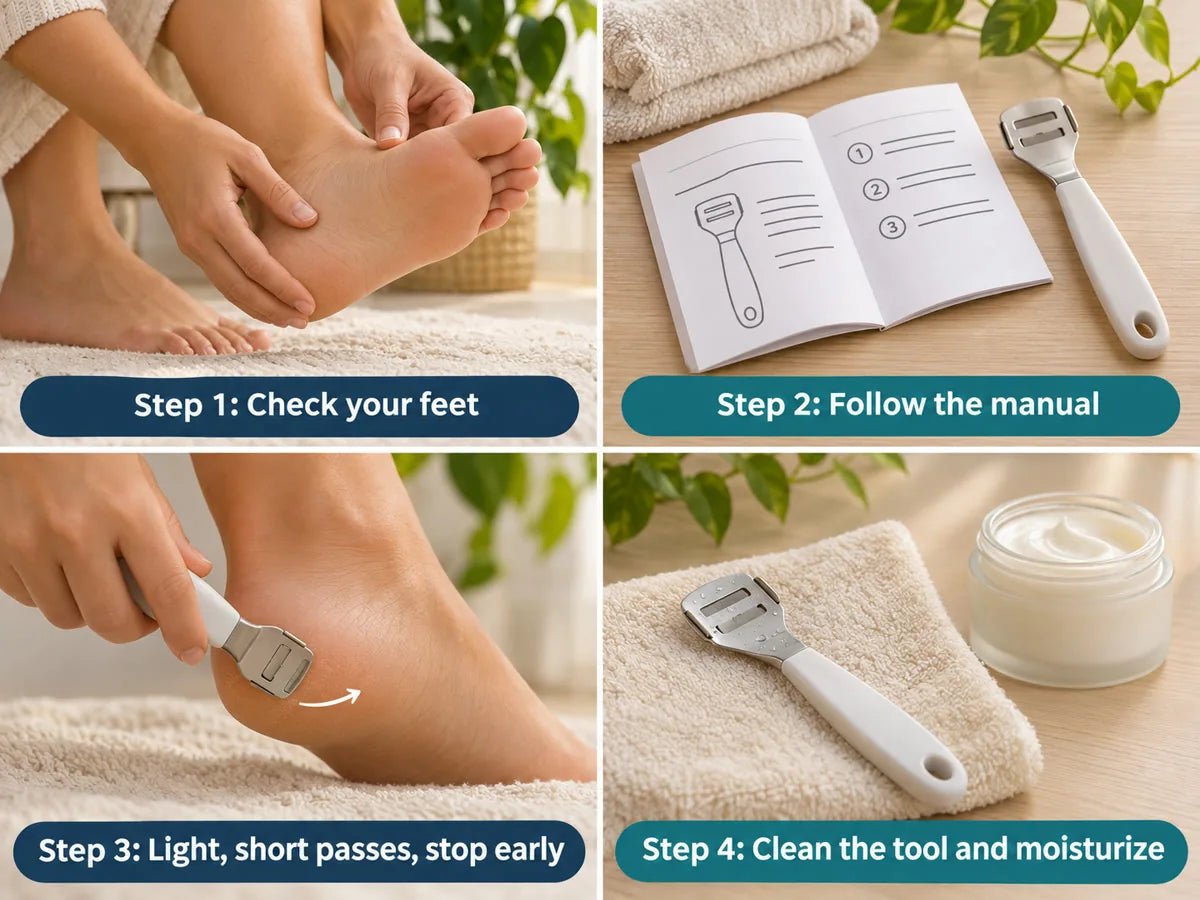
Step 1: Check that your feet are suitable
Check your feet before you pick up the blade, because some conditions make any cut far more serious. Skip a callus shaver if you have:
- Diabetes or poor circulation: Small wounds recover more slowly and can become infected.
- Damaged skin: Broken, bleeding, irritated, infected or blistered skin.
- Warts: Do not shave or file over them.
- Unexplained pain: A painful callus or corn with no clear cause.
Step 2: Follow your tool's own instructions
Read your tool's manual before the first use, because rules for wet or dry skin, guard settings and blade fitting differ from model to model.
Unpack it carefully and hold the blade by its holder, never by the edge. Check that the guard sits firmly and the blade doesn't wobble. If the manual is missing or unclear, don't guess.
Step 3: Use light, short passes and stop early
Use light pressure and short passes, and stop to check the skin after every few strokes.
Leave some thickness in place. A callus is the skin's padding against friction, and trying to remove all of it raises the chance of a cut.
Note: Stop right away if you feel soreness or see any bleeding, and have a doctor check any cut that looks infected.
Step 4: Clean the tool and moisturize
Clean and dry the tool after each use so moisture doesn't cause rust. Replace a dull or damaged blade the way your manual describes.
Keep the shaver for one person only, stored out of reach of children. Finish by moisturizing your feet. For dry heels, a cream with 10–25% urea applied within 5 minutes of bathing softens thick, dry skin.
Safer alternatives to a callus shaver for rough heels
Dermatology guidance favors gently thinning a callus over cutting it. Safer options range from simple manual tools to powered files, and one step deals with the cause. They include:
Pumice stone, foot file or emery board
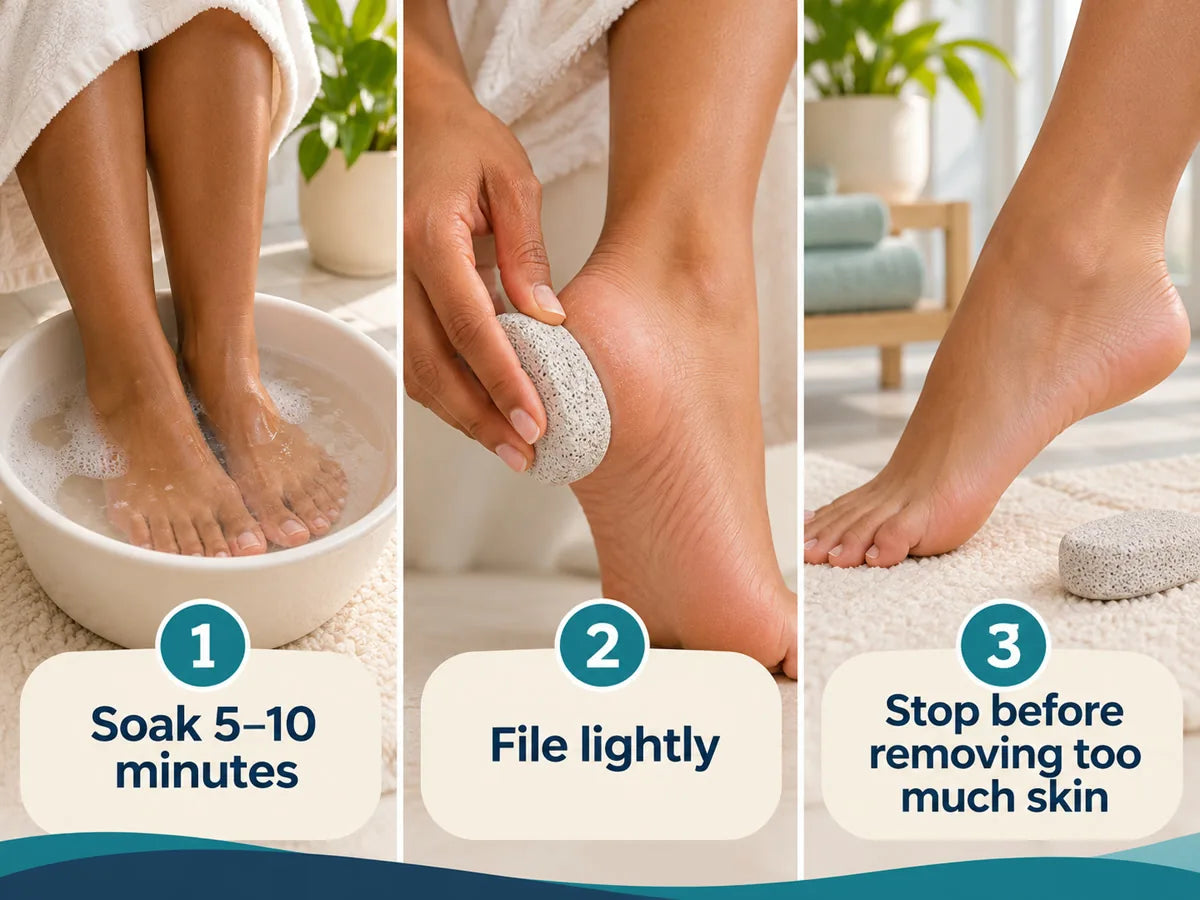
A pumice stone, foot file or emery board is a manual tool that thins callused skin by gentle rubbing. This is the home method the AAD supports. Soak your feet in warm water for 5–10 minutes, then file lightly. Stop before you remove too much skin, because over-filing can cause bleeding and infection.
- Best for: Mild to moderate roughness on healthy feet. For very mild roughness, a washcloth after a bath can be enough.
- Pros: Inexpensive and gentle when used after soaking.
- Cons: Slower, since you do all the work by hand.
Note: If you have diabetes, don't soak your feet, keep wash water at 90–95°F (32–35°C), and use a pumice stone only if your doctor says so.
Electric callus remover with a roller or disc
An electric callus remover sands hard skin with a spinning roller or disc instead of a blade, so it smooths the surface in thin layers. Rollers come in different grades. One manual lists extra-coarse, regular and extra-sensitive. Many models have low and high speeds so you can start gently.
- Best for: Rough heels and dry patches on healthy, unbroken skin.
- Time: A few seconds per area, such as 2–3 seconds per pass in one manual, then stop and check.
- Results: Smoother-feeling heels. No independent studies of these devices were found.
- Cons: Some models are for dry skin only, and rollers wear out.
Note: Stop if your skin becomes sore or inflamed, and never use the roller on broken or blistered skin.
Reduce the friction that causes calluses
Calluses come back when the friction or pressure that formed them continues, so removing skin is only half the job.
Wear well-fitting shoes, and add protective padding, such as moleskin or donut pads, where your shoes rub. If a callus stays painful or keeps returning despite these changes, see a dermatologist or podiatrist.
Which electric callus remover fits you: three Decor Your Life options
These three Decor Your Life electric callus removers suit different needs rather than ranking from best to worst. Each one:
- Charging: Charges by USB.
- Pressure: Works best with light pressure.
- Skin: Should not be used on broken skin.
- Health check: Needs a doctor's okay first if you have diabetes or poor circulation.
Your options include:
Rechargeable Electric Foot File with Fine and Coarse Rollers
The Rechargeable Electric Foot File with Fine and Coarse Rollers uses a spinning roller to smooth rough heels and dry patches. It comes with a coarse roller for thick spots and a fine roller for polishing and regular upkeep. Two speeds let you start gently, and an LED light helps you see the area.
- Best for: Rough heels, dry skin on the feet and an at-home pedicure.
- Time: About 2.5 hours to charge for about 40 minutes of use. Use 2–3 seconds per spot.
- Pros: Washable rollers that pop off for rinsing.
- Cons: Use only on clean, dry feet. Not for broken skin, warts or wounds.
Electric Callus Remover for Feet with Spare Rollers
The Electric Callus Remover for Feet with Spare Rollers has a wide roller that covers the heel in fewer strokes. It suits hard skin on the heels and the balls of the feet. It runs at one speed, includes spare rollers for when one wears down, and releases the roller with a side button.
- Best for: Hard skin on the heels and a simple one-speed routine.
- Time: About 2 hours to charge for around 60 minutes of use. There is no full-charge light.
- Pros: Spare rollers in the box and a quick-release roller.
- Cons: The body is not waterproof, so rinse only the roller. Charge with a 5V USB source only, and don't use it while it's charging.
Cordless 2-in-1 Foot Callus Remover and Nail Buffer
The Cordless 2-in-1 Foot Callus Remover and Nail Buffer uses coarse and fine sanding discs for heels and small sanding sleeves for buffing nails. The head spins forward or in reverse, so you can work both sides of the heel without changing your grip. A digital display shows the setting.
- Best for: Rough heels plus nail buffing.
- Time: A 1,200 mAh battery takes about 2 hours to charge for around 60 minutes of use.
- Pros: Two jobs in one tool, with Type-C charging.
- Cons: Keep the body dry. Replace a disc when it feels smooth or stops working well.
Every order includes free US shipping, 30-day returns on unused items, and a 12-month limited warranty against manufacturing defects.
[dyl-products: rechargeable-electric-foot-file, electric-callus-remover-for-feet, cordless-foot-callus-remover-nail-buffer]
Frequently asked questions
Do you use a callus shaver on wet or dry feet?
Use a callus shaver on wet or dry feet only as its manual directs, because instructions differ by tool. Some powered rollers need clean, completely dry skin, while manual filing with a pumice stone works best after a warm soak.
Do you need to soak your feet before using a callus remover?
Only before manual tools: soak for 5–10 minutes in warm water before a pumice stone or foot file, as long as you don't have diabetes. For a powered callus remover, follow the manual, because some models need clean, completely dry skin. The three Decor Your Life options above are all used on clean, dry feet, so skip the soak with them.
How often should you use a callus remover?
No standard schedule exists, so follow your device's manual and use it only when your skin feels rough again. Avoid going over one spot again and again in a session, and stop if your feet feel sore or look red.
Will a callus grow back after you remove it?
A callus can grow back after removal if the friction or pressure that caused it continues. Well-fitting shoes and protective padding help reduce that friction. A callus that keeps returning or hurts is worth showing to a doctor.
A callus shaver puts a sharp blade in your hand, and that is the main risk, because it is easy to cut too deep. For healthy feet with rough heels, a gentle electric roller is the safer choice. With diabetes or poor circulation, talk to a doctor first. Compare options in our foot care devices collection.