

Rough heels and a hard callus usually lead to one question: is a pumice stone callus routine enough, or is an electric foot file worth it? A stone costs little and gives you full control. A powered file does the work faster but needs a lighter touch. Either tool can take off too much skin if you rush. This guide compares both on results, effort, hygiene and safety, then shows how to use a stone well.
Pumice stone vs electric foot file for calluses: which is better for you?
Choose a pumice stone if your calluses are thin and you like a slow, hands-on routine. Choose an electric foot file if your heels have thick, stubborn hard skin and you want quicker, more even results. Neither tool suits everyone. It comes down to how thick your calluses are, how often you plan to file and how much hand effort you want to put in.
Choose a pumice stone if…
- Your calluses are thin: mild rough spots respond well to gentle hand filing.
- You want to spend little: a stone has the lowest upfront cost.
- You like a slow routine: soaking and filing by hand gives you full control.
- You file only now and then: occasional upkeep suits a stone.
- You will dry it every time: a damp stone can grow mildew.
Choose an electric foot file if…
- Your heels are thick and stubborn: a coarse roller or disc covers more ground.
- You want quick, even results: the motor keeps the motion steady.
- Your hand strength is limited: the device does the filing motion for you.
- You plan weekly upkeep: a fine head keeps heels smooth between sessions.
- You will follow the care rules: that means rinsing the head after each use and keeping a light touch.
Note: Skip self-care if you have diabetes or poor circulation, if the skin is broken, or if you are unsure what the spot is. See the safety section below.
What is a pumice stone and what is an electric foot file?
Both tools file away thickened, dead skin. One does it by hand and the other with a motor. Here is what each tool is and how it works:
Pumice stone
A pumice stone is a rough, porous abrasive that you rub over wet, softened skin to file down a callus by hand. Natural pumice is volcanic rock formed from gas-rich lava. Some stones are made from recycled glass instead. Dermatologists list a pumice stone as one option for calluses, used after a warm-water soak.
- Best for: thin calluses and mildly rough heels.
- Time: a soak first, then a short filing session.
- Pros: low cost, no charging, and you feel exactly how hard you press.
- Cons: slow on thick skin, and a stone that stays damp can grow mildew.
Electric foot file
An electric foot file is a handheld tool with a spinning abrasive roller or disc that sands off hard, dry skin for you. Heads come in grades such as coarse and fine. You use the coarse head on thick spots and the fine head to smooth the skin or keep it in shape. Many models are rechargeable by USB, and most are made for clean, dry feet.
- Best for: thick heel skin and regular weekly upkeep.
- Time: a few seconds per spot, moved in short strokes.
- Pros: quick, even results with little hand effort.
- Cons: higher upfront cost, replacement heads, charging, and fast removal that makes over-filing easier.
Pumice stone vs electric foot file: key differences
The biggest differences are callus thickness, time and upkeep. Neither tool is safer in general, because your pressure and timing matter more than the tool.
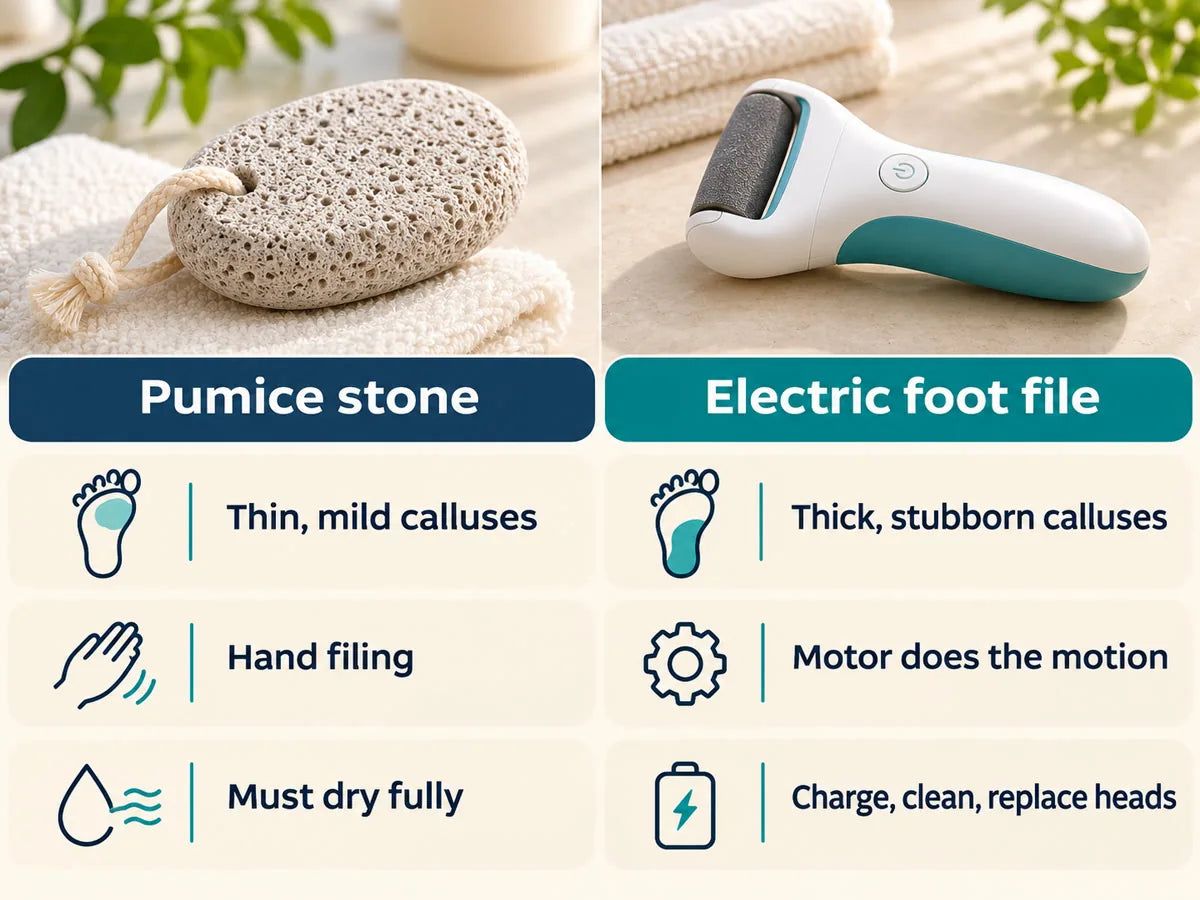
| Factor | Pumice stone | Electric foot file |
|---|---|---|
| Callus thickness | Thin, mild | Thick, stubborn |
| Speed | Slower, soak first | Faster, seconds per spot |
| Effort | Hand filing | Motor does the motion |
| Skin condition | Wet, softened | Clean, dry (most models) |
| Hygiene | Must dry fully | Rinse the head only if washable |
| Upkeep | Rinse and air dry | Charge, clean, replace heads |
| Upfront cost | Lowest | Higher, plus heads |
| Control | You feel each stroke | Light touch, check often |
| Over-filing risk | Yes, if you scrub too long | Yes, because removal is fast |
Results on thin vs thick calluses
On thin calluses, a pumice stone gives gentle, gradual thinning. A few short sessions can leave heels feeling smoother, as long as you stop before the skin turns pink or sore.
On thick calluses, hand filing is slow because each stroke removes only a little skin. A coarse roller or disc covers more ground in less time, so stubborn heels look and feel smoother sooner.
Neither tool changes why the callus formed. The result is smoother-looking skin, not a fix, and the callus comes back if the rubbing continues.
Speed and effort
A pumice stone session starts with a soak of about 5–10 minutes. One health-system guide then suggests 2–3 minutes of filing. Your hand does all the work, which can be tiring on large or thick areas.
An electric file needs only a few seconds per spot before you move on and check the skin. The trade-off is battery life. The models below list about 40 or around 60 minutes of use per charge.
Hygiene, upkeep and cost
A pumice stone is porous, so it holds water after each use. If it stays damp, it can grow mildew. Rinse it and let it dry completely every time.
An electric file needs a different routine. You brush off the skin dust, then rinse the roller if it is washable or replace the worn roller or disc. Many bodies are not waterproof, so only the detachable head goes under the tap.
A stone is the cheapest option up front. An electric file costs more at the start, and you will buy replacement heads as the abrasive wears smooth.
Safety and control
With a pumice stone, you feel the pressure directly. That makes the stone easy to control, but it is also easy to keep scrubbing past the point of smooth skin.
An electric file removes skin quickly. Use light pressure and stop to check often. On many models, pressing hard stalls the roller.
Note: Stop filing as soon as the skin feels sore or looks pink, because taking off too much skin can cause bleeding and infection.
How to use a pumice stone on a callus
A gentle pumice routine takes four short steps, and the soak matters as much as the filing. The steps are:
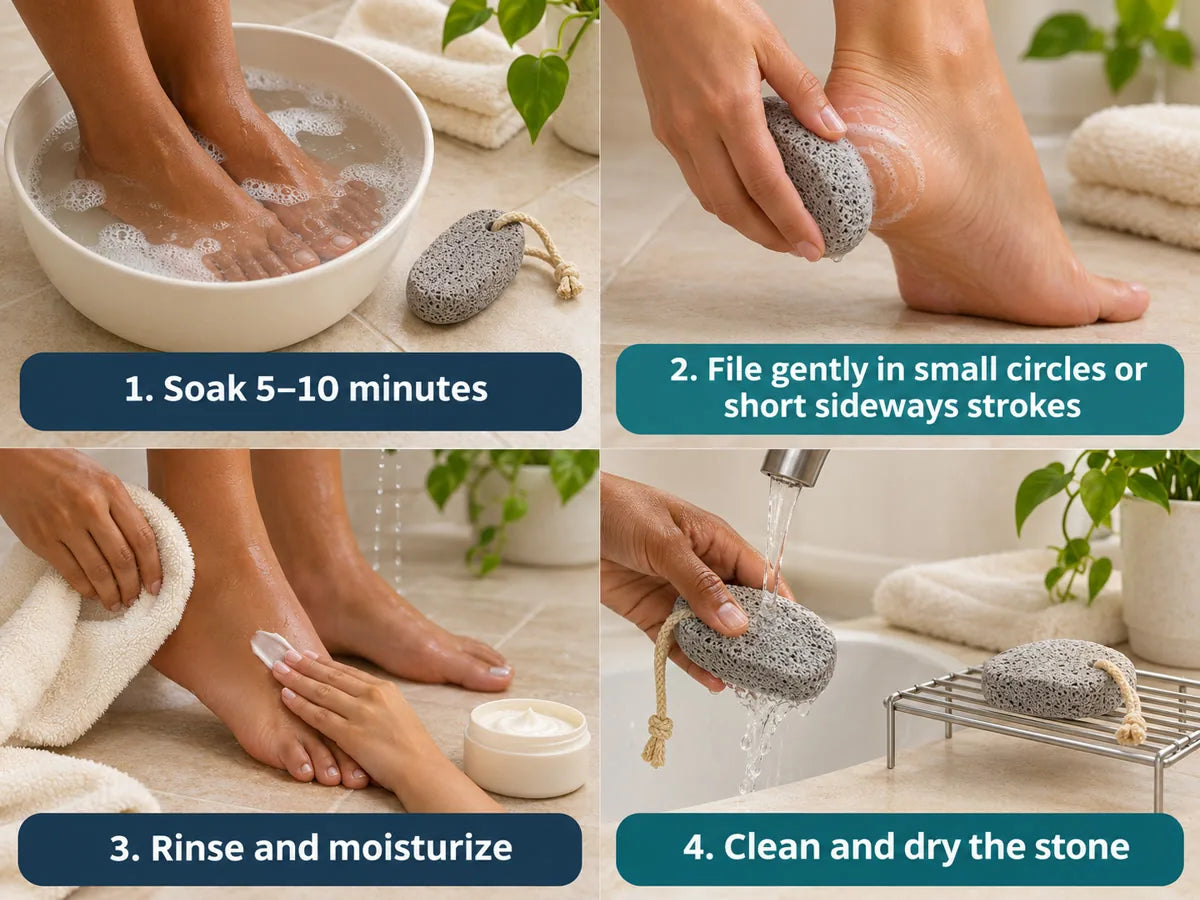
Soak your foot and wet the stone
Soak the callused area in warm water for about 5–10 minutes, or until the skin softens. Softened skin files more evenly with less pressure. Wet the stone too, and use it only on the callus, not on thin or soft skin nearby.
Note: If you have diabetes, do not soak or file your feet unless your doctor says it is okay. Diabetes raises the risk of skin breakdown and infection.
File gently in circular or sideways strokes
Rub the wet stone over the callus in small circles or short sideways strokes with light-to-medium pressure. One health-system guide suggests 2–3 minutes. Stop before the skin looks pink or feels sore, and leave some thickness behind, because a little callus protects the skin underneath.
Rinse and moisturize
Rinse your foot, pat it dry and apply a foot moisturizer. For dry heels, a urea cream with 10–25% urea helps soften thick skin when you apply it within 5 minutes of bathing. Check the area for redness or broken skin.
Clean and dry the stone
Rinse off all skin debris under running water. Let the stone air dry completely before you put it away, and store it somewhere dry rather than in the shower. No standard replacement schedule exists, so follow the maker's guidance and replace the stone when it no longer files well.
Which electric callus remover suits you?
If you decide on a powered file, the main choices are rollers or discs, the number of speeds and how the device charges. Here are the three we carry: choose the first for two speeds and an LED light, the second for a wide roller with spares, and the third if you also want to buff nails. All three are part of the Decor Your Life foot care range.
Rechargeable Electric Foot File with Fine and Coarse Rollers
The Rechargeable Electric Foot File with Fine and Coarse Rollers smooths rough heels with a spinning roller. It comes with two grades: a coarse roller for thick, rough spots and a fine roller for polishing and weekly upkeep. Two speeds let you start gently and step up for stubborn areas, and an LED light helps you see the spot you are working on.
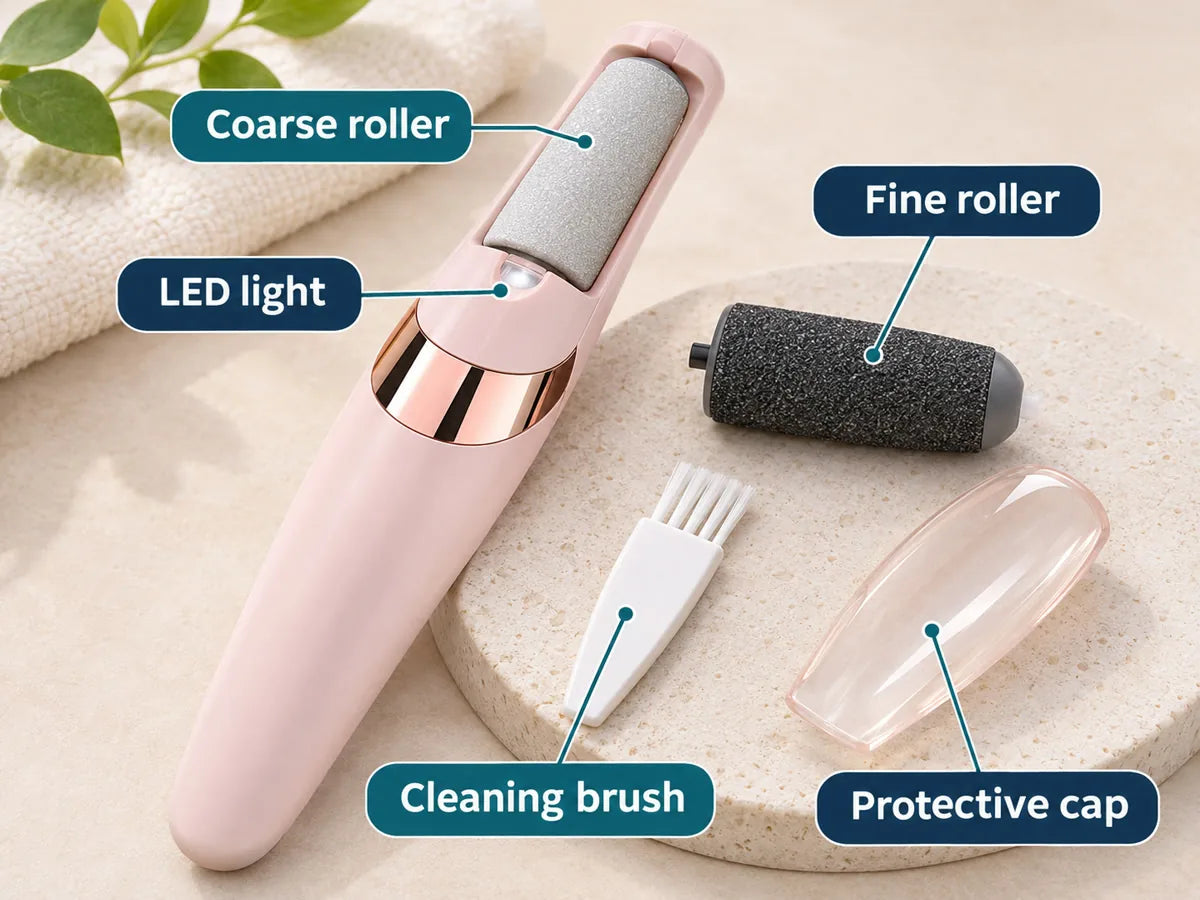
- Best for: rough heels, dry skin on the feet and at-home pedicures.
- Time: 2–3 seconds per spot in short strokes. It takes about 2.5 hours to charge for about 40 minutes of use.
- Pros: washable rollers, a cleaning brush and a protective cap in the box.
- Cons: pressing hard can stop the roller, so keep the touch light.
Electric Callus Remover for Feet with Spare Rollers
The Electric Callus Remover for Feet with Spare Rollers has a wide roller that covers the heel in fewer strokes. It is designed for hard skin on the heels and the balls of the feet. Spare rollers come in the box, and a quick-release button lets you slide the roller off to rinse it.
- Best for: hard skin on the heels and at-home pedicures.
- Time: about 2 hours to charge for around 60 minutes of use.
- Pros: wide roller, spare rollers and a quick-release head.
- Cons: one speed only and no full-charge light.
Note: Charge this file with a 5V USB source only and never use it while charging. The body is not waterproof, so rinse only the detachable roller.
Cordless 2-in-1 Foot Callus Remover and Nail Buffer
The Cordless 2-in-1 Foot Callus Remover and Nail Buffer uses sanding discs on the heels and small sanding sleeves to buff nails. The head spins forward or in reverse, so you can work both sides of the heel without changing your grip. A digital display shows the current setting.
- Best for: rough heels, nail buffing and at-home pedicures.
- Time: a few seconds per spot. The 1,200 mAh battery takes about 2 hours to charge for around 60 minutes of use, with Type-C charging.
- Pros: coarse and fine discs, plus nail sleeves.
- Cons: the body must stay dry, and discs need replacing when they feel smooth.
Is a pumice stone callus routine safe? When to skip it
A pumice stone callus routine is low-risk for most people with healthy feet who soak first, file gently and stop before the skin turns sore. Safety depends on your health and on how much skin you remove. The same limits apply to electric foot files.
Skip self-care and see a doctor or podiatrist if any of these apply:
- Diabetes, neuropathy, peripheral arterial disease, poor circulation or numbness: reduced feeling and slower healing mean a small injury can go unnoticed and turn into a sore, so ask a clinician first.
- Broken skin, bleeding, wounds or warts: never file over them.
- A very painful spot: strong pain is a reason for a professional check.
- An unknown spot: if you are unsure whether it is a callus or a wart, get it checked before you file.
One stone maker also warns against using its stone on dry or sensitive skin, so read the instructions for your stone.
Why does a callus keep coming back after using a pumice stone?
A callus comes back because filing removes the thick skin but not the pressure or friction that built it. Your skin thickens in places that rub or carry load, so the same spot rebuilds as long as the cause stays.
To reduce that rubbing, try these steps:
- Shoes: wear well-fitted shoes that do not rub or pinch.
- Pads: use moleskin or donut pads over the pressure point.
- Toenails: keep them trimmed.
Calluses can fade gradually once the friction stops, but no filing routine makes them disappear for good. If a callus keeps returning or hurts, see a podiatrist or dermatologist.
[dyl-products: rechargeable-electric-foot-file, electric-callus-remover-for-feet, cordless-foot-callus-remover-nail-buffer]
Frequently asked questions
How often should you use a pumice stone on calluses?
Anywhere from daily to once or twice a week, because guidance differs. One health-system guide says daily, while one manufacturer recommends 1–2 times weekly. Start at the gentler end, keep sessions short, and take a break if your skin feels tender.
Is natural lava pumice better than a synthetic stone?
Natural lava pumice is not proven better than a synthetic stone. Guidance does not rank volcanic pumice above stones made from recycled glass or other materials. Pick a stone made for feet, use it wet as directed, and replace it if it crumbles or wears smooth.
Can I use a pumice stone and an electric foot file in the same routine?
You can use both tools in one routine, as long as they never go over the same spot in the same session. Most electric files need dry feet while a stone needs wet skin, so use them on different days or different areas, always with light pressure.
Can I return an electric foot file if it doesn't suit me?
You can return it within 30 days if it is unused, and for change-of-mind returns you pay return shipping. Damaged, defective or wrong items are replaced or refunded with no need to send them back. See our returns and refunds policy.
The best pumice stone callus choice comes down to thickness: a stone for thin calluses, an electric file for thick, stubborn heels. Use either one gently, and stop before the skin feels sore. Compare rollers, speeds and charging in our foot care devices collection, with free US shipping on every order.